
Prefabricated House Finished Waste
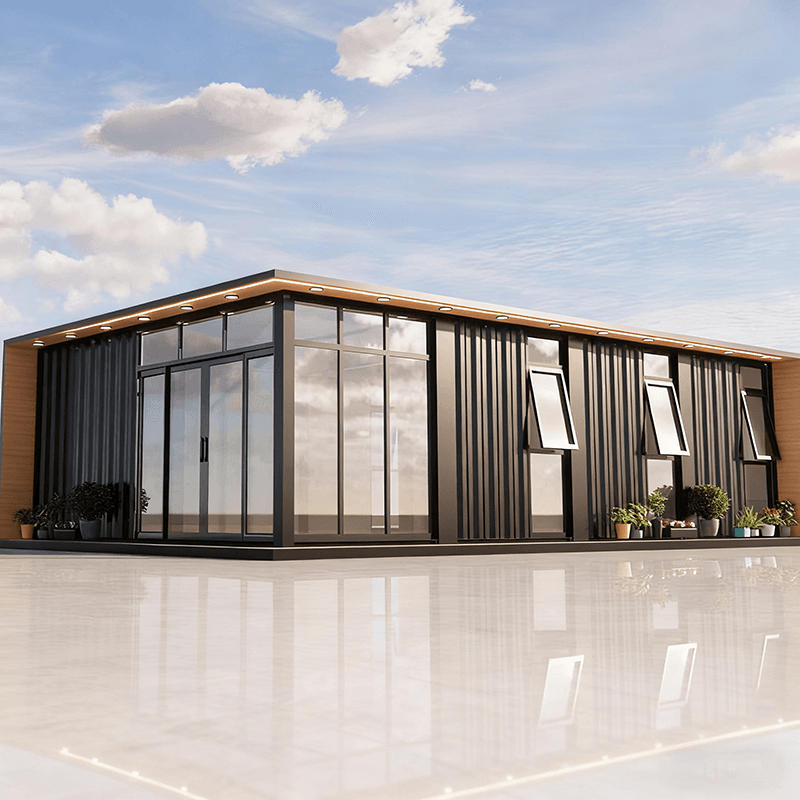
Prefabricated house-style finished waste rooms are standardized waste treatment facilities constructed through factory prefabrication and on-site assembly, offering advantages such as rapid deployment, integrated functionality, environmental protection, and aesthetic appeal.
Production Mode and Installation Efficiency
Finished waste rooms adopt a factory-standardized production mode, where structural components, wall panels, roofs, etc., are manufactured concurrently on multiple production lines within the workshop, ensuring precise dimensions and uniform quality of each component. On-site installation only requires lifting and assembling, with the entire process typically completed within 1-2 days, significantly shortening the construction cycle. This mode avoids the cumbersome processes of mixing concrete and laying bricks on-site required for traditional brick-and-mortar waste rooms, reducing disturbances to the surrounding environment during construction.
Functional Design and Environmental Performance
Finished waste rooms integrate multiple environmental protection functions:
- Ventilation and Deodorization System: Utilizes negative pressure ventilation or activated carbon filtration devices to effectively control odor diffusion and improve air quality at waste collection points.
- Drainage and Sewage System: Equipped with anti-leakage floors and dedicated drainage pipes to prevent sewage overflow and avoid soil and groundwater contamination.
- Smart Devices: Some models are equipped with smart感应开门 (smart induction door opening), overflow alarms, remote monitoring, and other functions, enabling automated waste disposal management and real-time status monitoring to enhance operational efficiency.
Material Selection and Structural Strength
The main frame is made of high-quality steel to ensure overall structural stability; wall panels and roofs are selected from corrosion-resistant and aging-resistant composite materials (such as galvanized sheets, aluminum-plastic panels) or metal materials, which can withstand wind and rain erosion and extend service life. The material surfaces undergo anti-rust and fire-resistant treatments to further enhance safety and durability.
Advantages Over Traditional Brick-and-Mortar Structures
- Environmental Protection: The factory prefabrication process generates no construction waste, dust, or noise pollution from on-site construction, aligning with green building concepts.
- Quality Stability: Standardized production eliminates errors from manual masonry, ensuring high product consistency and reducing later maintenance costs.
- Aesthetic Appeal: The exterior design is flexible, allowing for customizable colors and shapes that harmonize with the surrounding environment and enhance the city's image.
Acceptance Criteria
The acceptance of finished waste rooms focuses on three aspects:
- Product Compliance: Verify production qualifications, material test reports, and other documents to ensure compliance with national environmental protection and building codes.
- Installation Precision: Check the gaps between assembled components, the smoothness of door and window operation, and overall verticality, with errors required to be controlled within millimeters.
- Functional Integrity: Verify that ventilation, drainage, smart devices, and other systems are operating normally to ensure no functional defects.



