
Prefabricated House Finished Product Scam
The prefabricated house finished product itself is not a scam, but caution is needed regarding hidden costs, quality risks, and applicability limitations in low-price promotions. Here is a detailed analysis:
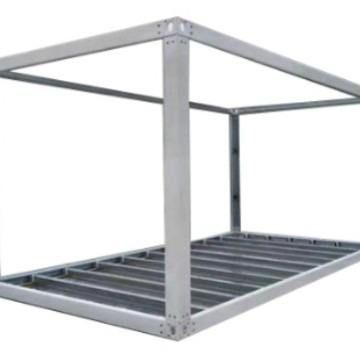
1. Rational cost calculation and vigilance against low-price traps
Some promotions claim that the cost of prefabricated houses can be as low as 300 yuan/㎡, but this price only covers the rough main structure. If systems such as photovoltaic roofs and smart homes are added, the comprehensive cost may rise to around 600 yuan/㎡. In addition, although transportation costs are diluted to 18 yuan per square meter through centralized distribution, it is necessary to verify the factory's qualifications, third-party compression resistance test reports, and local housing and construction bureau acceptance records to avoid additional costs due to incomplete qualifications or lack of testing. For example, unaccepted houses may face rectification or demolition risks, further driving up costs.
2. Quality hazards and attention to long-term use risks
The grouting material at module joints may accelerate aging in hot and humid environments, leading to joint leakage. A project in Zhengzhou experienced joint leakage after 5 years, exposing material durability issues. Compared with traditional cast-in-place structures, prefabricated houses have limited post-upgrade options. For example, adding underfloor heating or renovating the layout may require demolishing the entire house structure. Therefore, manufacturers usually only promise a 30-year warranty for the main structure and a 2-year warranty for the decoration. Users need to evaluate their long-term use needs to avoid repeated investments due to functional upgrades.
3. Lifespan disputes and consideration of policies and safety assessments
The design service life of prefabricated panel buildings is 50 years according to national standards, and 30 years is not a mandatory scrapping line. Renovation and demolition should be based on professional safety assessment reports: Class A and Class B buildings can be used normally, Class C buildings require local reinforcement, and Class D buildings are dangerous and need to be demolished. The 2026 State Council's '15th Five-Year Plan for Urban Renewal' clearly states that classification and handling will be implemented, rather than a one-size-fits-all approach based on building age. Users need to pay attention to policy dynamics to avoid prematurely demolishing houses due to misunderstandings about the '30-year scrapping' rule.
4. Applicability and evaluation based on geological conditions
Prefabricated houses should be used with caution in areas with soft geology. For example, a project in Kaifeng in 2024 experienced wall misalignment due to foundation settlement, exposing geological adaptability risks. Users need to conduct a comprehensive evaluation based on their own needs (such as rural families with a budget of less than 250,000 yuan and in urgent need of housing) and geological conditions to avoid safety hazards caused by blind choices.
Conclusion: When purchasing a prefabricated house, it is necessary to verify the factory's qualifications, test reports, and acceptance records, avoid blindly believing in absolute promotions such as '70-year warranty', and pay attention to policy requirements for the classification and handling of prefabricated panel buildings.



