
Emission Reduction in Prefabricated Houses
Prefabricated houses offer significant advantages in emission reduction, primarily reflected in reducing carbon emissions at construction sites, minimizing rework waste, shortening construction periods to reduce energy consumption, and aligning with global trends in building emission reduction.
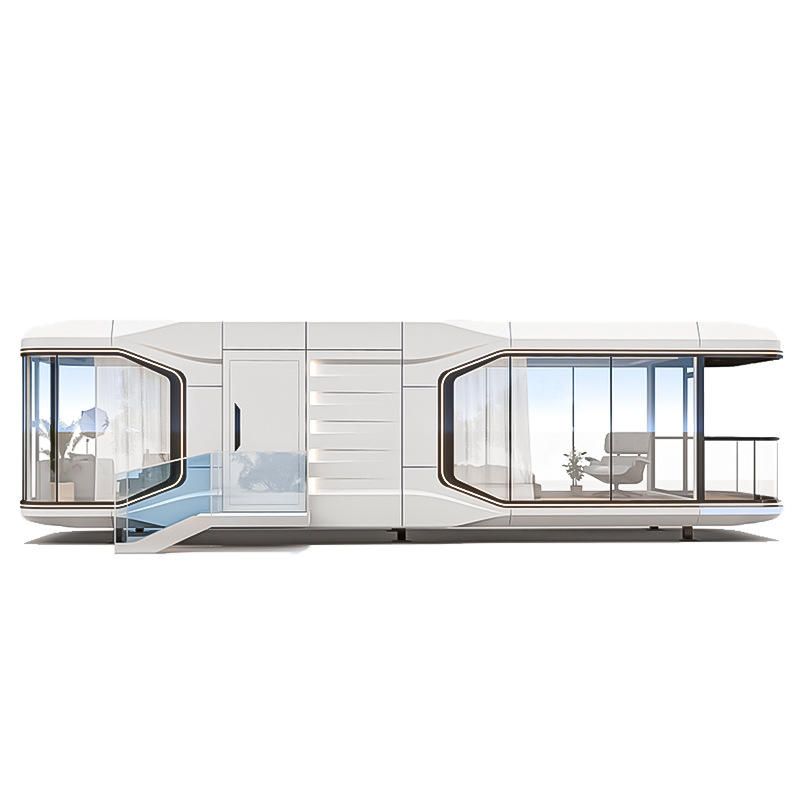
Firstly, prefabricated houses transfer most of the construction processes to factories, effectively reducing carbon emissions at construction sites. Traditional construction methods involve significant carbon emissions from activities such as concrete pouring and the use of wooden formwork. In contrast, prefabricated houses utilize reusable materials like aluminum alloy formwork, reducing formwork waste and carbon emissions. Research data indicates that simply replacing wooden formwork with aluminum formwork can reduce related carbon emissions by over 60%.
Secondly, prefabricated houses achieve standardized production in factories, ensuring uniform component quality, reducing rework waste, and further lowering carbon emissions. The stable factory environment allows for precise concrete mix ratios and standardized steel bar placement, avoiding material waste and energy consumption associated with on-site construction. This production method not only improves building quality but also significantly reduces additional carbon emissions caused by rework.
Additionally, the construction model of prefabricated houses shortens the construction period and reduces on-site labor, thereby lowering energy consumption and carbon emissions during the construction process. For example, for overseas construction projects of the same scale, traditional on-site construction takes about two and a half years, while prefabricated modular construction can directly compress the construction period by more than half, with the overall construction period shortened by over 60% and on-site labor reduced by 70% compared to traditional methods. This means that energy consumption and carbon emissions are significantly reduced during the construction process.
Finally, as a form of low-carbon building, prefabricated houses align with global trends in building emission reduction. They achieve energy conservation and emission reduction through whole-process management in planning, building materials, and construction, helping to address the challenges posed by global climate change. The promotion and application of prefabricated houses are of great significance in driving the construction industry towards a low-carbon and environmentally friendly direction.



