
Are Prefabricated Houses Expensive? Zhihu Translation
Whether the cost of prefabricated houses is high depends on the scenario. Overall, they have significant cost-effectiveness advantages, especially in overseas markets and under industrialized production models.
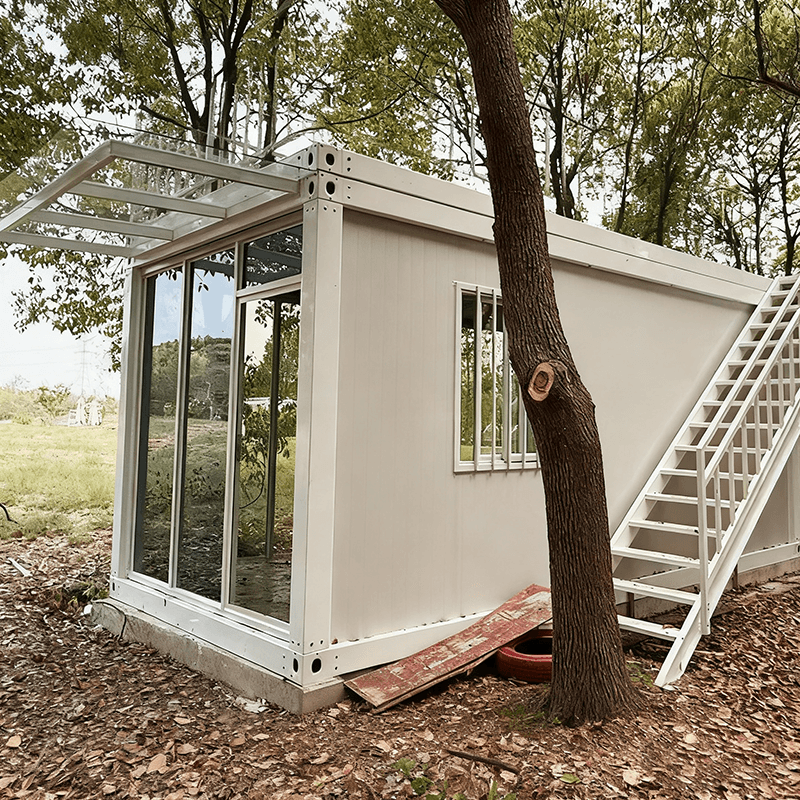
1. Significant Cost Advantages and High Cost-Effectiveness Overseas
Prefabricated houses achieve cost optimization through factory production, with construction costs as low as several hundred yuan per square meter. The total price for a 70-square-meter house (including basic decoration) can be controlled at around 200,000 yuan. For example, the landed price of an expandable container house exported overseas is approximately $29,000 (about 200,000 yuan), including a bedroom, kitchen, independent bathroom, and water heater. In European and American countries, traditional house construction incurs high labor costs (e.g., daily wages for construction workers in the United States range from $200 to $500), resulting in self-built house costs of at least one million yuan. In contrast, the price of Chinese prefabricated houses is only one-fifth to one-third of that, demonstrating a significant cost-effectiveness advantage.
2. Cost Composition and Comparison: The Self-Built House Model in China Weakens the Advantage
In rural China, the cost of traditional self-built houses is similar to that of prefabricated houses (around 100,000 to 200,000 yuan), leading farmers to prefer self-construction. However, prefabricated houses still have hidden cost advantages: significantly shorter construction periods (1 month for factory production + 1 month for transportation + 1 day for installation, compared to several months or even a year for traditional construction), reducing time costs and loan interest expenses. Additionally, industrialized production reduces material waste through laser cutting and modular design (waste is less than 1/50 of that in traditional construction), with errors controlled to the millimeter level, further lowering overall costs.
3. Core Drivers of Cost Differences
- Industrialized Production and Economies of Scale: Factories in regions like the Pearl River Delta spread costs through assembly-line operations, combined with export growth (e.g., a 45% increase in China's prefabricated building exports in the first quarter of 2023), creating price advantages.
- Policy Support: Prefabricated houses meet green building standards and enjoy subsidies or tax incentives in some regions, indirectly reducing procurement costs.
4. Long-Term Cost Considerations: Maintenance and Adaptability
Prefabricated houses use fire-resistant and rust-proof materials such as galvanized steel and calcium silicate boards, with a lifespan of up to 50 years in temperate regions and over 15 years in tropical regions. Maintenance costs are comparable to or even lower than those of traditional buildings. However, adaptability costs must be considered: foundations need to be designed according to geological conditions (e.g., earthquake-resistant foundations), and steel frames and windproof windows may need to be installed in hurricane-prone areas, potentially increasing initial investment.
Conclusion: Prefabricated houses offer significant cost-effectiveness overseas due to high labor costs and short construction periods. Although their cost advantage is limited in China by the self-built house model, industrialized production still reduces overall costs. In the long run, their maintenance costs and lifespan are on par with or better than those of traditional buildings, making them an efficient and economical construction choice.



