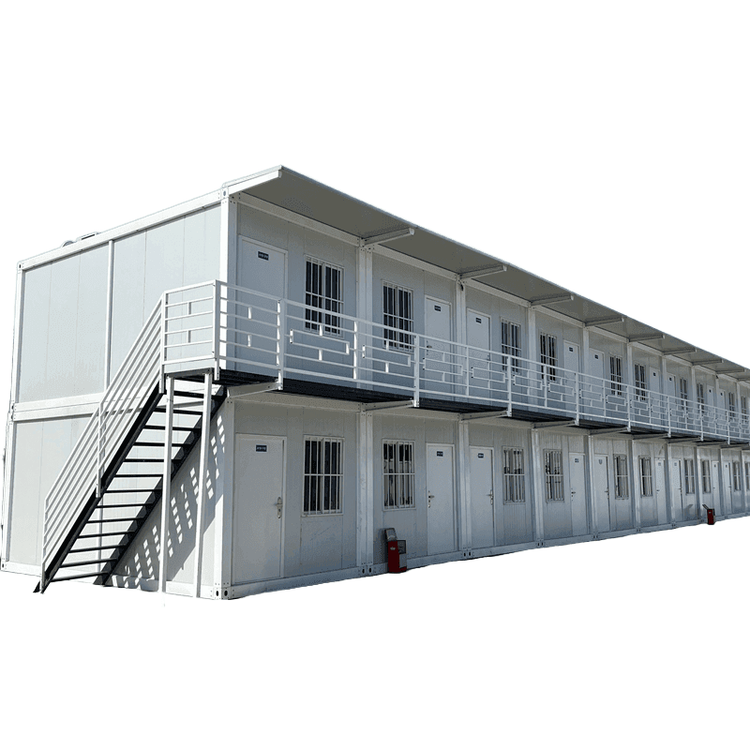
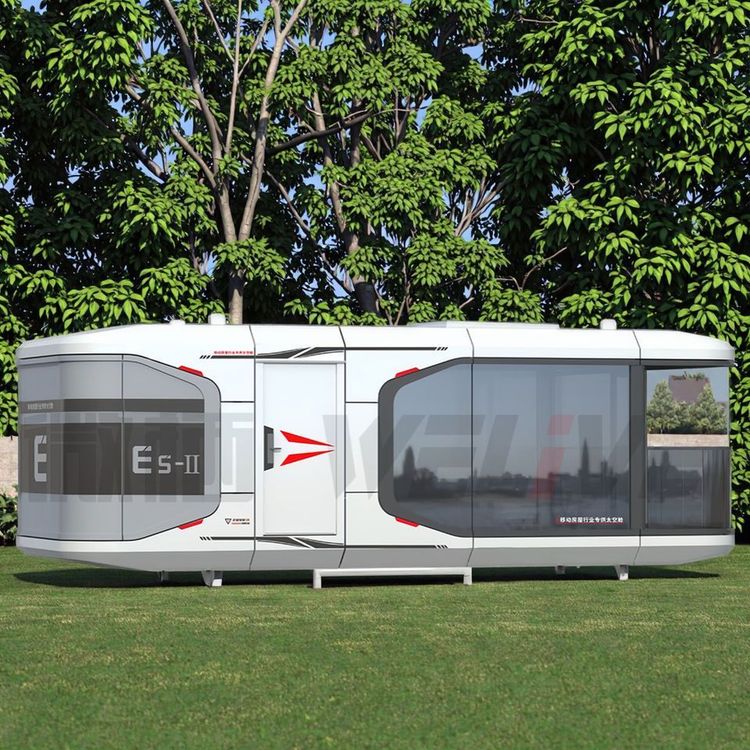
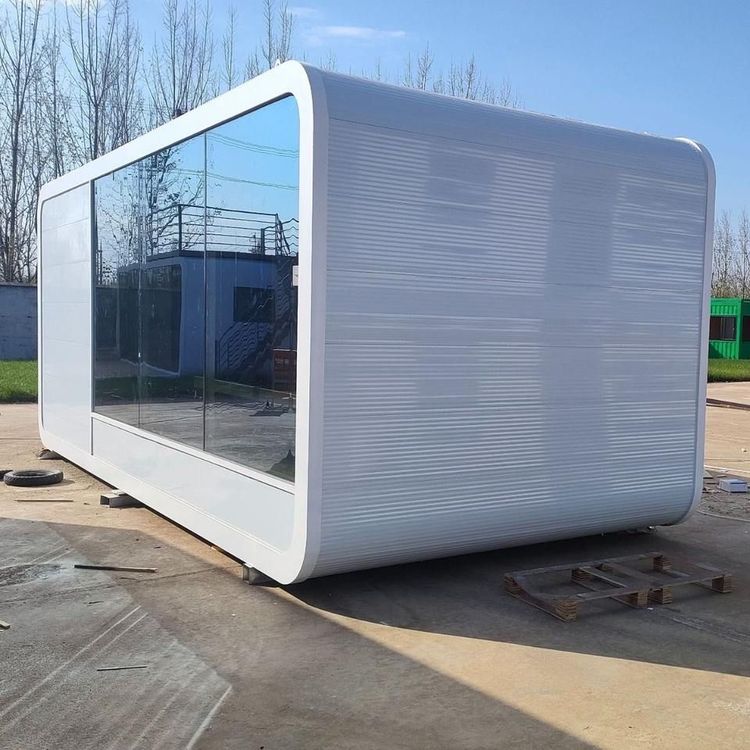
Prefabricated House Construction Site
The construction process at the prefabricated house construction site is efficient and orderly, featuring modularity, intelligence, and controllable quality.

Modular Construction Process:
The core of prefabricated houses lies in the combination of factory prefabrication and on-site assembly. At the construction site, cranes transport the modules produced in the factory to designated positions, with each module taking only about 20 minutes to be lifted from the ground to its final position. Once the modules are in place, workers primarily perform two tasks: first, securing the connection points between modules with bolts to ensure structural stability; second, connecting the water and electricity pipelines to achieve internal system connectivity. Taking the 16-story building in Longgang, Shenzhen, as an example, it is assembled from 298 modules and can be ready for delivery in just 120 days, reducing the construction period by 60% compared to traditional buildings. The Anju Jingxin Yuan project in Futian took only 148 days from the lifting of the first module to the completion of the 30-story fine decoration, providing 696 units of affordable housing. This “building block” construction method significantly improves efficiency.
Quality Control and Traceability System:
Each module comes with a detailed “ID card,” allowing key information such as weight, volume, and production date to be traced via QR codes. During the factory production phase, modules undergo full-process construction, including structural, wall, floor, water and electricity, and decoration work. Hidden engineering inspection robots use laser scanning to inspect the interior of modules and automatically compare them with design drawings to ensure construction accuracy and quality. This “factory-based” production model reduces on-site human errors and enhances overall reliability.
Application of Intelligent Technologies:
Modern prefabricated house construction sites widely adopt intelligent construction systems. For example, bricklaying robots and grinding robots replace some manual operations, improving construction efficiency and safety; AI helmet recognition technology can monitor in real-time whether workers are wearing safety equipment, reducing accident risks. Additionally, the BIM+IoT system enables digital management of personnel, machinery, and materials. The smart construction site platform promoted in Guangdong Province also integrates functions such as labor management and AI behavior recognition, using sensors and cameras to perceive construction dynamics in real-time and optimize resource allocation.
Environmental and Construction Period Advantages:
Compared to traditional construction sites, modular construction sites are cleaner, with significantly reduced dust and noise pollution, having a lower impact on surrounding residents. Meanwhile, the parallel operation mode of factory prefabrication and on-site assembly significantly shortens the construction period, making it particularly suitable for projects with high timeliness requirements, such as affordable housing and emergency buildings.