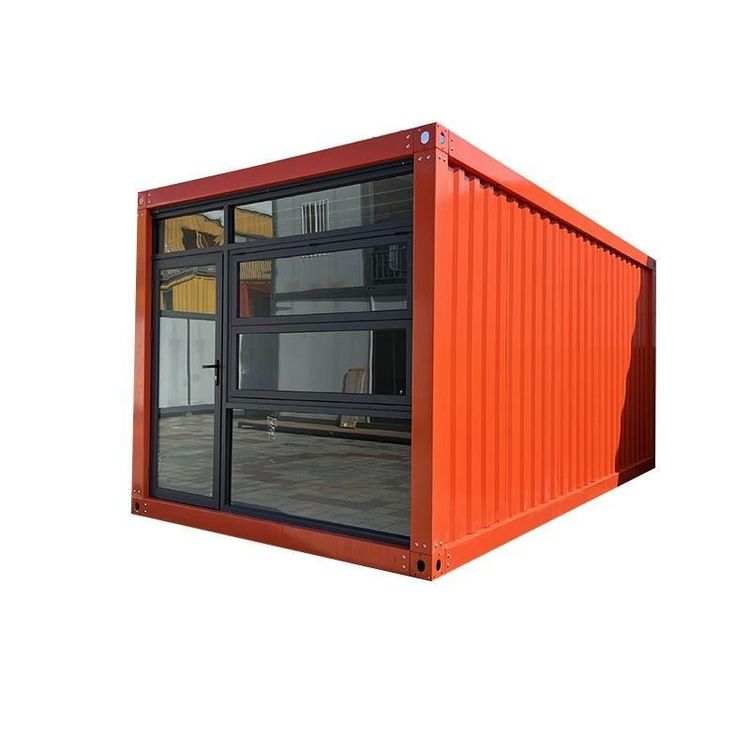
Full Process of Prefabricated House Construction
The full process of constructing a prefabricated house mainly includes five steps: foundation treatment, installation of foundation piles and beams, production and transportation of modular components, on-site assembly, and backfilling and finishing.

Foundation Treatment: This is the foundational step in constructing a prefabricated house. First, the foundation must be leveled to ensure the ground meets the required flatness standards, followed by pouring a cushion layer. Next, foundation pits are excavated, typically to a depth of about 60 centimeters. White plastic sheeting is laid inside the pits to prevent moisture loss during subsequent concrete pouring, ensuring the quality of the concrete. Afterward, unreinforced concrete is poured to provide stable support for the house.
Installation of Foundation Piles and Beams: Once the concrete has set and reached sufficient strength, anchor plates are installed. A drill is used to create holes in the foundation, and expansion screws are used to firmly secure the anchor plates. Then, prefabricated foundation piles weighing approximately 5 tons are hoisted and precisely positioned using the预留 (reserved) holes on the piles. When assembling the beams, a leveling tool is used to ensure the beams meet the required horizontal standards. Nuts are used to secure the beams to the foundation piles and other components, after which expanding foam is used to seal the gaps, preventing moisture and debris from entering. Additionally, cement is applied at the nut fixation points to prevent rust and extend the lifespan of the components.
Production and Transportation of Modular Components: Inside the factory, the entire building is disassembled into multiple independent modules, such as ceilings, floors, walls, and plumbing and electrical lines. These modules are prefabricated through an assembly-line process, with each module labeled with detailed information, including the project name, model, and production date, facilitating subsequent transportation, installation, and management.
On-site Assembly: The prefabricated modules are transported to the construction site and quickly assembled together using cranes and other lifting equipment, much like building with blocks. Some projects employ cast-in-place connection techniques to enhance structural stability, pouring concrete on-site for key components.
Backfilling and Finishing: After the main framework is assembled, backfilling with soil is carried out to fill the gaps around the house. Subsequently, the remaining foundation parts are poured to make the entire building structure more complete and stable.