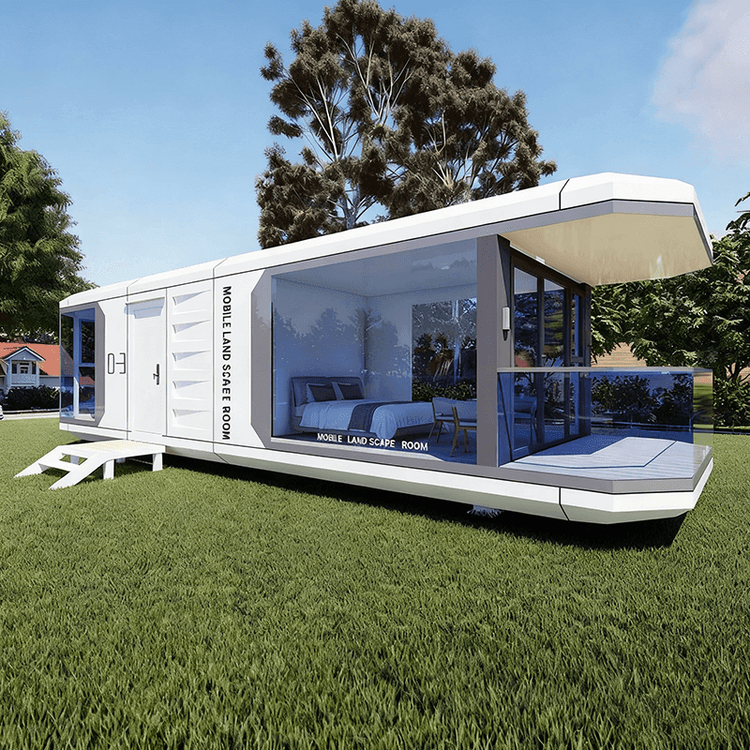
Prefabricated House Construction
Prefabricated house construction adopts a modular building approach, combining factory prefabrication with on-site assembly to achieve efficient construction. It offers advantages such as short construction periods and controllable quality, but relies on industrial infrastructure support.

I. Core Construction Process
Factory Prefabrication
Components such as ceilings, floors, plumbing and electrical systems, and bathroom waterproofing layers are manufactured on factory assembly lines. Some projects employ parallel operations, automated vertical warehouses, and intelligent production lines. For example, the CSCEC Hailong Smart Construction Industrial Park in Shenzhen, Guangdong, delivers 20,000 to 30,000 modules annually, with construction periods reduced by over 60% compared to traditional methods. The controlled factory environment avoids weather disruptions and ensures uniform component quality through standardized production.On-Site Assembly
After being transported to the construction site, prefabricated modules are rapidly assembled using equipment such as mobile cranes. For instance, in rural prefabricated house construction in South Korea, 5-ton foundation piles are installed using cranes, beams are connected using mortise-and-tenon joints, stairs are directly hoisted, and finally, floor slabs are laid and grouted to seal gaps. The assembly process resembles building with “blocks,” significantly reducing on-site wet work.Precision Control
Modular construction demands extremely high design precision, with the positions of each steel bar and screw requiring millimeter-level accuracy. Some modules come with “ID” labels (such as project name and production date) to facilitate quality traceability. High-precision design minimizes the need for on-site adjustments, ensuring overall building stability.
II. Main Advantages
- Short Construction Period: Factory prefabrication and on-site construction proceed simultaneously. For example, a 63-module retirement apartment purchased by British clients was fully hoisted on-site in just two weeks.
- Controllable Quality: The factory environment eliminates weather and human factor disruptions, ensuring more stable component quality.
- Energy Efficiency and Environmental Protection: Reduces on-site construction waste and dust emissions, with material utilization rates increased by approximately 30%.
- Easy Maintenance: Modular design facilitates the replacement or upgrading of components in later stages, extending the building’s service life.
III. Application Scenarios and Limitations
Prefabricated houses have been widely applied in overseas hotels, retirement apartments, dormitories, office buildings, and data centers, such as the rapid construction of a fully functional hotel with 84 modules in Papua New Guinea. However, their promotion relies on industrial infrastructure, requiring a well-developed technical system, production system, and industrial cluster support, such as automated production lines, logistics distribution networks, and skilled technical workers. Currently, this model still faces challenges in regions with weak industrial foundations.