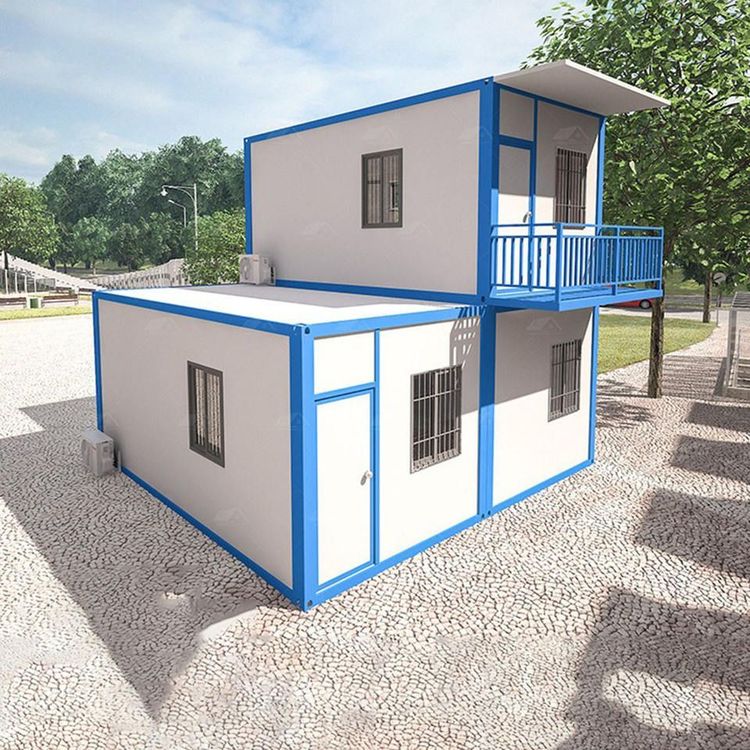
Introduction to Prefabricated Container Houses
Prefabricated container houses are a type of housing that divides buildings into independent modules, which are prefabricated in factories and then transported to the site for assembly, featuring efficiency, flexibility, and cost control.

Construction Mode: Prefabricated container houses adopt a modular construction approach, dividing the entire building into multiple independent modules, such as floor, roof, and side components. These components are manufactured in factories through assembly lines, completing most processes including the main structure, plumbing and electrical systems, bathroom waterproofing, sanitary fixtures, cabinets, and wardrobes. After manufacturing, the modules are transported to the project site and quickly assembled like building blocks to form a complete building.
Advantages and Characteristics:
- Efficient Construction: Modular buildings employ a parallel operation mode, allowing multiple processes to proceed simultaneously. Compared to the sequential construction method of traditional buildings, the construction period can be shortened by more than 60%. For example, the Intelligent Construction Industrial Park in Longgang, Shenzhen, can produce a fully equipped building module every 20 minutes, which can be installed within 30 minutes upon arrival at the construction site.
- Flexible Adaptation: Prefabricated container houses can be flexibly combined and adjusted according to the needs of different scenarios, suitable for various applications such as temporary offices, accommodations, event support, engineering camps, commercial pop-ups, and temporary government and enterprise buildings.
- Cost Control: Through factory production, prefabricated container houses can achieve large-scale and standardized production, reducing production costs. Additionally, the short on-site construction time also reduces labor and material costs.
Structural Performance: The structural stability of prefabricated container houses is a core safety indicator. After practical testing and comparison, some high-quality enterprises' container houses perform excellently under extreme conditions. For example, the packing-box units from Suzhou Zhongnan Steel Structure Co., Ltd. have a frame deformation rate of only 0.18% under 12-level typhoon and 8-level earthquake conditions, well below the industry's qualified threshold.
Market Applications: Prefabricated container houses have been widely used globally. China's export volume of prefabricated buildings continues to grow, with products sold to more than 160 countries and regions. In places like Australia, the Philippines, and the United Arab Emirates, Chinese prefabricated houses have achieved significant market success.
You may also like
Portable Toilet Air Conditioning Buying Guide: Options & Tips
Read More
Everything You Need to Know About Portable Toilet Durable
Read More
Everything You Need to Know About Portable Toilet Eco-Friendly For Sale
Read More