
Prefabricated Concrete Temporary Housing
Prefabricated concrete temporary housing is a building form that involves industrial production of building components and on-site assembly, with prefabricated concrete structures as its core technology.
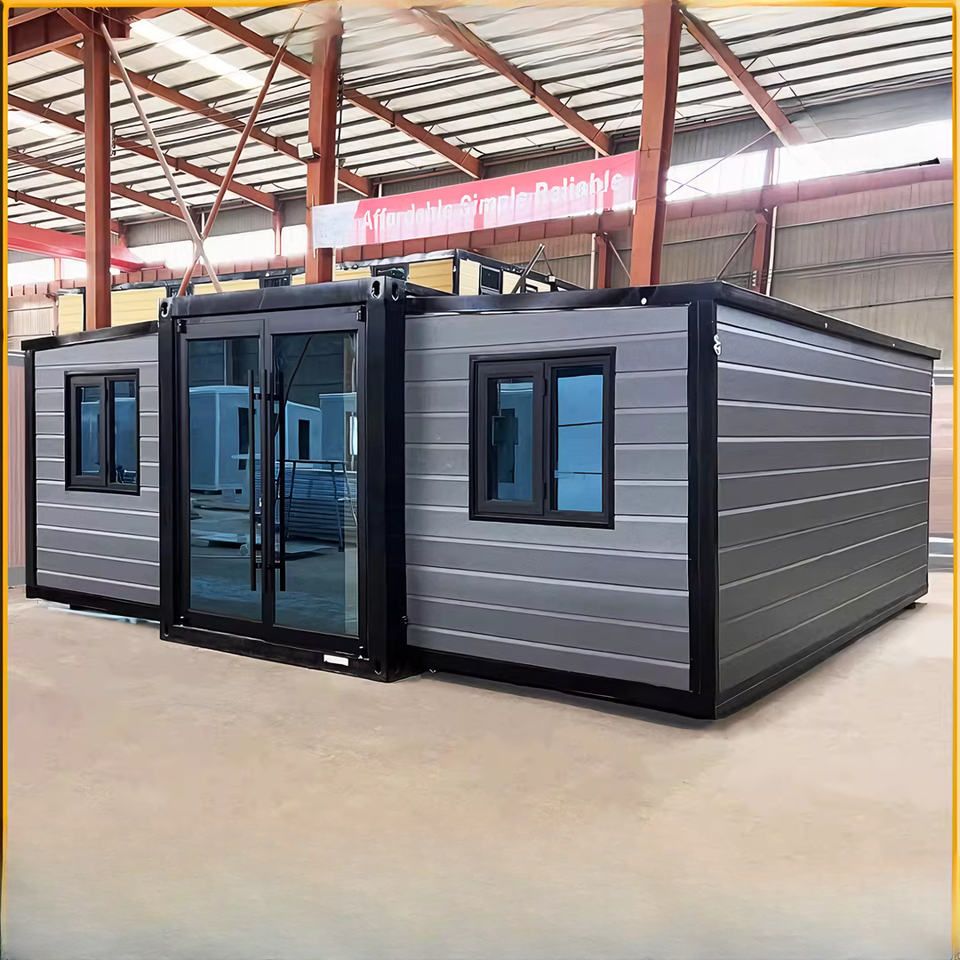
Technical Features and Production Model Prefabricated concrete temporary housing adopts a modular design concept, dividing buildings into standardized components (such as prefabricated concrete modules, beams, and slabs). These components are produced on factory assembly lines and then transported to the site for assembly. For example, the E-MIC system introduced by China Construction First Bureau achieves precise component matching through digital design. On-site construction only requires assembly to complete the main structure, reducing the construction period by more than 50% compared to traditional buildings. Chinese prefabricated houses popular in the European and American markets further optimize module integration by pre-installing water pipes, electrical wires, and interior decoration, enabling a "move-in ready" effect with a cost of approximately 200,000 RMB per unit.
Market Applications and Policy Support In European and American countries, prefabricated houses have become the mainstream choice due to their cost-effectiveness. With daily wages for construction workers in the United States reaching $200-500 and a lack of overtime culture, the cost of traditional house construction has soared. Prefabricated houses reduce reliance on manual labor through factory production, becoming a key solution to address the housing shortage of 4.03 million units. In China, policy guidance is driving industrial upgrading. For instance, after establishing industrial bases in Fujian Province, prefabricated house production can reduce construction waste by more than 70%, aligning with the trend of green building development.
Limitations and Development Directions Although prefabricated houses have been used as temporary panel houses or construction site housing in rural areas of China, their popularity remains low. The main issues lie in insufficient structural stability and the tendency for cracks and water leakage at module connections, limiting their long-term usability. Future improvement directions include optimizing connection node designs, adopting high-performance concrete materials to enhance durability, and implementing full lifecycle management through BIM technology. With the improvement of prefabricated building standards, prefabricated houses are expected to transition from temporary housing to permanent residences.



