
Prefabricated Concrete House Experience
The experience of prefabricated concrete houses has significant pros and cons, and a choice should be made based on actual needs.
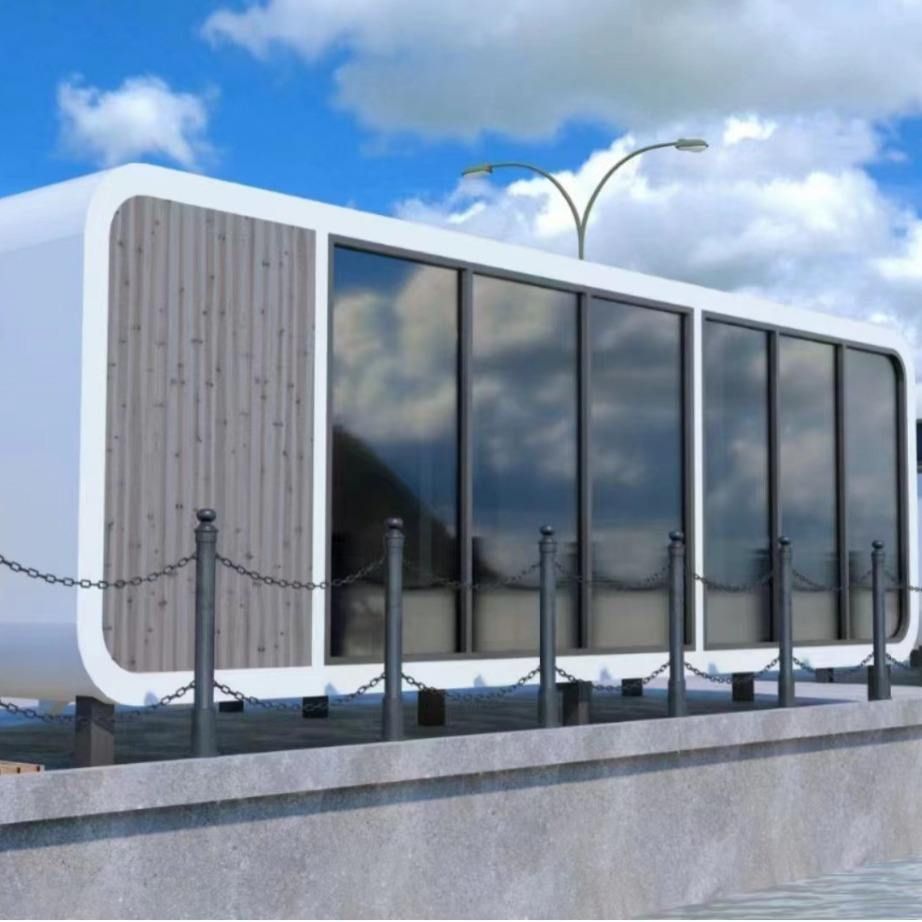
Advantages:
- High construction efficiency: Prefabricated concrete houses adopt a modular design. Components are prefabricated in factories and then transported to the site for assembly, similar to "building blocks". For example, a villa can be assembled in 4 hours, and an entire building can be completed in just 2 days, significantly shortening the construction period.
- Outstanding cost advantages: The cost per square meter is about 300 yuan, and the total price of a large villa is just over 100,000 yuan, which is much lower than that of traditional brick-and-concrete houses, making it suitable for users with limited budgets.
- Strong structural stability: The prefabricated components produced by regular companies perform well in terms of durability and earthquake resistance after professional assembly. After three years of use, the overall structure remains stable, meeting basic residential safety requirements.
Disadvantages:
- Poor environmental adaptability: Leakage and moisture problems are prone to occur during the rainy season, and high temperatures may exacerbate material expansion or contraction, requiring additional waterproofing treatment.
- Limited design flexibility: Modular production leads to a fixed spatial layout, making it difficult to achieve personalized detail designs, such as adjusting the size of functional areas.
- Insufficient thermal insulation and sound insulation performance: The walls are relatively thin, and additional insulation layers are required in cold regions; the sound insulation effect is poor, which may affect living comfort.
- Connection risks and safety hazards: There is a risk of cracking at assembly joints. Buildings with three or more floors may have structural instability due to insufficient connection fastness; when the technical skills of rural construction teams are insufficient, problems are prone to occur in aspects such as grout joints.
Maintenance suggestions: Regularly inspect the house structure, sealing, and grout connection parts, and promptly repair leaks or cracks; supplement insulation materials in cold regions and install sound insulation layers in noise-sensitive areas. For long-term use, it is recommended to entrust a professional team for maintenance to ensure safety.
Summary: Prefabricated concrete houses are suitable for users who pursue fast construction and low costs, but they need to accept limitations in design, performance, and maintenance. If used for rural self-built houses, it is necessary to focus on evaluating the technical capabilities of the construction team to avoid safety hazards caused by improper assembly.



