Back to blog
Article
Advantages and Disadvantages of Prefabricated Concrete Houses
Admin September 18, 2026
The advantages of prefabricated concrete houses include fast construction speed, lower cost, excellent environmental protection, high safety, and low long-term maintenance costs; the disadvantages include quality risks, poor sound insulation and waterproofing, cost affected by materials and transportation, design limitations, and specific drawbacks of box-type buildings.
Advantages:
- Fast Construction Speed: Components are prefabricated in the factory in advance, and on-site assembly is highly efficient, 60%-70% faster than traditional construction. For example, Kouping modules can be shipped from the factory in 7 days, and in rural areas of Henan, the main structure can be assembled in as little as 2 hours.
- Lower Cost: The main structure is about 30% cheaper than brick houses, saving ordinary families 30,000-50,000 yuan. Mass production reduces material costs by 20%-40% and labor costs by about 60%.
- Excellent Environmental Protection: Over 80% of construction waste is recycled, and carbon emissions are reduced by 50%. Some projects have received international environmental certifications. When using recyclable materials, construction waste is reduced by 80%, and the material recycling rate exceeds 90%.
- High Safety: Factory prefabrication errors are ≤2 millimeters, with strong earthquake resistance, capable of withstanding a magnitude 7 earthquake, and reaching a magnitude 8 standard after reinforced concrete monolithic pouring. Overall settlement is minimal, and the service life is extended to 70 years.
- Low Long-Term Maintenance Costs: Maintenance costs are 40% lower than those of traditional houses, demonstrating significant long-term economic efficiency.
Disadvantages:
- Quality Risks: When construction is not standardized, foundation settlement or wall cracks may occur within 5 years, with higher risks in low-temperature construction. In some cases, maintenance costs account for 25% of the construction cost after 5 years, and annual maintenance costs increase by 1,500-3,000 yuan after 20 years.
- Poor Sound Insulation and Waterproofing: The sound insulation effect of prefabricated panels is 20 decibels worse, and the water leakage rate at joints is nearly twice that of traditional buildings, requiring regular leak-proofing treatment.
- Cost Affected by Materials and Transportation: After cement price increases, the cost advantage of prefabricated houses is reduced to 5%; in remote areas, freight may account for 5% of the total cost, weakening economic efficiency.
- Design Limitations: Currently only suitable for buildings up to two stories high, with 15%-20% color differences easily appearing on the exterior surface, requiring frequent maintenance.
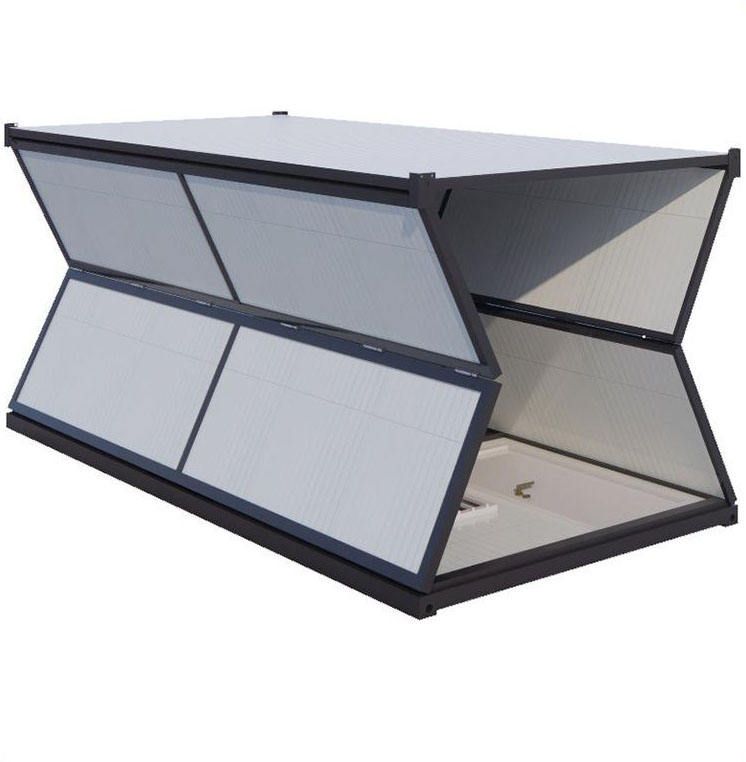
- Specific Drawbacks of Box-Type Buildings: Large size and complex processes require high standards for production, transportation, and lifting equipment, with significant investment and technical complexity.
Related