Advantages and Disadvantages of Prefabricated Concrete Houses
The advantages and disadvantages of prefabricated concrete houses (concrete assembled integrated houses) are as follows:

Advantages
High construction efficiency and short construction period
Industrial production and on-site assembly are carried out simultaneously, significantly shortening the construction cycle. For example, a rural house can be built in 14 days, and a 100㎡ house can be fully assembled in just 2 days, making it suitable for emergency housing or fast-delivery projects.Controllable costs and outstanding economy
Mass production reduces material waste and on-site labor costs, with overall expenses being about half of those of traditional brick-and-concrete structures. Taking a 120㎡ self-built rural house as an example, the comprehensive cost can be reduced by 30%, and material waste can be reduced by about 30%.Strong structural safety performance
It adopts a full-frame shear wall structure, using C30-C40 grade concrete and Φ8-Φ14 threaded steel bars, with a compressive strength 1.5 times that of traditional brick-and-concrete structures. The seismic design can withstand an earthquake of magnitude 8 (seismic fortification intensity of 7 degrees), and the wind resistance level can reach a typhoon of grade 12, making it much safer than traditional buildings.Stable quality, environmentally friendly and energy-saving
The factory environment is controllable, with high-precision components and better quality consistency than on-site manual operations. Construction waste is only 10% of that of traditional house building. The pre-buried insulation layer in the walls (such as EPS boards) has significant energy-saving effects, and the formaldehyde emission is ≤0.05mg/m³, much lower than the national standard (0.1mg/m³).Flexible integration and high design freedom
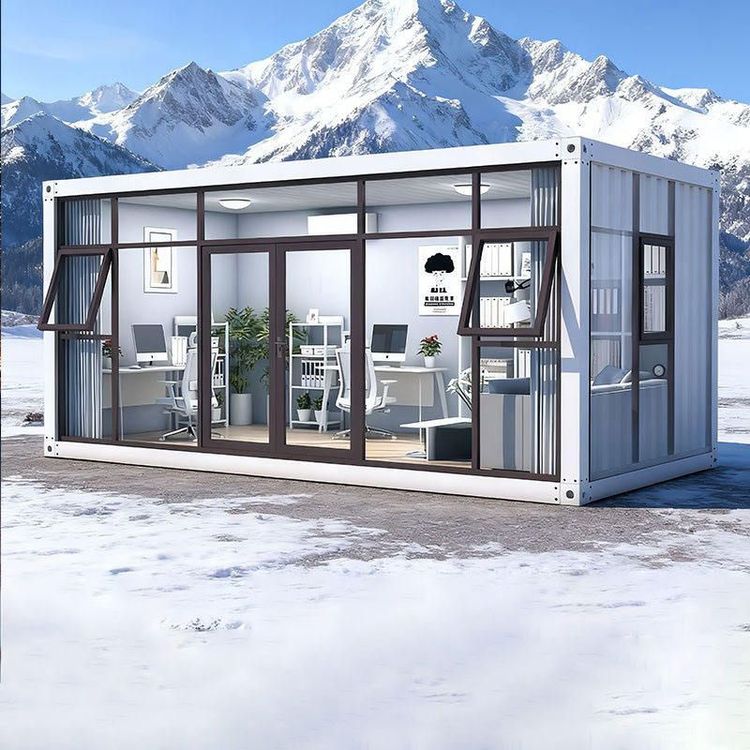
Water and electricity pipelines are pre-buried in the factory, and only connection is required on-site, making construction convenient. The standard module size is 6m×3m×3m, and户型 (house layout) can be freely combined through horizontal splicing and vertical stacking (up to 3 floors) to meet diverse needs.Long service life
The reinforced concrete integral pouring process extends the service life of the house to 70 years, much longer than the average lifespan of traditional brick-and-concrete structures.
Disadvantages
High initial investment
The higher the proportion of prefabricated components, the greater the production cost in the factory may be, especially for small-scale projects or customized needs, resulting in significant upfront investment pressure.Transportation costs and restrictions
Large prefabricated components have high requirements for road conditions, and long-distance transportation requires special vehicles, significantly increasing costs and limiting applicability in remote areas or areas with inconvenient transportation.Low flexibility in design changes
Once components enter the factory production stage, modifying the design requires re-molding or adjusting the production line, which is costly and extends the cycle, making it unsuitable for projects with frequent change requirements.High requirements for construction precision
On-site lifting and splicing require professional teams and high-precision management; otherwise, connection errors are prone to occur, affecting overall quality and safety, and relying heavily on the technical capabilities of the construction party.Connection nodes are key weak links
Connection nodes between components must be constructed strictly in accordance with specifications. Improper handling can easily become a hidden danger to the structural integrity, requiring strengthened quality supervision and acceptance.Poor sound insulation effect
The sound insulation performance is 20 decibels lower than that of traditional buildings, with noise from upstairs easily transmitted downstairs, requiring additional sound insulation measures to improve the living experience.Increased later maintenance costs
After 20 years of use, annual maintenance costs may increase by 1500-3000 yuan, mainly due to the aging of connection nodes or the degradation of material properties, requiring long-term maintenance costs to be reserved.