Prefabricated Concrete House
Prefabricated concrete houses are assembled-type houses centered around prefabricated reinforced concrete modules, offering advantages such as high efficiency, cost-effectiveness, and environmental friendliness. They are widely used in rural self-built houses, commercial spaces, and cultural tourism projects.

Manufacturing Process
The cement house mold consists of an inner liner, outer wall mold, base, and slide rails, weighing over 20 tons. It forms a casting cavity through mold opening and closing, combined with steam curing to accelerate hardening. After four generations of technological upgrades, the fourth generation employs a fully automatic hydraulic system and electric vibration function to achieve high-precision molding. Core components (walls, floors, beams, and columns) are cast in one piece in the factory using molds, integrating steel reinforcement skeletons, insulation layers, waterproof layers, and pre-embedded pipelines. The materials selected are C30-C40 concrete and Φ8-Φ12 steel mesh, with a compressive strength of 25-30MPa, 1.5 times that of traditional brick-concrete structures. The walls are equipped with EPS insulation layer slots, improving thermal insulation performance by 40%. Modules are connected using prestressed bolts and welded steel plates, achieving a wind resistance rating of 10 and a seismic fortification intensity of 7 degrees.
Advantages and Characteristics
- High Efficiency: A single 30㎡ module can be prefabricated in the factory in just 7 days. Three workers on-site, with the assistance of a crane, can complete the installation of a single module in 4 hours. A 100㎡ house can be fully constructed in just 2 days, significantly faster than the traditional 3-6 month construction period.
- Low Cost: The cost of the main modules for a 120㎡ house ranges from 120,000 to 150,000 yuan, with a comprehensive construction cost 30% lower than that of traditional brick-concrete structures. The rental model offers annual rents as low as 5,000 yuan per room, further lowering the barrier to entry.
- Green and Environmentally Friendly: Factory production achieves a 95% recovery rate of offcuts, with no dust or sewage emissions on-site. Construction waste is only 10% of that generated by traditional construction methods. The formaldehyde emission level of the materials is ≤0.05mg/m³, lower than the national standard (0.1mg/m³), supporting "immediate occupancy upon installation."
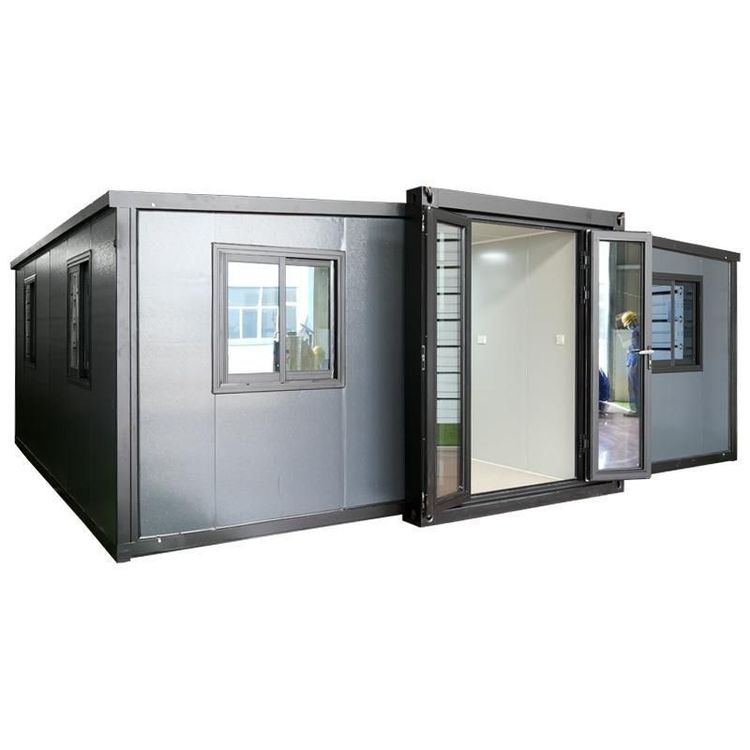
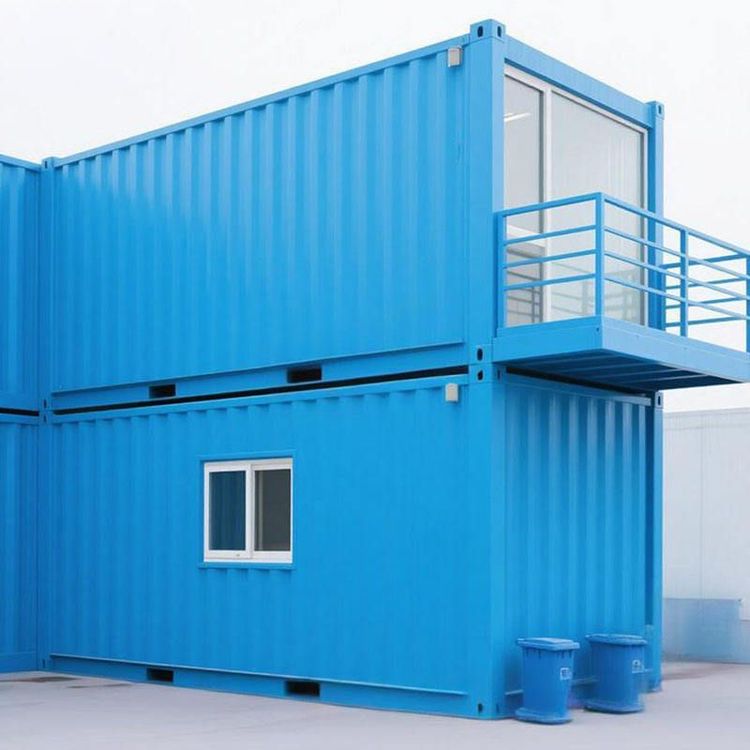
- Flexible House Types: The standard module size is 6m×3m×3m, allowing for free combination of house types through horizontal splicing or vertical stacking (up to 3 floors), adapting to the diverse needs of rural self-built houses, cultural tourism homestays, and more.
Application Scenarios
Prefabricated concrete houses have become a popular choice for rural self-built houses, commercial spaces, and cultural tourism projects due to their efficient, cost-effective, and environmentally friendly characteristics. They are particularly suitable for scenarios with high requirements for construction period, cost, and environmental protection.