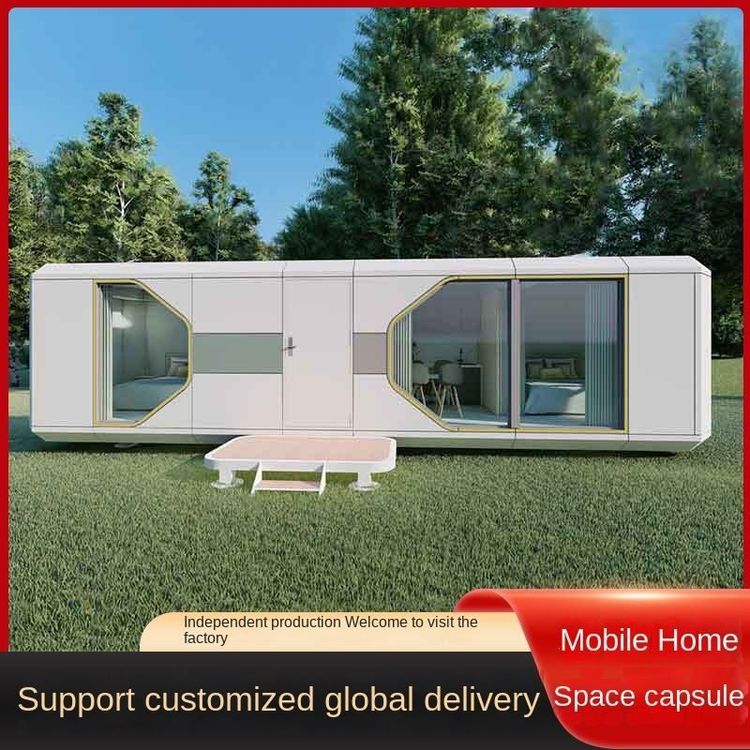
Prefabricated Component Houses in Guangdong
In Guangdong, prefabricated component houses (modular buildings) are developing rapidly, characterized by innovative production models, significant technological advantages, expanding industrial scale, and diverse application scenarios. However, they also face challenges such as differences in standards, high certification costs, and logistical bottlenecks.

Production Model: The "factory-made parts, on-site assembly" model is adopted, where buildings are disassembled into independent modules, manufactured in factories, and then transported to the site for assembly. For example, the Shenzhen Zhongjian Hailong Intelligent Construction Industrial Park achieves parallel operations through automated production lines and three-dimensional warehouses, with an annual delivery capacity of 20,000 to 30,000 modules, significantly improving production efficiency.
Technological Advantages:
- Reduced Construction Time: The construction period is reduced by more than 50%-60% compared to traditional buildings. For instance, a social housing project in Shenzhen, assembled from 6,028 concrete modules, had its completion and delivery time shortened from 2.5-3 years to just 1 year; the Guangzhou Huadu District Police Station office building was delivered in less than a month from module hoisting to completion.
- Controllable Quality: Module curing is completed in factories, avoiding weather interference, achieving millimeter-level production precision, and ensuring structural safety equivalent to that of traditional cast-in-place buildings.
- Environmental Protection and Energy Efficiency: Solid waste emissions throughout the life cycle are reduced by 75%, on-site workers are reduced by 70%, and dust, noise, and construction waste are significantly reduced, aligning with the trend of green building development.
Industrial Scale:
- Guangdong enterprises lead the research and development of modular building technology systems. For example, Guangzhou released the country's first unified modular building technology system, categorizing it into four major types and verifying its seismic performance.
- Outstanding export performance: In the first four months of 2026, the Guangzhou Customs District exported movable houses worth 1.4 billion yuan, a year-on-year increase of 38.1%; enterprises across the country exported movable houses worth 1.68 billion yuan through Shenzhen ports, a year-on-year increase of 19.6%, with products sold to more than 150 countries and regions.
Application Scenarios:
- Residential Sector: The social housing project in Shenzhen has accommodated more than 2,000 households, utilizing modular assembly technology to achieve rapid delivery and large-scale application.
- Public Buildings: The Guangzhou Huadu District Police Station office building has been put into use as a national "Good House" demonstration project, verifying the reliability of the technology.
Challenges and Recommendations:
- Standard Differences: Incompatible building codes across different countries and regions increase the cost of standard conversion for enterprises.
- Certification Costs: High international certification fees create financial barriers.
- Logistical Bottlenecks: The customs clearance process for concrete and steel-concrete composite structure modules is complex and time-consuming.
- Recommended Measures: Rely on digital platforms to achieve multi-standard adaptation and promote the alignment of Chinese standards with international ones; concentrate resources to break through key markets and establish an overseas certification resource-sharing platform; seek government policy support to reduce overseas expansion costs.