Prefabricated Component House
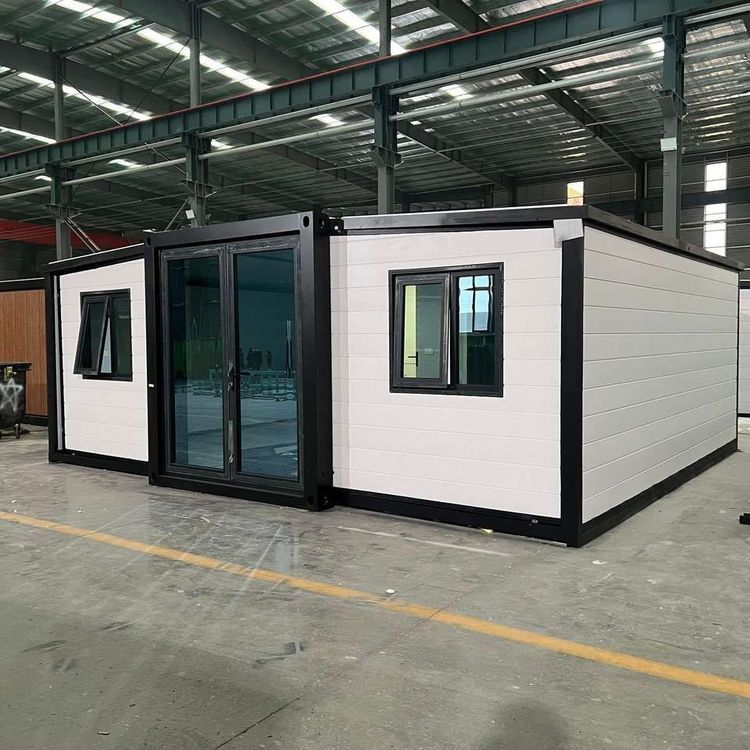
Prefabricated component houses, also known as prefabricated assembled buildings, are a form of construction that involves industrial production of building components and on-site assembly.

Main Types
They include panel-assembled, box-assembled, and frame-assembled types, with modular buildings representing a more highly integrated model. Panel-assembled types use prefabricated wall panels and floor slabs as core components, allowing for expanded usable area but with limited design flexibility. Box-assembled types combine prefabricated functional units, increasing construction speed by 50%-70%, but requiring higher standards for transportation and lifting equipment. Frame-assembled types focus on structural components such as beams and columns, offering strong adaptability.
Technologies and Components
The technologies encompass prefabricated concrete structures and steel structures, with components including prefabricated products such as beams, slabs, walls, and columns. For example, the Nanjing Jindi Yufang project adopts a prestressed prefabricated concrete assembled integral frame structure system, demonstrating the combined application of steel and concrete structures.
Advantages
- Efficient Construction: Construction periods are shortened by 30% compared to traditional methods. In Zhejiang, the main structure of a fully assembled residential building was completed in 7 days, while a case in Henan saw a house "assembled" in just 4 hours.
- Significant Environmental Benefits: Fujian Province has established industrial bases through policy support, achieving a reduction in construction waste by over 70%.
- Controllable Costs: In Henan, lifting costs are just over 300 yuan per square meter, with budgets for building villas in the tens of thousands of yuan.
- Superior Performance: Reinforced concrete structures offer a quality guarantee period of 70 years for the main structure, suitable for residential buildings, office buildings, and other scenarios, with a maximum height of 5 stories.
Disadvantages
- Design Limitations: Panel-assembled types are constrained by the dimensions of prefabricated components, resulting in lower design flexibility.
- Equipment Dependence: Box-assembled types require large-scale transportation and lifting equipment, increasing construction difficulty.
Market Situation
China's exports of prefabricated houses have seen significant growth. In the first four months of 2026, the Guangzhou Customs district exported 1.4 billion yuan worth of portable houses, a year-on-year increase of 38.1%; the Shenzhen port exported 1.68 billion yuan, a year-on-year increase of 19.6%, primarily to regions with strong overseas market demand.
Prefabricated component buildings, through the combination of industrial production and on-site assembly, offer outstanding advantages in terms of efficiency, environmental protection, and cost. However, they require a balance between design flexibility and equipment requirements. With technological advancements and policy support, their market application prospects are broad.