
Prefabricated Commercial Building Shops
Prefabricated commercial building shops are commercial structures constructed through factory prefabrication and on-site assembly, featuring short construction periods, lower costs, stable quality, and high flexibility.
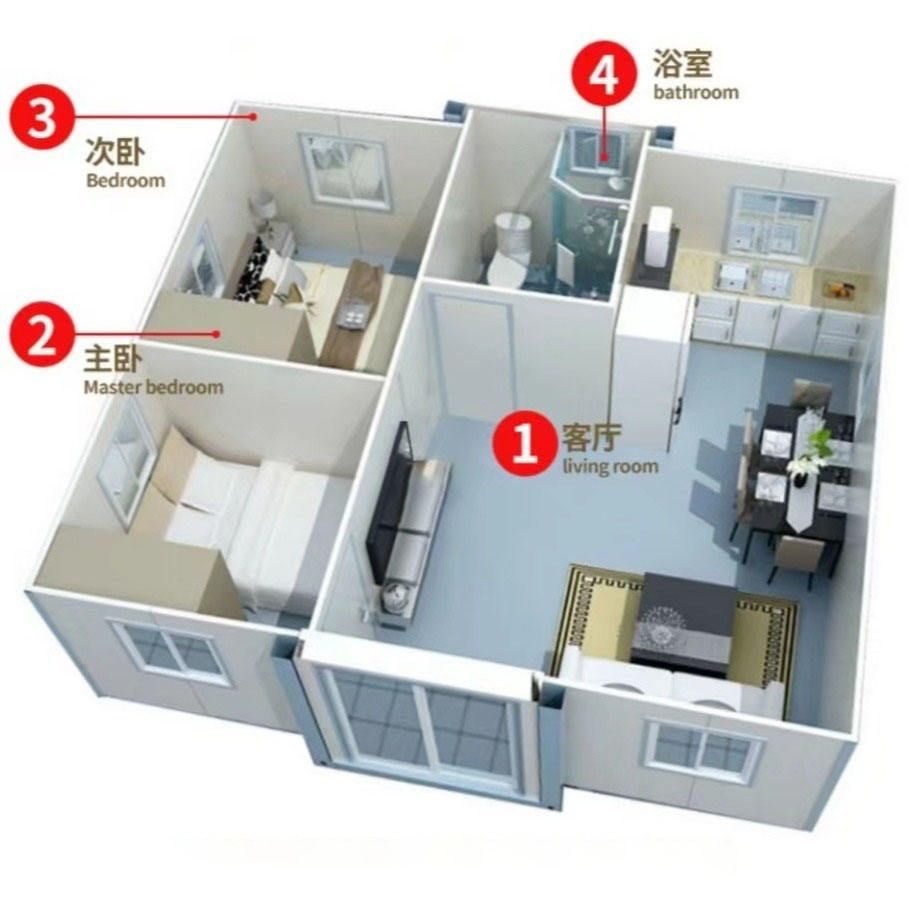
Application Scenarios and Typical Cases
Prefabricated commercial building shops are widely used in high-end shopping centers, transportation hubs, and fast-turnover commercial formats. For example, the Chengdu SKP project adopted 10 standardized modular shops, each with an area of 96 square meters. Over 95% of the processes were completed in the factory, including the main structure, exterior facade, and interior display. On-site assembly could be completed in as fast as one day, allowing brand merchants to move in with minimal setup. The project implemented partitioned barrier operations to enable simultaneous mall operation and construction, minimizing the impact on customer flow and business operations. Additionally, shop renovations at transportation hubs such as airports and high-speed rail stations, as well as fast-turnover formats like cultural and creative businesses, tea shops, and pop-up retail, have a strong demand for modular spaces.
Materials and Structural Safety
The main materials include cement, sand, gravel, and steel bars. Cement serves as the binding material, while steel bars are used to enhance tensile strength and prevent cracking. The structural types typically include frame structures (composed of beams and columns) or slab structures (formed by assembling large prefabricated slabs), both of which undergo rigorous calculations and testing to ensure safety. For example, the Chengdu SKP project ensured the overall stability of the building through factory-prefabricated components and precise on-site assembly.
Manufacturing Process and Quality Control
The manufacturing process is divided into six stages:
- Design Phase: Architectural design is carried out based on usage requirements and site conditions, including floor plan layout, structural calculations, and component sizing.
- Mold Making: Molds are made using steel or wood to ensure precise component shapes.
- Concrete Mixing: Cement, sand, gravel, and water are mixed in proportion, with admixtures added as necessary to improve performance.
- Pouring and Vibrating: Concrete is poured into the molds, and vibrating is used to remove air bubbles and ensure density.
- Curing: Components are cured in a suitable environment to gradually harden and reach the designed strength.
- Transportation and Assembly: The cured components are transported to the site and precisely assembled using lifting equipment to ensure firm connections.
The factory environment is controlled, ensuring consistent component quality, and strict testing ensures compliance with relevant standards.
Price Range and Suppliers
Prices vary significantly depending on materials and configurations: The price of finished prefabricated cement houses starts at 1100 yuan per square meter; prices for finished shop houses provided by other suppliers range from 200 yuan per square meter to 4700 yuan per unit. Major suppliers include Hebei Zhongzhu Housing Technology Co., Ltd., Yuyao Yuanxiang Mobile House Factory, and Shandong Yunsen Integrated Housing Co., Ltd., which can provide customized products and services.



