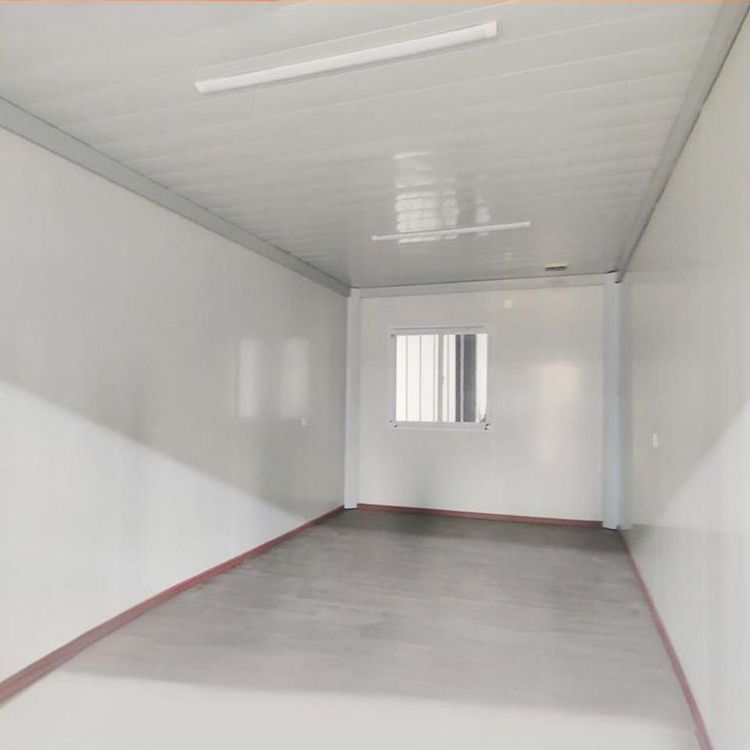
Prefabricated Cement Mobile Toilet
The prefabricated cement mobile toilet does not use cement as its primary structural material. Instead, it adopts a 'factory manufacturing + on-site assembly' model, where core components are prefabricated in the factory and then assembled on-site, fundamentally differing from traditional toilets constructed with on-site cement work. Here is a detailed analysis:

1. Structural System: Light Steel or Steel Frame Replacing Cement Pouring
The main structure of a prefabricated public toilet typically employs a light steel keel or steel frame system, which is welded and assembled into standardized box units in the factory according to design drawings. This structure is connected using bolts or welding, eliminating the need for on-site cement pouring. It ensures structural strength while avoiding the long wet-work cycle and environmental susceptibility associated with cement construction. For example, steel frames offer superior seismic performance compared to traditional cement structures and are lighter in weight, facilitating transportation and lifting.
2. Enclosure System: Diverse Materials Breaking Away from Cement's Monotony
Outer enclosure materials can include simulated stone, simulated wood grain, metal curtain walls, etc., with inner layers treated for insulation and moisture resistance. These materials undergo high-precision processing through factory prefabrication, resulting in high surface flatness and customizable appearances, such as simulated marble textures or wood grain effects, completely breaking away from the monotonous and rough image of traditional cement toilets. Additionally, modular design supports rapid replacement of damaged components, significantly reducing maintenance costs.
3. Functional Core: Factory Pre-assembly Reducing On-site Workload
Core functional modules, including sanitary fixtures, partitions, and water supply and drainage systems, are all pre-assembled and tested in the factory. On-site, only water and electricity connections are required for operation. For example, squat toilets and urinals are bolted to the steel frame, and the piping system uses quick connectors, avoiding potential leakage issues common in traditional toilet installations. This 'plug-and-play' model drastically shortens the construction period, with traditional public toilets taking 2-3 months and prefabricated ones only about 2 weeks.
4. Treatment System: Flexibly Adapting to Different Sewage Disposal Needs
Depending on site conditions, prefabricated public toilets can be equipped with various sewage disposal methods, such as pipeline connections, packaged systems, and water-flushing circulation systems, without relying on traditional cement septic tanks. For instance, in areas without municipal sewage networks, a packaged treatment system can be used to seal and store feces for regular removal. In ecologically sensitive areas, a water-flushing circulation system can be selected, achieving zero sewage discharge through biodegradation technology. This flexibility makes them suitable for various scenarios, including urban streets, tourist attractions, and temporary events.
Summary of Core Advantages: Prefabricated public toilets achieve short construction periods, controllable quality, and flexible space through industrial production models. Their materials primarily consist of steel structures, fiberglass, and metals, with cement possibly used only as local filling or decorative material, not as a main structural component. This design concept not only enhances the practicality and aesthetics of public toilets but also provides new ideas for the rapid renewal and sustainable development of urban public facilities.