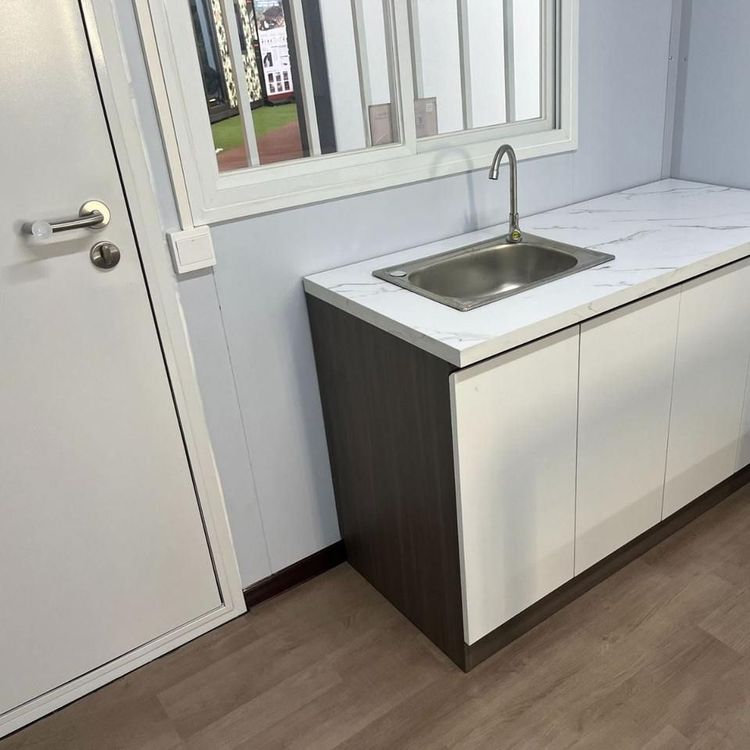
Prefabricated Cement Houses in Tibet
Prefabricated cement houses are an important solution for construction on the Tibetan Plateau, offering multiple advantages in terms of technology, materials, applications, and market potential.

Significant Technological Advantages
Prefabricated cement houses adopt a factory-based manufacturing model, where standardized production of structural components, walls, pipelines, and other parts is completed in the factory, followed by rapid on-site assembly. This approach effectively circumvents the adverse effects of harsh on-site conditions in Tibet, such as low temperatures, strong winds, and transportation difficulties, enabling all-weather efficient construction. Modular design facilitates transportation and assembly, significantly reducing logistics costs and construction periods. Factory prefabrication ensures component precision and consistent quality, minimizing on-site errors. High integration allows for simultaneous embedding of water, electricity, and heating systems, enhancing overall performance. Additionally, the structural system has undergone specialized validation for high-altitude wind pressure and freeze-thaw cycles, demonstrating excellent seismic resistance and durability. Some products incorporate passive energy-saving designs, reducing energy dependence in high-altitude regions and aligning with sustainable development principles.
Superior Material Performance
The materials used for prefabricated houses in Tibet, such as LC75 lightweight aggregate concrete, typically have a density ranging from 1400 to 1600 kilograms per cubic meter, significantly lower than the 2400 kilograms per cubic meter of ordinary concrete. This low-density characteristic reduces the load on building foundations, lowers inertial forces during earthquakes, and enhances overall seismic resilience. Simultaneously, its porous structure reduces the material's thermal conductivity coefficient, providing better wall insulation than ordinary concrete, which helps minimize indoor heat loss and adapt to the severe cold climate of the plateau. Furthermore, pre-wetted aggregates continuously release moisture, providing internal curing for cement hydration and reducing reliance on external watering for curing, making it suitable for Tibet's dry and low-humidity construction environment.
Wide Range of Applications
Prefabricated cement houses meet various functional requirements, including residential, office, and medical uses, and are widely applied in projects such as supporting facilities along the Qinghai-Tibet Railway, border outposts, and ecological monitoring stations. For small standalone buildings like border outposts or communication base stations, often constructed on hillsides or mountain passes where mechanical transportation is challenging, the use of LC75 lightweight aggregate concrete enables the prefabrication of lightweight wall panels and floor slabs, facilitating manual handling and rapid assembly. For residential buildings, their insulation performance reduces the thickness of additional insulation layers, increasing usable indoor space.
Rapid Market Development
The prefabricated building market in Tibet is experiencing rapid growth, with the construction period advantage of prefabricated buildings being particularly prominent. Compared to the 14-18 months required for traditional cast-in-place construction, prefabricated solutions take only 6-9 months, making full use of the limited construction season on the plateau. Tibet Zangjian Technology Co., Ltd., as Tibet's first and only national-level prefabricated building industrial base, offers an integrated solution of factory prefabrication and on-site assembly, shortening construction periods by over 50%. Leading domestic prefabricated integrated housing manufacturers, such as China Construction Integration Technology Co., Ltd., possess a high-altitude dedicated building research and development system and automated production lines. Their products have passed national green building material certifications and offer full-process service capabilities from design and production to construction.