
First Floor of Prefabricated Cement House
The first floor of a prefabricated cement house typically refers to a single-story building constructed using prefabricated cement components, characterized by modularity and rapid construction.
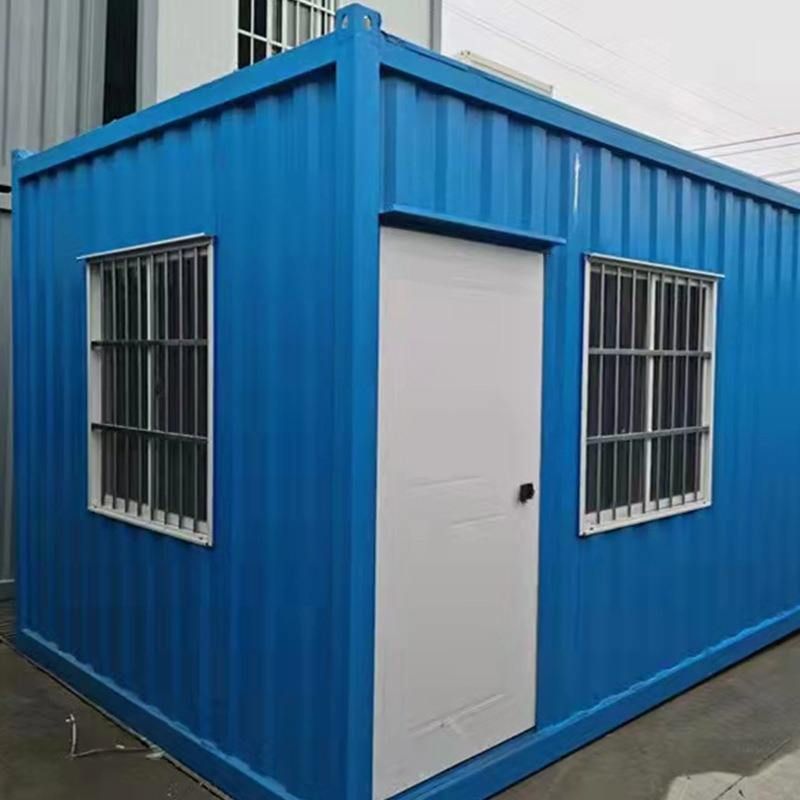
Construction Methods and Material Composition
Prefabricated cement components are manufactured in advance at factories, including standardized parts such as wall panels, floor slabs, and roof panels. These components are transported to the site and assembled using bolts or welding. The core material is primarily cement, often using ordinary Portland cement or lightweight cement variants, with steel mesh or frameworks embedded to enhance tensile strength. Some components incorporate waterproof layers (e.g., polystyrene boards) or insulation layers (e.g., mineral wool) to adapt to different environments. The structural forms are divided into panel and frame types: panel structures are assembled directly using large wall and roof panels; frame structures first erect cement or steel frameworks, which are then filled with wall panels. Roofs are typically flat or slightly sloped, and floors often use cement with an added moisture-proof layer.
Construction Process and Pricing
The construction process includes design planning, component production, transportation, on-site lifting, and fixation, emphasizing standardization and efficiency. Prices vary by region, brand, and specifications. For example, products from Xinsheng Cement Products Co., Ltd. in Biyang County, Zhumadian, Henan, range from 300-350 yuan per square meter; Xuweihongtu Trading Co., Ltd. in Zhuozhou, Baoding, Hebei, offers prices at 260 yuan per square meter; and Yongchang Assembly Prefabricated Component Co., Ltd. in Chengde, Hebei, provides options at 106 yuan per square meter or 3980 yuan per set.
Advantages and Disadvantages Analysis
Advantages:
- Standardization and Repeatability: Factory production ensures consistent component quality, reducing on-site construction errors.
- Rapid Construction Speed: Short on-site work time allows the main structure to be completed within 4 hours, with the overall move-in period shortened to two or three days.
- Lower Cost: The unit price is approximately 300 yuan per square meter, with the total cost of a two-story house about 50% lower than that of a traditional brick house.
Disadvantages:
- Poor Earthquake Resistance: Low applicability in earthquake-prone areas, with a tendency to collapse during earthquakes.
- Inadequate Sound and Thermal Insulation: Hot in summer and cold in winter, with poor sound insulation.
- Leakage at Joints: Long-term use may lead to steel corrosion, affecting structural lifespan. The theoretical lifespan is 70 years but depends on construction quality.
- Low Design Flexibility: Difficult to meet personalized needs, such as smart home installations or garage renovations.



