
Prefabricated Building Houses
Prefabricated building houses are a form of construction that involves industrial production of building components and on-site assembly, also known as prefabricated assembled buildings or modular buildings.
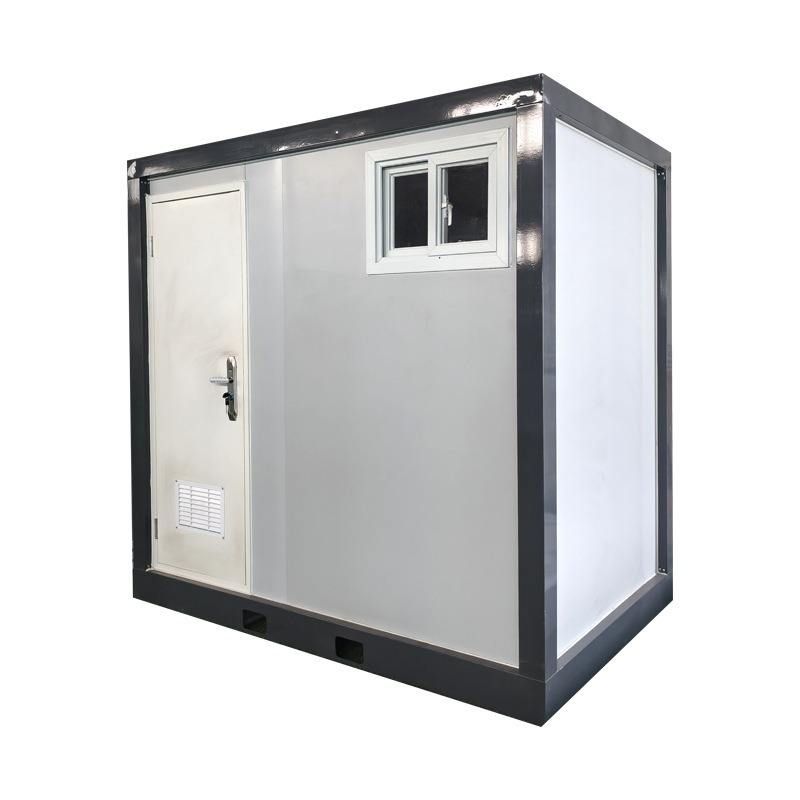
Main Types and Technologies
Prefabricated building houses are mainly divided into three categories: panel-assembled, box-assembled, and frame-assembled. The technologies cover prefabricated concrete structures and steel structures, with components including prefabricated products such as beams, slabs, walls, and columns. Modular buildings represent a higher level of integration, where the building is broken down into independent modules, manufactured in factories, and then transported to the site for assembly. For example, the Nanjing Jindi Yufang project adopted a prestressed prefabricated concrete assembled integral frame structure system, demonstrating the application of frame-assembled construction.
Core Advantages
- Shortened Construction Period: The construction period is significantly shorter than traditional methods. For some projects, the completion and delivery time has been reduced from 2.5-3 years to 1 year, with on-site labor reduced by about 50%. Modular building construction periods can be shortened by more than 60%. Overall, the construction period for prefabricated buildings is 30% shorter than traditional methods.
- Reduced Pollution: Factory parallel operations combined with automated production lines significantly reduce on-site noise, dust, construction waste, and traffic congestion. Fujian Province has established industrial bases through policy support, achieving a reduction in construction waste of over 70%.
- Controllable Quality: Component production is similar to industrial products, with each 'building block' having a detailed 'ID card' that records project name, product model, and production date. Steel bar positioning accuracy is measured in millimeters, with strict error control.
- Easy Maintenance: Maintenance is flexible, and application scenarios continue to expand, adapting to diverse needs.
Development History and Market Status
China's prefabricated concrete technology began in the 1950s, initially used for factory and residential construction. In the 1970s, driven by the 'three modernizations' policy in construction, technical systems such as large-panel structures and box structures were formed. By the mid-1980s, the industry stagnated due to cost and quality issues. In the 21st century, it has revived due to production efficiency and environmental advantages. Companies like Vanke Group have developed prefabricated shear wall residential structural systems and applied prefabricated frame technology. Currently, Chinese-made prefabricated houses are selling well overseas. In the first four months of 2026, Guangzhou Customs exported 1.4 billion yuan worth of modular houses, a year-on-year increase of 38.1%. Shenzhen Port exported 1.68 billion yuan, a year-on-year increase of 19.6%. It is predicted that the global modular building market will exceed 142.8 billion USD by 2030.
Forms and Comparative Advantages
Prefabricated building houses mainly come in three forms: steel, concrete, and wood. Chinese companies have comparative advantages in steel and concrete: steel structures are lightweight and suitable for ocean transportation and high-rise buildings; concrete structures are closer to traditional living experiences and have high acceptance in the domestic market.



