
What Does Prefabricated Block House Mean
A prefabricated block house is a form of construction that adopts factory-based production methods, where the main building components are prefabricated and then assembled on-site. It is also known as modular construction or prefabricated construction. The core lies in breaking down the building into independent modules. All components, including walls, floors, roofs, plumbing and electrical lines, and waterproofing layers, are manufactured in the factory. They are then transported to the construction site and assembled to achieve an efficient construction mode of 'building like stacking blocks'.
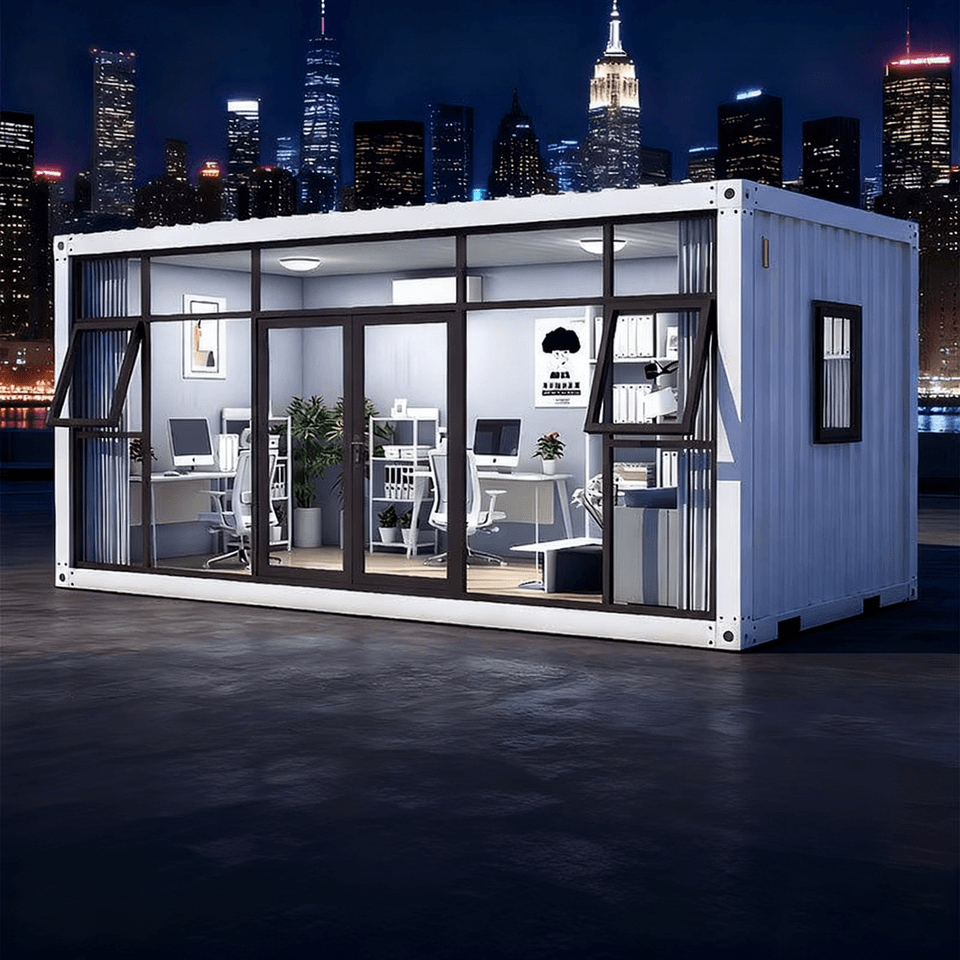
Compared with traditional buildings, prefabricated block houses have significant advantages:
- High construction efficiency: Factory-standardized production and on-site assembly proceed simultaneously, greatly shortening the construction period. For example, a 100-square-meter prefabricated house can be completed in just 1-2 months, while a traditional brick-and-mortar house takes more than 6 months.
- Strong cost controllability: Factory mass production reduces material waste, and the shortened on-site construction period reduces labor costs, making the overall cost more competitive.
- Outstanding environmental protection and energy efficiency: Factory-based production reduces on-site dust, noise, and waste pollution. Moreover, through optimized design, the overall energy consumption of the building can be reduced by more than 50%, meeting green building standards.
- Combination of quality and flexibility: The factory environment ensures component accuracy and avoids on-site construction errors. The modular design supports flexible adjustment of building functions and can even be relocated or reused as a whole.
Common types and application scenarios:
Prefabricated block houses cover various forms such as modular houses, prefabricated panel houses, container houses, and wooden prefabricated houses. Their application areas are wide, including rural self-built houses (meeting the demand for rapid construction), tourist resort homestays (adapting to personalized design), urban temporary housing (such as construction site dormitories), and post-disaster reconstruction (quickly restoring residential functions). For example, in post-disaster reconstruction, prefabricated houses can quickly set up temporary shelters to provide safe accommodation for disaster-stricken people.
Technical principles:
Prefabricated block houses achieve efficient construction through the full-chain collaboration of 'design - production - transportation - assembly'. In the design stage, it is necessary to coordinate module division and connection nodes. In the production stage, automated equipment is used to ensure component accuracy. In the transportation stage, the module size and road restrictions need to be considered. In the assembly stage, rapid connections are achieved through bolts or welding, ultimately forming a complete building structure. This model represents the development direction of building industrialization and is expected to replace traditional construction methods in more fields in the future.



