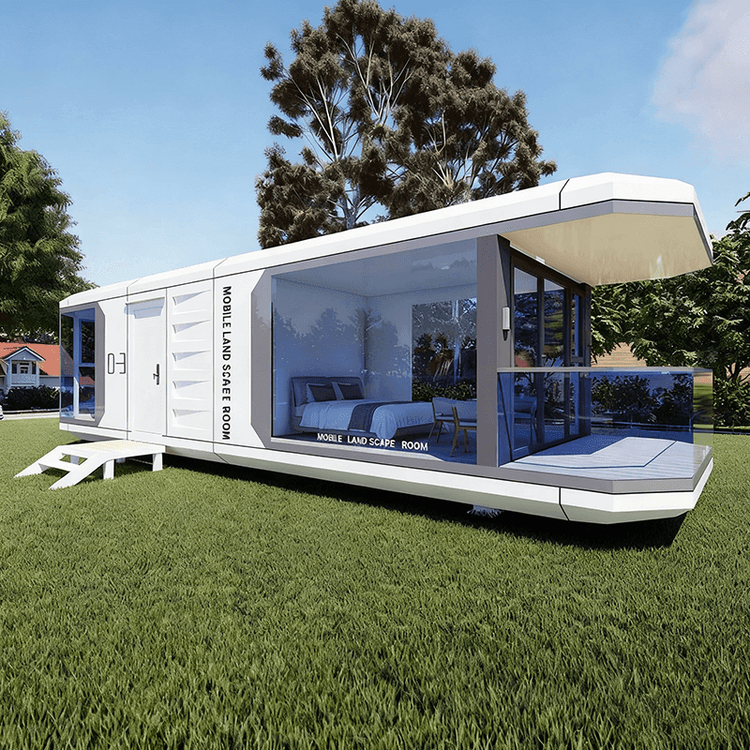
Prefabricated Assembly Simple House
A prefabricated assembly simple house is a form of construction that involves industrial production of building components and on-site assembly. It is a type of prefabricated building, offering significant advantages such as shortened construction periods and reduced pollution.

Technical Composition and Component Types
The technical core of a prefabricated assembly simple house encompasses two major systems: prefabricated concrete structures and steel structures. Its components are produced in factories using standardized processes, primarily including prefabricated beams, slabs, walls, and columns. For example, in prefabricated concrete structures, components such as prefabricated shear walls and composite floor slabs are manufactured using high-precision molds to ensure dimensional accuracy. The steel structure system uses prefabricated steel beams and columns as the framework, combined with lightweight panels to form walls and floors. After processing in the factory, these components are transported to the construction site for assembly, avoiding the wet construction processes of traditional cast-in-place methods and significantly improving construction efficiency.
Construction Process and Advantages
The construction process centers around “assembly,” typically involving the following steps:
- Foundation Construction: Pre-cast concrete foundations are poured to provide stable support for component installation.
- Component Assembly: Workers connect prefabricated wall and floor modules using bolts or welding, gradually constructing the three-dimensional structure of the house.
- Joint Treatment: Seal and reinforce the connections between components to ensure structural safety.
- Roof and Finishing: Complete roof installation and interior and exterior decoration to form a complete building.
Advantages:
- Shortened Construction Period: Parallel factory production and on-site assembly can reduce the construction period by 30%-50% compared to traditional methods.
- Environmental Protection and Energy Efficiency: Reduces on-site dust, noise, and construction waste; modular construction can even reduce construction waste by over 70%.
- Quality Control: Factory environments ensure component precision and reduce human errors.
- Resource Efficiency: Standardized design promotes component reuse and reduces material waste.
Development History and Current Applications
China's prefabricated concrete technology began in the 1950s, initially applied in factory and residential construction, but stagnated due to technological limitations. In the 21st century, with increasing environmental demands and production efficiency, the technology has revived. For example, the development of prefabricated shear wall residential structural systems has driven the industrialized construction of high-rise residential buildings. Additionally, regions like Fujian Province have established industrial bases through policy support to promote modular construction, achieving waste reduction and resource recycling, serving as typical examples of the development of prefabricated buildings.