
Prefabricated Assembly of Houses
Prefabricated assembly of houses is a construction method that involves the industrial production of building components and their on-site assembly, offering advantages such as shortened construction periods, reduced pollution, improved efficiency, and enhanced quality and safety.
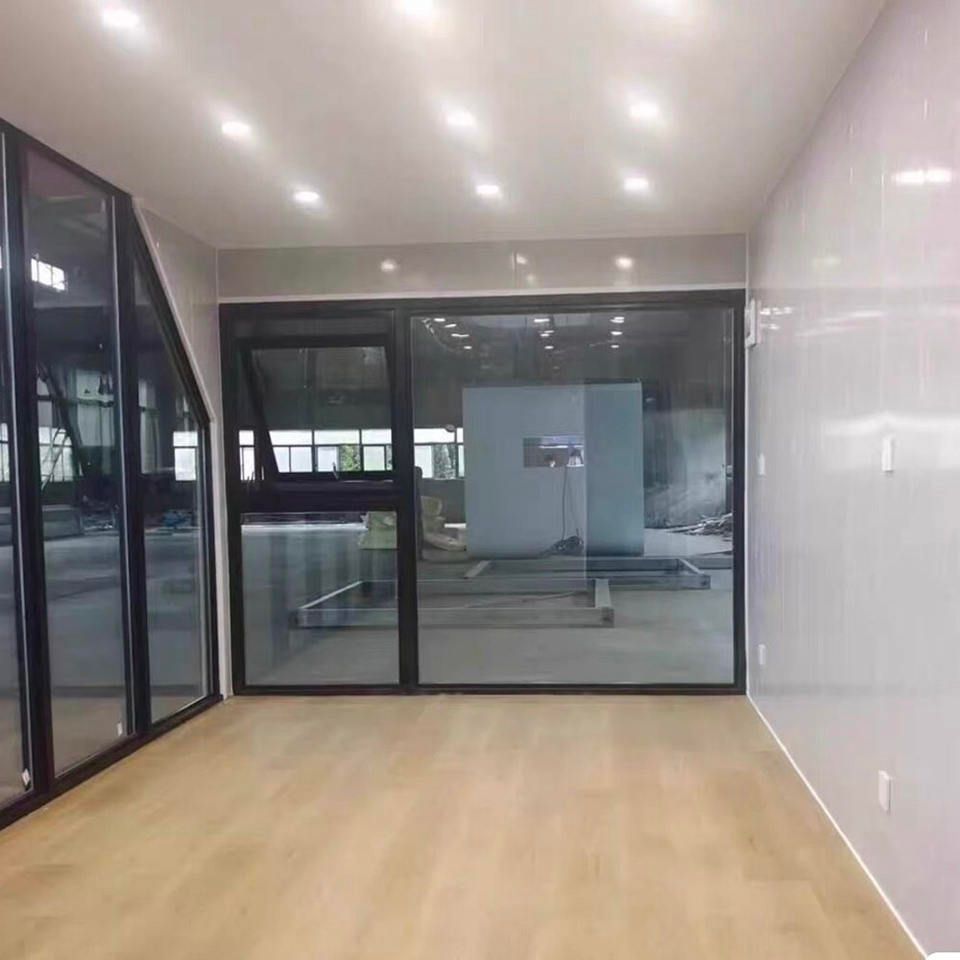
Definition and Characteristics
Prefabricated assembly of houses, also known as prefabricated construction, shifts a significant portion of on-site work to factories. Building components and accessories, such as floor slabs, wall panels, stairs, and balconies, are manufactured in factories and then transported to construction sites for assembly using reliable connection methods. This approach achieves industrialization, standardization, and large-scale production in construction, enhancing efficiency and quality.
Main Types and Technologies
The primary types of prefabricated construction include panel-based, box-based, and frame-based assemblies. Technologies encompass prefabricated concrete structures and steel structures, with components including prefabricated beams, slabs, walls, and columns. Among them, modular construction represents a higher level of integration in prefabricated construction, where buildings are broken down into independent modules, manufactured in factories, and then transported to construction sites for assembly.
Advantages and Applications
Prefabricated construction offers significant advantages. Shortened construction periods: Box-based assembly can increase construction speed by 50%-70% through the combination of prefabricated functional units; modular construction can reduce construction cycles by over 60% compared to traditional methods. Reduced pollution: Factory-based production minimizes noise and dust pollution generated by on-site operations. Improved labor productivity and quality and safety standards: Industrial production ensures the precision and quality of components, enhancing the overall performance of buildings. China's prefabricated concrete technology originated in the 1950s, initially applied in factory and residential construction. In the 21st century, it has experienced a resurgence due to its production efficiency and environmental benefits, with companies like Vanke Group developing prefabricated shear wall residential structural systems and applying prefabricated frame technologies in engineering projects.
Policy Support and Market Prospects
Policies strongly support the development of prefabricated construction. In September 2016, the General Office of the State Council issued the "Guidelines on Vigorously Developing Prefabricated Construction," highlighting it as a major transformation in construction methods. Local governments have also introduced relevant policies, such as Hainan Province aiming for 80% of newly started construction projects to be prefabricated by 2025, and Guangzhou implementing prefabricated construction for 100% of residential land parcels auctioned from 2026 onwards. Additionally, Chinese-made prefabricated houses are selling well overseas, indicating broad market prospects.



