
Prefabricated Assembled Modular Housing
Prefabricated assembled modular housing is a form of construction that involves industrial production of building components and on-site assembly, also known as prefabricated construction or modular construction. The following provides a detailed introduction in terms of construction methods, component types, technical systems, advantages, and application cases:
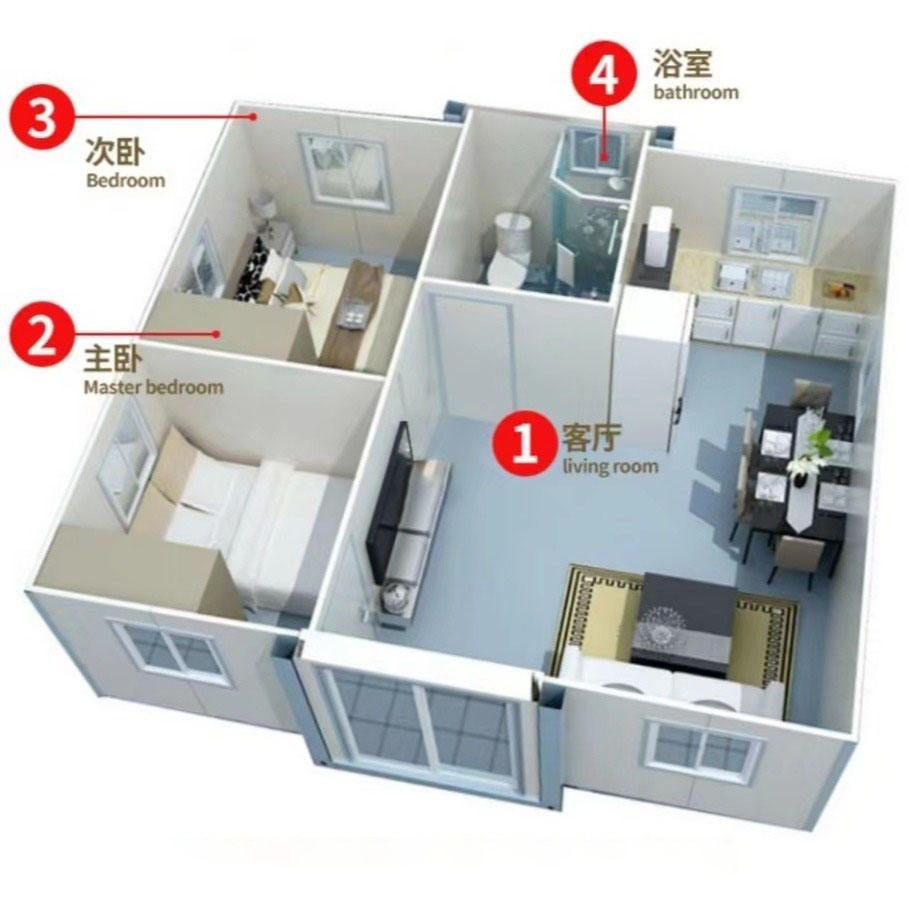
Construction Methods: The entire building is broken down into independent modules. All components, including ceilings, floors, and water and electricity pipelines, are manufactured in a factory and then transported to the construction site for assembly, much like building with building blocks. For example, rural self-built houses can be constructed using prefabricated components, with the main structure completed in just 14 days.
Component Types: These include prefabricated products such as beams, slabs, walls, and columns, primarily categorized into panel-based, box-based, and frame-based assembly types. Box-based assembly uses complete spatial modules as units, while frame-based assembly supports building loads through prefabricated structural systems.
Technical Systems: These encompass two main directions: prefabricated concrete structures and steel structures. Concrete structures are formed by connecting prefabricated components on-site, while steel structures utilize steel components processed in factories for rapid assembly. Both rely on high-precision manufacturing techniques to ensure building quality.
Core Advantages:
- Reduced Construction Time: The construction period is reduced by more than 60% compared to traditional buildings. The Shenzhen affordable housing project used 6,028 concrete modules to compress the completion time from 2.5-3 years to just 1 year.
- Reduced Pollution: Factory production reduces on-site noise and dust by more than 70%, significantly lowering the amount of construction waste. The industrial base in Fujian Province has achieved a waste reduction of over 70% through policy support.
- Controllable Quality: Each component is equipped with a detailed 'ID card' recording the project name, product model, and production date. Steel bar positioning accuracy reaches the millimeter level, with error control far superior to on-site construction.
- Convenient Maintenance: Modular design supports rapid local repairs, with application scenarios extending from residential buildings to temporary structures and commercial spaces.
Typical Cases:
- Vanke Group has developed a prefabricated shear wall residential system, while the Nanjing Jindi Yufang project uses a prestressed prefabricated concrete frame structure.
- The Shenzhen affordable housing project has housed over 2,000 households, with five nearly 100-meter residential buildings assembled from concrete modules.
- China's exports of prefabricated houses have grown significantly, with the Guangzhou Customs district achieving an export value of 1.4 billion yuan in the first four months of 2026, a year-on-year increase of 38.1%.
- Modular container houses feature brick exterior walls and support free assembly; rural self-built houses achieve rapid connection through 5-ton foundation piles and mortise-and-tenon beams.



