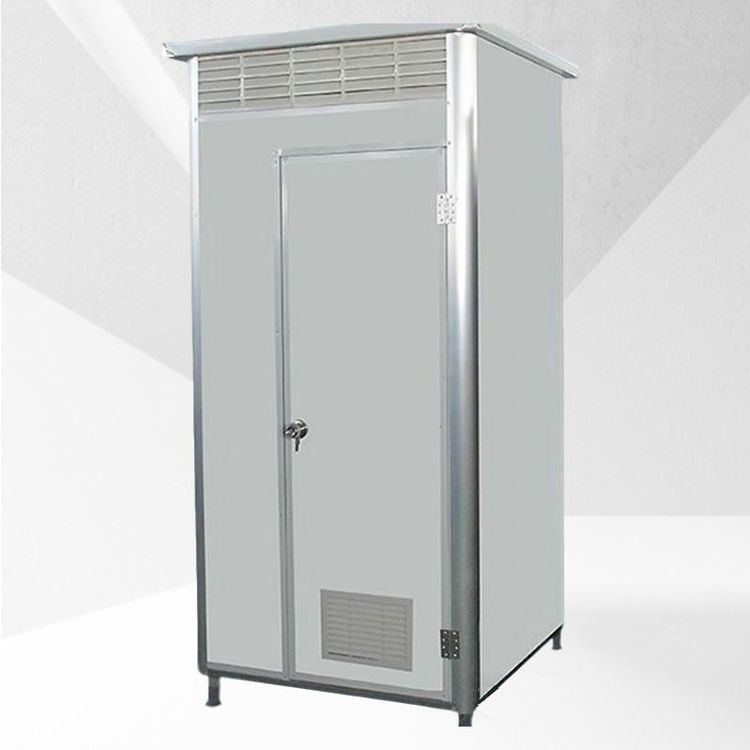
Portable Toilet with Toilet Facilities
A portable toilet with toilet facilities is a facility that can be moved as a whole and set up in fixed or temporary locations to provide toilet services for the public and customers.
I. Basic Components A portable toilet with toilet facilities generally consists of multiple parts. The fecal sewage storage tank (or fecal sewage treatment device) is one of the core components, used to collect and treat the sewage and feces generated from using the toilet, preventing direct discharge from causing environmental pollution. The floor provides a stable standing and moving space for users, ensuring safety during use. Sanitary ware includes toilets or squat pans to meet different usage habits. The walls serve to enclose and isolate, protecting the privacy of users. Washing equipment such as sinks allows users to clean their hands after using the toilet. The water tank stores water for flushing, ensuring the cleanliness and hygiene of the toilet. The roof can shield against wind and rain, protecting the internal facilities from the external environment. The mobile device enables the toilet to be moved as a whole according to needs, improving its flexibility of use.
II. Classification Methods In terms of structural form, they can be divided into single-structure portable toilets and composite-structure portable toilets. The single-structure type is relatively simple and highly independent; the composite-structure type may be composed of multiple parts and may have more complex and diverse functions. According to the method of movement, there are hoisting and handling-type portable toilets, which usually require hoisting equipment or manual handling for movement; and powered and towed-type portable toilets, which can be moved by power drive or being towed by other vehicles, making movement more convenient. Based on the sewage treatment method, they can be classified as water-flush and non-water-flush suction-type portable toilets, circulating water-flush portable toilets, and dry-packing portable toilets. The water-flush type maintains toilet cleanliness through water flow flushing; the non-water-flush suction type uses suction equipment to treat fecal sewage; the circulating water-flush type recycles and treats sewage for reuse; and the dry-packing type packs and treats feces without the need for water flushing.
III. Practical Application Cases For example, the lightweight plastic portable toilet, a 2026 new model, features a lightweight design for easy movement and installation. The use of signage clearly indicates the toilet's usage status and other information. The ventilation design effectively removes odors. The large-capacity clean water tank meets usage needs for an extended period. The gravity-flush sewage tank is equipped with a foot pump for easy operation. There is also a portable toilet made by a young man using a water storage tank and a pallet. By fixing universal wheels at the bottom of the pallet for movement, placing and modifying the water storage tank, and installing a toilet, a sink, a showerhead, and other facilities, it meets specific usage needs. In addition, the portable commode prepared for the elderly and pregnant women at home makes it convenient for those with mobility issues to use the toilet at night, reflecting its humanized design features.