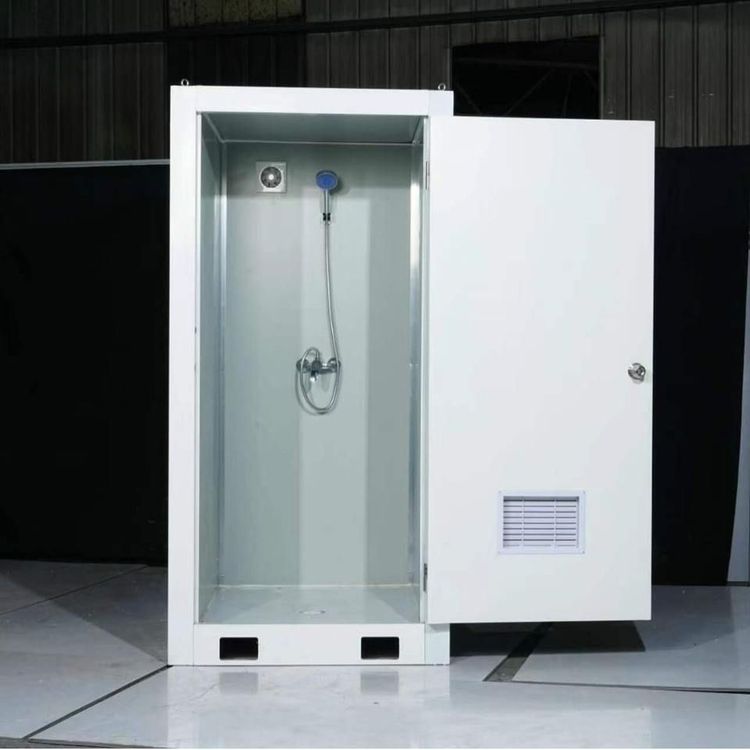
Portable Toilet with Large Barrel Design
Portable toilets do indeed feature designs that use large barrels as the core structure, but these are mostly seen in DIY scenarios or specific functional modules, with standardized enterprise products rarely using large barrels directly as the main structure.

Specific Application Forms of Large Barrels in Portable Toilets
Main Structure in DIY Scenarios
In some personal invention cases, large barrels are directly transformed into the main body of portable toilets. For example, there are cases where cut-out large water barrels are used as the core framework of the toilet, with universal wheel bases installed to enable mobility. Inside, wooden strip frameworks are used to reinforce the structure, and aluminum-plastic panels are applied on the outer layer to enhance aesthetics. Such designs typically integrate functions like toilets and showers, and use green barrels or other containers as water sources, forming a complete mobile sanitation unit.Waste Storage Module
In the common structure of mobile toilets, the fecal and sewage storage tank is one of the core components. Some simple or low-cost designs directly use large-capacity barrels (such as plastic or metal barrels) as waste storage devices, with sealed designs to prevent odor leakage. These barrels are usually detachable for easy regular cleaning or replacement.Water Supply Module
The water supply system of some mobile toilets also uses large barrels as containers. For example, by connecting a water pump and pipes, water from the storage barrel is delivered to the toilet flushing device or showerhead to meet basic water needs.
Differences Between Standardized Enterprise Products and Large Barrel Designs
Standardized mobile toilets produced by enterprises typically use steel frameworks paired with materials like galvanized steel sheets or fiberglass-reinforced plastics to enhance structural strength and durability. Large barrel designs are rarely used as the main structure in such products but may exist as auxiliary modules (such as for waste storage or water supply). The advantages of standardized products lie in their modular design, strong wind and earthquake resistance, and compliance with public health standards, while DIY products modified from large barrels focus more on flexibility and cost savings.
Applicable Scenarios and Limitations
Portable toilets modified from large barrels are suitable for temporary events, emergency rescue, or personal use scenarios. Their advantages include low cost, simple fabrication, and rapid deployment. However, due to material strength limitations, long-term use may pose risks of structural deformation, and their sealing and hygiene conditions may not meet the standards of standardized products. For long-term use or to meet high-traffic demands, it is recommended to choose standardized mobile toilets produced by enterprises.