
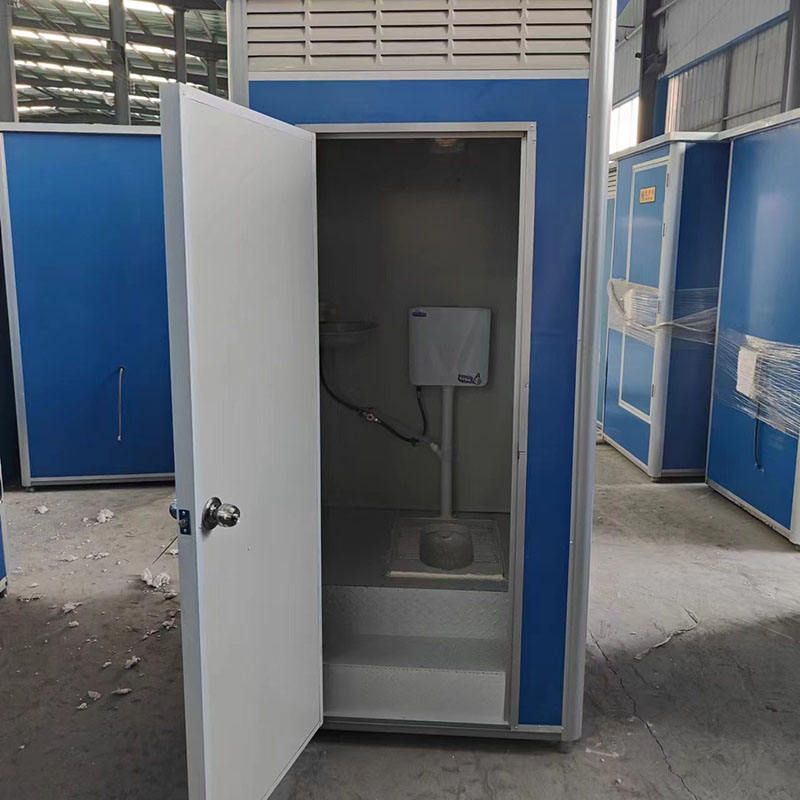
Portable Toilet - Simple and Small Toilet
There are various ways to make simple portable toilets. Below are several common types and their key manufacturing points:
I. Water Storage Tank Modification Type This type of portable toilet uses a water storage tank as its core material, achieving functional integration through cutting and assembly. Manufacturing steps are as follows:
- Basic Frame Construction: Fix universal wheels at the bottom of the拖板 (trailer board) to ensure overall mobility. The trailer board, as the load-bearing platform, should be made of a material with strong load-bearing capacity (such as metal or thickened plastic).
- Water Storage Tank Processing: Place and cut the water storage tank to form an open tank body. Stack and fix two tank bodies to increase internal space. When cutting, reserve a doorway position to ensure easy access for people.
- Internal Facility Installation:
- Drainage System: Open a drainage hole on the internal floor and connect it to the toilet's sewage pipe to ensure the smooth discharge of excrement.
- Water Supply System: Fix water pipes and faucets to provide water for facilities such as sinks and showers. If water storage is required, part of the tank body can be retained as a water tank.
- Sanitary Facilities: Install a toilet (either a simple or flush type), a sink, and a shower to meet basic cleaning needs.
- Door Production: Fix a wooden board as the door. Ensure its airtightness to prevent odor diffusion, while reserving ventilation openings or installing a small exhaust fan.
II. Building Block Assembly Type This type of toilet adopts a modular design and is quickly assembled with building block-like components, suitable for temporary or ultra-small scenarios. Characteristics are as follows:
- Structural Flexibility: By assembling standard-sized building blocks (such as plastic or wooden panels), the size and shape of the toilet can be quickly adjusted.
- Lightweight Design: The components are lightweight, facilitating manual handling and assembly, suitable for scenarios without mechanical assistance.
- Simplified Functions: It usually only includes basic squatting positions or toilets, omitting a complex water supply system and relying on external water sources or disposable cleaning products.
III. Economical and Practical Type (Multiple Squatting Positions) This type of toilet is mainly designed in a gray and white color scheme, emphasizing practicality and cost-effectiveness, suitable for public places. Core Design:
- Space Optimization: Set up 8 squatting positions and maximize space utilization through reasonable layout, while retaining aisles to ensure smooth personnel flow.
- Material Selection: Use corrosion-resistant and easy-to-clean materials (such as stainless steel or high-density plastic) to reduce long-term maintenance costs.
- Ventilation and Lighting: Install exhaust fans or ventilation openings on the top, combined with natural lighting or simple lighting equipment, to improve the internal environment.
Precautions:
- Plan the size and functional requirements before manufacturing to avoid resource waste.
- When cutting or welding operations are involved, wear protective equipment and ensure standard operations.
- Portable toilets need to be regularly cleaned of excrement and sewage to prevent environmental pollution.



