
Portable Toilet Mobile Toilet
A portable toilet is a facility that can be moved as a whole and provides public restroom services, featuring flexible deployment and adaptability to various scenarios.
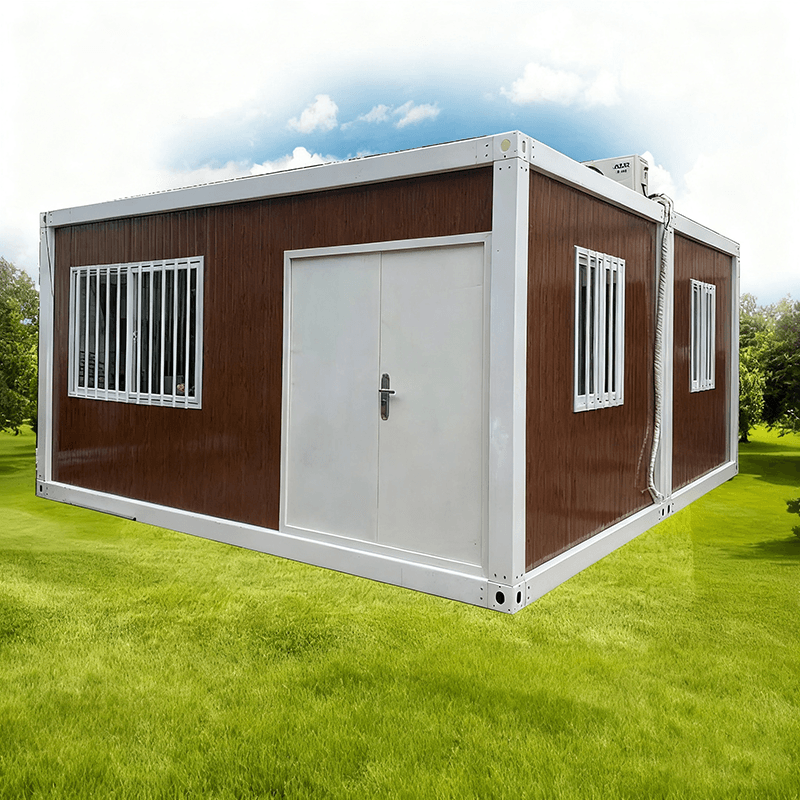
Definition and Basic Functions
A portable toilet (Portable toilet) refers to a facility that can be moved in its entirety and is set up at fixed or temporary locations. Its core function is to provide public restroom services. Its greatest advantage lies in breaking through the limitations of fixed buildings. It can be rapidly deployed according to the density of pedestrian traffic (such as in urban business districts and large exhibitions) or activity requirements (such as outdoor music festivals and sports events). It can even promptly address restroom needs in remote scenic spots, disaster areas, and other regions without infrastructure.
Structural Composition and Classification
Structural Composition
A portable toilet typically consists of the following parts:- Fecal treatment system: This includes storage tanks (used for non-flush or suction types) or disposal devices (such as purification modules for circulating flush toilets).
- Basic structure: Flooring, walls, and roofs ensure safety and privacy during use.
- Sanitary facilities: Sanitary ware (such as toilets or squat pans), washing equipment (sinks), and water tanks (used for flush-type toilets).
- Mobile devices: Lifting hooks, towing chassis, or power systems facilitate transportation and installation.
Classification Methods
- By structural form:
- Single-unit structure: An independent unit suitable for small-scale needs.
- Composite structure: Multiple units combined to form a large toilet complex.
- By mobility method:
- Lifting/handling type: Requires lifting equipment or manual handling, suitable for short-term events.
- Power/towing type: Equipped with an engine or towing chassis, capable of self-movement or being towed by a vehicle.
- By sewage treatment method:
- Flush type: Requires a water connection to flush away waste, with regular cleaning of the sewage tank needed.
- Non-flush suction type: Uses vacuum suction to draw feces into a storage tank, suitable for water-scarce environments.
- Circulating flush type: Achieves water resource recycling through filtration and purification, reducing water consumption.
- Dry-packing type: Uses biodegradable bags to collect feces, requiring no water source, suitable for extreme environments.
- By structural form:
Application Scenarios and Advantages
The flexibility of portable toilets makes them widely used in urban public management, large-scale event support, tourism development, and emergency rescue fields. For example, at music festival sites, power-type portable toilets can be adjusted according to the stage location. In disaster areas, dry-packing toilets can be quickly put into use and avoid water source pollution. Their core value lies in quickly responding to needs, reducing construction costs, and minimizing environmental impact, making them indispensable public service facilities in modern society.



