
Portable Toilet Mobile Restroom
A portable toilet is a facility that can be moved as a whole and provides toilet services to the public. It is suitable for fixed or temporary demand locations such as stations, docks, and tourist attractions.
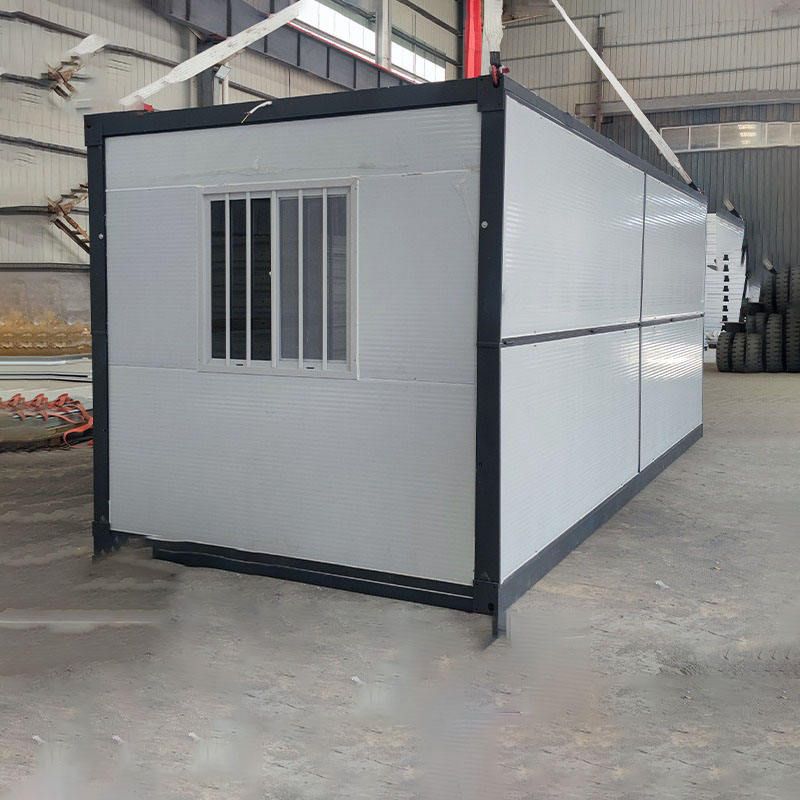
Structure and Classification
Portable toilets typically consist of fecal sewage storage tanks (or disposal devices), floor slabs, sanitary ware, walls, washing equipment, water tanks, roofs, and mobile devices. There are various classification methods:
- By structural form: They are divided into single-unit structures (independent units) and composite structures (multi-unit combinations).
- By mobility method: They include lifting/handling types (requiring mechanical assistance) and powered/towable types (with built-in power or capable of being towed).
- By sewage treatment method:
- Water-flush and waterless-flush suction types: They rely on a water source for flushing, and sewage needs to be periodically suctioned and treated; waterless-flush types reduce water usage through chemical agents or vacuum suction.
- Recirculating water-flush types: Equipped with water treatment systems, they achieve sewage purification and reuse, suitable for areas with scarce water resources.
- Dry-pack types: Feces are directly collected in biodegradable bags, requiring no flushing, which is environmentally friendly and easy to maintain.
Advantages and Design Principles
The core advantages of portable toilets lie in their mobility, combinability, and reusability, enabling rapid deployment to demand locations and adapting to temporary events or long-term public use. Their design follows three major principles:
- Mobility convenience and economic durability: Lightweight materials (such as steel frames and metal carved panels) are used to ensure structural stability while facilitating transportation and installation.
- Environmental protection and ecology: Pollution is reduced through recirculating water systems, dry-pack technologies, etc. Some models are equipped with solar panels for energy conservation.
- Humanization and efficiency enhancement: The interiors are fully equipped (such as separate male and female areas, lighting and ventilation windows, and aluminum alloy doors), balancing privacy and comfort.
Appearance and Customization
Conventional portable toilets mostly adopt a gray-white color scheme, with a simple appearance but complete functions, such as metal carved panels for thermal insulation and sliding windows for optimized ventilation. In addition, the market offers customization services. For example, "Apple Pod Toilets" can be adjusted in size, material, and functional modules (such as adding barrier-free facilities and母婴室 (nursing rooms)) according to scene requirements, meeting high-end or special scene demands.
Applications and Services
Portable toilets are widely used in densely populated areas (such as commercial streets and squares), temporary locations (such as construction sites and exhibitions), and remote areas (such as tourist attractions and villa areas). Some companies (such as Shanghai Xinzhang Environmental Protection Equipment Engineering Co., Ltd.) provide rental services, covering high-end and low-end models, reducing users' one-time investment costs and improving resource utilization efficiency.



