
Portable Toilet for Home and Outdoor Use
Portable toilets are suitable for home and outdoor scenarios, meeting the toilet needs of both temporary and fixed locations.
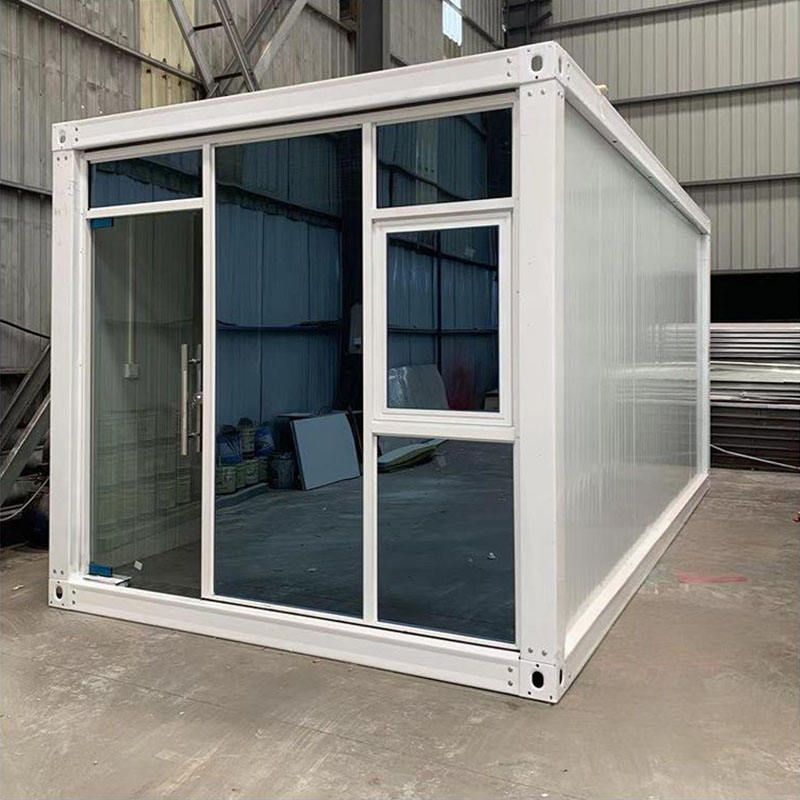
I. Composition of Portable Toilets Portable toilets typically consist of core components such as fecal sewage storage tanks (or fecal sewage treatment devices), floor slabs, sanitary ware, walls, washing equipment, water tanks, roofs, and mobile devices. These components achieve overall mobility through modular design. For example, the four-squat portable toilet produced by Dezhou Hongtu Metal Products Co., Ltd. is 4 meters long and 2.3 meters wide, featuring a pointed roof. Its exterior walls are made of thermal-insulating metal carved panels, and the interior is equipped with two squat positions, a urinal, and a pedestal sink in the men's restroom, demonstrating a combination of functionality and practicality.
II. Classification of Portable Toilets
- By structural form: They are divided into single-unit structures and composite structures. Single-unit structures are suitable for scenarios with limited space, such as home yards or small outdoor events; composite structures expand capacity through modular combinations and are commonly found in large construction sites or scenic spots.
- By mobility method: They are classified as lifting and handling types and powered towing types. Lifting and handling types rely on lifting equipment and are suitable for long-term use at fixed locations; powered towing types are equipped with towing devices and can be quickly transferred to different locations. For example, the pink apple-pod-shaped toilet customized for a strawberry base achieves flexible deployment through towing.
- By sewage treatment method: They are categorized as flush types, non-flush suction types, circulating flush types, and dry packing types. Flush types rely on water tank供水 (water supply from a water tank) and are suitable for scenarios with a water source; non-flush suction types process feces through vacuum pumps and are applicable in water-scarce areas; circulating flush types utilize biodegradation technology to purify sewage, enabling water resource reuse; dry packing types seal feces in replaceable containers, eliminating the need for sewage pipelines and simplifying maintenance.
III. Application Scenarios and Advantages In home and outdoor scenarios, portable toilets can solve toilet problems for temporary events (such as weddings and camping) or fixed areas (such as villa yards and farm management houses). Their advantages lie in rapid deployment, environmental protection and energy efficiency, and low maintenance costs. Moreover, their appearance and functions can be customized according to needs. For example, the pink apple-pod-shaped toilet integrates into agricultural landscapes through color design, enhancing the user experience.



