
Portable Toilet Container: What to Know Before You Buy
Before purchasing a Portable Toilet Container, it is essential to clarify the following key information to match actual needs and avoid usage risks:
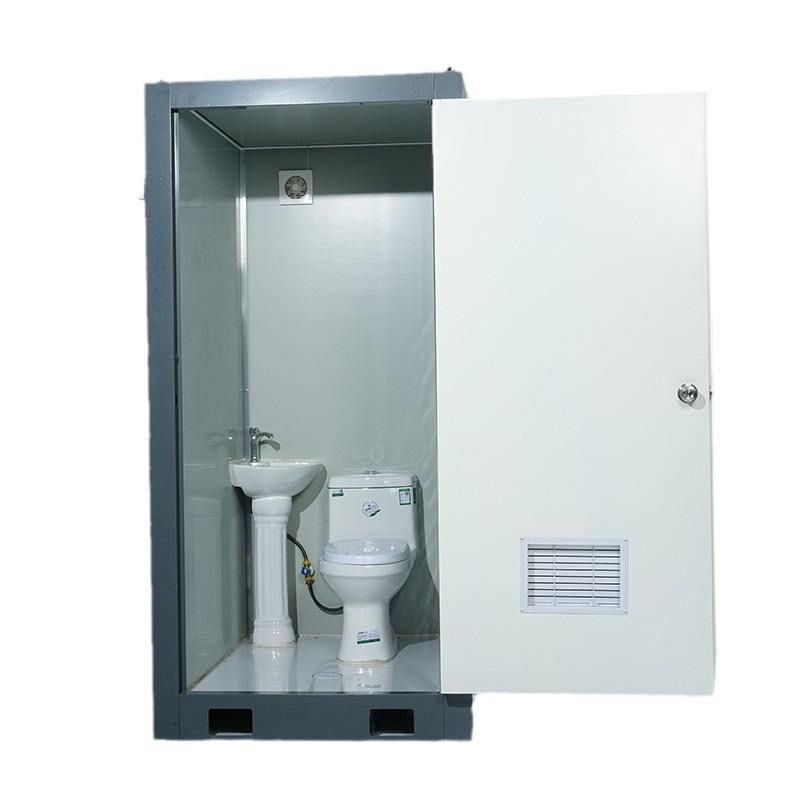
I. Definition and Applicable Scenarios
A portable toilet is a sanitary facility that can be moved as a whole, with core advantages of portability, modularity, and convenient transportation. It is suitable for fixed or temporary demand locations such as stations, docks, tourist attractions, construction sites, and squares. Its flexibility can reduce resource waste, for example, enabling rapid deployment at large events or temporary construction sites, avoiding the long construction cycle and high costs of traditional public toilets.
II. Structure and Materials
- Frame Structure: Typically welded from steel (such as channel steel and square steel) to ensure stability during lifting.
- Wall Materials: Primarily made of color-coated steel plates, fiberglass-reinforced plastics, and stainless steel, balancing lightness and durability. Some high-end models use anti-corrosion coatings to extend service life.
- Internal Configuration: Higher than that of ordinary fixed toilets, possibly including fecal sewage storage tanks, water tanks, sanitary ware (such as toilets or squat pans), ventilation systems, etc. Some models are also equipped with sinks or disinfection devices.
III. Classification and Functions
- By Structural Form: Divided into single-unit structures (independent units suitable for small-scale scenarios) and composite structures (multi-unit combinations that can be expanded into temporary toilet clusters).
- By Mobility Method: Divided into lifting-type (requiring lifting equipment for transportation) and powered towing-type (can be towed by vehicles).
- By Sewage Treatment:
- Flush-type: Requires connection to a water source, offering high cleanliness but dependent on infrastructure.
- Waterless Suction-type: Uses vacuum or gravity to suction feces, suitable for water-scarce environments (such as desert construction sites).
- Dry Packing-type: Uses biodegradable bags to collect waste, requiring no water source but needing regular bag replacement.
IV. Key Considerations
- Wastewater Treatment: Choose the type based on the usage scenario, for example, prioritizing flush-type for tourist attractions to enhance user experience, and dry packing-type for water-scarce areas to avoid pollution.
- Capacity and Maintenance: For large construction sites or events, select high-capacity models (e.g., storage tanks ≥ 500L) and establish a regular cleaning schedule (e.g., daily pumping).
- Compliance: Ensure the product meets local health and safety standards (e.g., Australia requires compliance with S trap/P trap specifications, and the EU requires CE certification).
V. Brand Selection Recommendations
- Yihui: Lightweight and portable, supporting folding functionality, suitable for outdoor travel or emergency scenarios.
- Kangji: Focuses on environmental protection and ergonomic design, with easy operation and low maintenance costs.
- KSITEX: Offers intelligent features (such as fast charging and multifunctional control panels), suitable for high-end events.
- Yade: Incorporates technologies such as heating and deodorization, with stylish design, suitable for tourist attractions or commercial venues.
By clarifying demand scenarios, functional preferences, and budget ranges, you can efficiently screen suitable models and avoid procurement errors due to insufficient information.



