
Portable Toilet Cabin
A portable toilet cabin is a facility that can be moved as a whole to provide toilet services to the public or customers, featuring mobility, modularity, and ease of transportation.
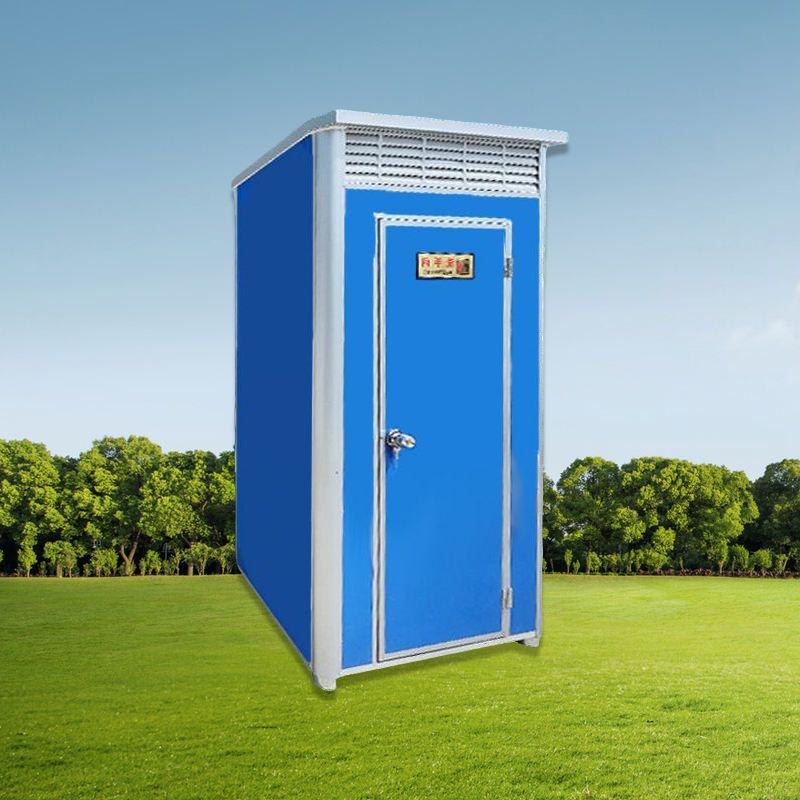
I. Structural Composition Mobile toilets are typically composed of core components such as fecal sewage storage tanks (or disposal units), floor slabs, sanitary ware, walls, washing facilities, water tanks, roofs, and mobile units. Some high-end models also integrate wet-dry separation functions. For example, a mobile bathroom unit measuring 2 meters in width and 3.5 meters in length features a double-colored metal insulated carved panel wall, equipped with an aluminum alloy glass single door, allowing simultaneous use for toileting, showering, and placing a washing machine indoors. Another model with a pure white exterior, measuring 2 meters by 3 meters, has an independently placed sink and makeup mirror outside, optimizing functional zoning.
II. Classification Methods
- By structural form: Divided into single-unit structures and composite structures. Single-unit structures are independent and complete units suitable for space-constrained scenarios; composite structures are composed of multiple modules, allowing flexible expansion of functional areas.
- By mobility method: Includes lifting and handling types, and powered towing types. The former relies on lifting equipment for transportation, while the latter achieves long-distance movement through vehicle traction, adapting to different terrains and transportation needs.
- By sewage treatment method: Covers water-flush types, waterless suction types, recirculating water-flush types, and dry-pack types. Water-flush types rely on water tank supply and require regular cleaning of sewage tanks; waterless types process feces through vacuum suction or chemical degradation; recirculating water-flush types adopt reclaimed water technology to conserve water resources; dry-pack types use biodegradable bags to collect waste, eliminating the need for water sources and sewage pipelines.
III. Core Advantages Its greatest features lie in mobility and reusability. Through standardized design, the facility can be quickly disassembled, assembled, and transported to temporary event venues, disaster relief areas, or remote regions, effectively addressing the issues of long construction periods and high costs associated with traditional toilets. For example, at large outdoor music festivals, powered towing mobile toilets can adjust their positions according to the venue layout and be directly transported away after the event, avoiding resource waste. Additionally, modular design supports functional expansion, such as adding barrier-free facilities or maternal and child care stations, enhancing service adaptability.
IV. Application Scenarios Widely used in tourist attractions, construction sites, transportation hubs, emergency rescue, and other scenarios. For example, dry-pack mobile toilets, requiring no water or electricity access, are the preferred choice for field exploration or disaster sites; recirculating water-flush types are suitable for water-scarce areas, achieving sustainable use through biological filter purification of sewage.



