
Portable Squat Toilet
A portable squat toilet is a facility that can be moved as a whole and set up in fixed or temporary locations to provide toilet services for the public and customers. Here is an introduction from different aspects:
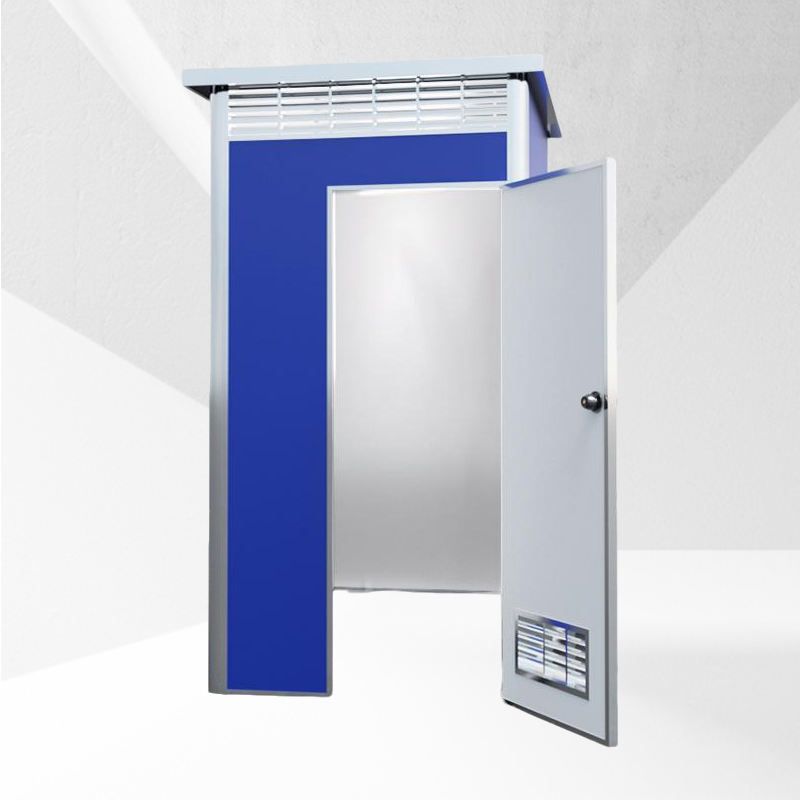
Appearance and Structure
- Appearance: There are various shapes and color combinations. For example, a three-squat-position portable toilet uses metal carved panels with a gray and white color scheme; a four-squat-position portable toilet has an Apple Pod shape with a black and white color scheme.
- Structure: It is generally composed of a fecal sewage storage tank (or fecal sewage treatment device), floor slab, sanitary ware, walls, washing equipment, water tank, roof, and moving device. According to the structural form, it can be divided into single-structure portable toilets and composite-structure portable toilets. For instance, the overall frame of a three-squat-position portable toilet is welded with galvanized square steel. It has two toilet compartments, a management room, and a washroom, with a gray aluminum alloy exterior door and complete internal water and electricity sanitary ware. The walls of a four-squat-position portable toilet are all made of galvanized sheet metal. A nine-squat-position portable toilet has a moving hook as a whole and can be moved with the hook, and its toilet frame is all galvanized, making it sturdy and durable.
Moving Methods
According to the moving methods, they can be divided into hoisting and handling portable toilets, powered and towed portable toilets. The nine-squat-position portable toilet has a moving hook as a whole and belongs to the type that can be hoisted and moved. It can be moved with the hook, facilitating arrangement and transfer at different locations to meet the usage needs of temporary or fixed locations.
Sewage Treatment Methods
According to the sewage treatment methods, they can be divided into water-flush and non-water-flush suction portable toilets, circulating water-flush portable toilets, and dry-packing portable toilets. Different treatment methods are suitable for different scenarios. For example, in areas with scarce water resources, dry-packing portable toilets may be used to reduce water consumption. In locations with a complete sewage treatment system and high hygiene requirements, water-flush and non-water-flush suction portable toilets or circulating water-flush portable toilets may be chosen.



