
Portable Single Toilet
The portable single toilet is a type of mobile toilet, classified as a single-structure mobile toilet based on its structural form. The following provides a detailed introduction from the aspects of definition, composition, development history, classification, and characteristics:
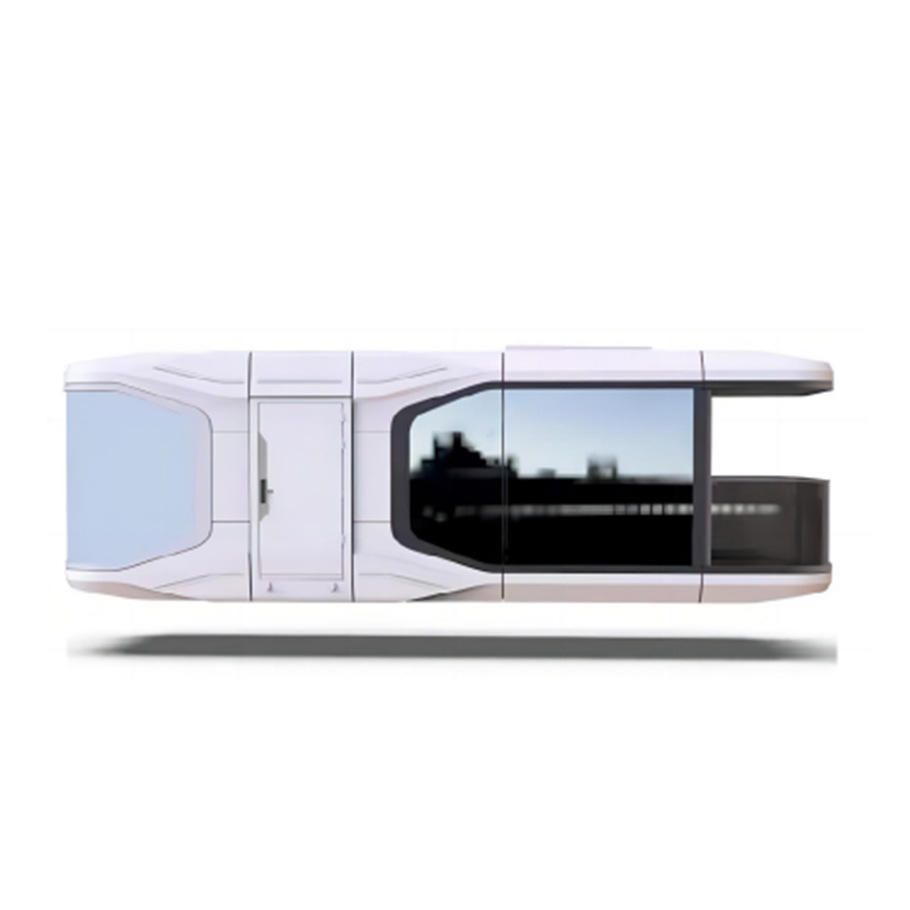
Definition and Suitable Locations
A mobile toilet refers to a facility that can be moved as a whole and provides temporary or fixed toilet services to the public. It is suitable for densely populated locations such as stations, docks, tourist attractions, large construction sites, and squares. As a branch of mobile toilets, the portable single toilet emphasizes an independent structure and convenient mobility, allowing it to be used independently without relying on other building modules.
Composition Structure
Its core components include:
- Fecal treatment system: Includes storage tanks or disposal devices (such as waterless flushing suction type, dry packing type, etc.);
- Basic structure: The floor, walls, and roof form an enclosed space;
- Sanitary facilities: Sanitary ware (such as toilets or squat pans), washing equipment, and water tanks;
- Mobile device: Lifting hooks, towing chassis, or power systems to support different moving methods.
Development History
Early mobile toilets were made of wood, with simple functions and a tendency to accumulate odors. With technological advancements, materials have been upgraded to lightweight and high-strength materials such as fiberglass and polyethylene, significantly improving sealing, corrosion resistance, and service life, while optimizing internal ventilation and deodorization designs.
Classification Methods
- By moving method:
- Lifting/handling type: Relies on lifting equipment or manual handling;
- Power/towing type: Equipped with an engine or wheeled chassis, capable of autonomous movement or being towed by a vehicle.
- By sewage treatment method:
- Water flushing type: Requires a water connection and uses flushing for cleaning;
- Waterless flushing suction type: Uses vacuum suction to collect feces;
- Recirculating water flushing type: Reuses water resources through a filtration system;
- Dry packing type: Uses biodegradable bags to encapsulate excreta, requiring no water.
Core Characteristics
- Portability: Modular design supports rapid assembly and disassembly, adapting to temporary events or emergency scenarios;
- Combinability: Multiple single toilets can be combined to form large-scale sanitary facility clusters;
- Environmental friendliness: Dry packing and recirculating water flushing types reduce water consumption, meeting sustainable development needs;
- Economy: Compared to traditional toilets, they have a short construction period, low cost, and can be reused, reducing long-term investment.



