Portable Single-Person Mobile Toilet
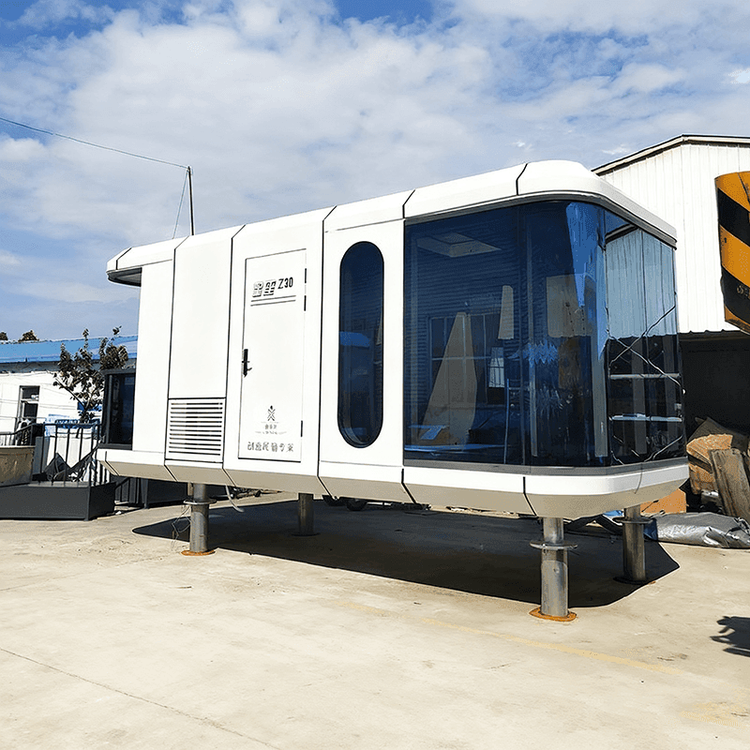
A portable single-person mobile toilet is a sanitary facility that can be moved as a whole, is easy to transport, and can be reused repeatedly. It is introduced below from aspects such as composition, classification, and special types:

I. Basic Composition A portable single-person mobile toilet usually consists of multiple parts. The fecal sewage storage tank (or fecal sewage treatment device) is one of the core components, used for collecting and treating excreta to ensure a sanitary environment. The floor provides a stable standing or squatting surface for users. Sanitary fixtures such as toilets or squat pans meet basic excretion needs. The walls serve to isolate and protect privacy, while also blocking outside views and odors. Washing equipment, including sinks, allows users to clean their hands conveniently. The water tank stores flushing water to ensure the toilet's cleanliness. The roof provides shelter from wind and rain, offering a relatively comfortable environment for users. The mobile device enables the toilet to be easily transported and moved to adapt to different usage scenarios.
II. Classification Methods
- By structural form: They can be divided into single-structure mobile toilets and composite-structure mobile toilets. Single-structure toilets are relatively simple and highly independent; composite-structure toilets may be composed of multiple parts and may have more complex and diverse functions.
- By mobility method: There are lifting and handling-type mobile toilets, which usually require equipment such as cranes for movement; power-driven and towed-type mobile toilets can be moved using their own power systems or by being towed by other vehicles, offering higher flexibility.
- By sewage treatment method: They are classified into water-flush and waterless-flush suction-type mobile toilets. Water-flush toilets use water to flush excreta, providing good cleaning effects; waterless-flush suction-type toilets collect excreta through suction devices. Recirculating water-flush mobile toilets can recycle flushing water, saving water resources. Dry-packing mobile toilets dry-pack excreta for easy subsequent cleaning and transportation.
III. Special Types There are also portable commodes on the market, such as commode chairs. They feature a thickened steel pipe frame, providing a stable structure that can withstand a certain amount of weight. The bottom is designed with anti-slip foot pads to increase stability during use and prevent sliding. The height conforms to ergonomic principles; when sitting, the knees are naturally bent, and when standing up, the thighs can easily exert force, making it more comfortable to use. Moreover, they support folding for storage. When not in use, they can be easily folded up, taking up little space, and are convenient to carry when traveling or visiting relatives.