
Portable Outdoor Frame for Simple Toilet
The outdoor frame for portable simple toilets typically employs lightweight, corrosion-resistant, and structurally stable materials, with common types including color-coated steel sheets and galvanized square steel. The design emphasizes portability and ease of transportation.
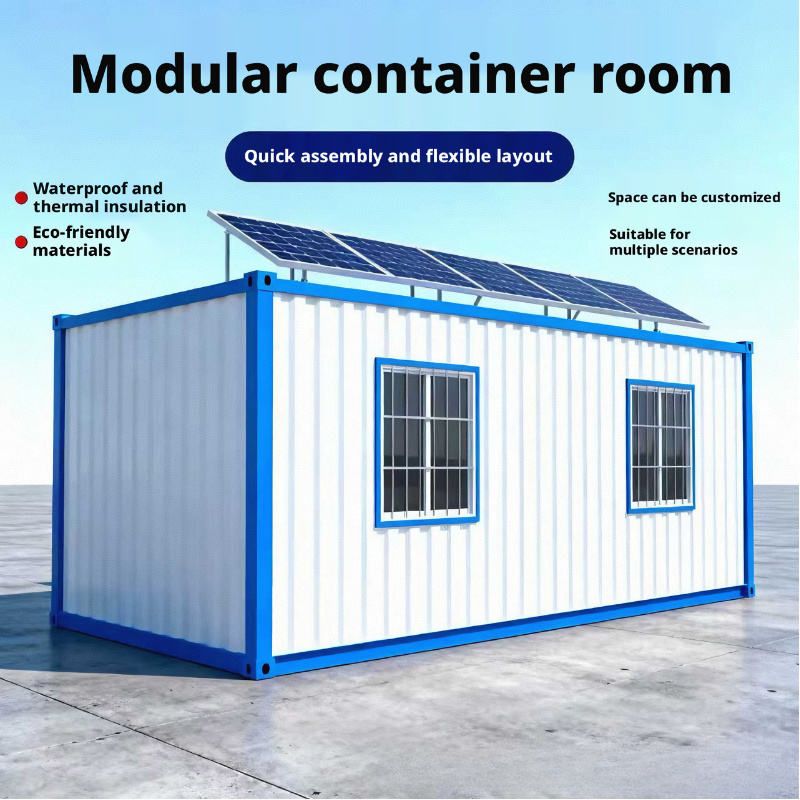
Material Selection and Characteristics
Color-Coated Steel Sheets
Color-coated steel sheets are one of the commonly used materials for the frames of portable simple toilets. Their core advantages lie in lightweight and corrosion resistance. Made by coating thin steel sheets with a colored coating, this material effectively isolates corrosive media such as air and moisture, extending the service life of the frame. Meanwhile, the lightweight nature of color-coated steel sheets reduces the overall structural weight, facilitating manual handling or mechanical lifting. Additionally, these sheets can be assembled using standardized panels and fixed with metal locks to form a stable outer shell structure, meeting outdoor usage requirements.Galvanized Square Steel
Some portable simple toilet frames utilize galvanized square steel, which forms a zinc layer on the surface of the square steel through hot-dip galvanizing, significantly enhancing its corrosion resistance, especially suitable for humid or rainy outdoor environments. Galvanized square steel boasts high mechanical strength, capable of withstanding significant external impacts, ensuring the frame remains undeformed over long-term use. Furthermore, the regular cross-section of square steel facilitates welding or bolting, enabling rapid assembly into a stable structure, suitable for scenarios requiring higher load-bearing capacity.
Structural Design Considerations
Structural Stability
The frame design should enhance overall stability through geometric optimization (such as triangular bracing and cross-bracing) to prevent tipping or deformation due to external forces (such as wind or human collisions). For example, some designs incorporate horizontal support bars at the bottom of the frame to form a closed force system, distributing local stress.Lightweight and Transportation Convenience
To facilitate transportation and mobility, the frame should minimize weight and optimize dimensions as much as possible. For instance, adopting a modular design allows the frame to be disassembled into stackable standardized components, reducing transportation space requirements. Alternatively, using hollow square steel instead of solid material can reduce weight while maintaining strength.Shell Assembly and Fixing
Shell panels (such as color-coated steel sheets) are typically fixed to the frame using metal locks or rivets to ensure airtightness and wind resistance. The joints may employ tongue-and-groove designs to enhance connection tightness, preventing rainwater penetration or dust ingress.



