
Portable Home Toilet
Portable home toilets are sanitary facilities designed for individuals with mobility issues, offering flexibility and convenience in home settings. They are primarily categorized into two types: simple and integrated.
Simple Portable Home Toilets
Simple portable home toilets, represented by portable commodes and portable toilets, are primarily designed for elderly individuals or pregnant women with mobility challenges, meeting basic sanitary needs in home environments.
1. Portable Commode: Its core structure includes a heavy-duty seat, a deep waste container, handles, and a lid. The deep waste container design reduces the frequency of cleaning, while the handles facilitate easy transportation. The lid effectively isolates odors, preventing their spread. These products are typically compact and can be flexibly placed in bedrooms, living rooms, and other spaces, making them particularly suitable for nighttime use or scenarios where the bathroom is far away.
2. Portable Toilet: Featuring a bench-style flip cover design, the flip cover completely seals the waste container when closed, further enhancing odor control. For cleaning, the flip cover can be directly opened for rinsing or fitted with a dedicated garbage bag, simplifying the cleaning process. The material is mostly lightweight plastic, and the bottom is equipped with anti-slip pads to ensure stability during use. Some models also come with backrests and armrests to enhance comfort.
Integrated Portable Home Toilets
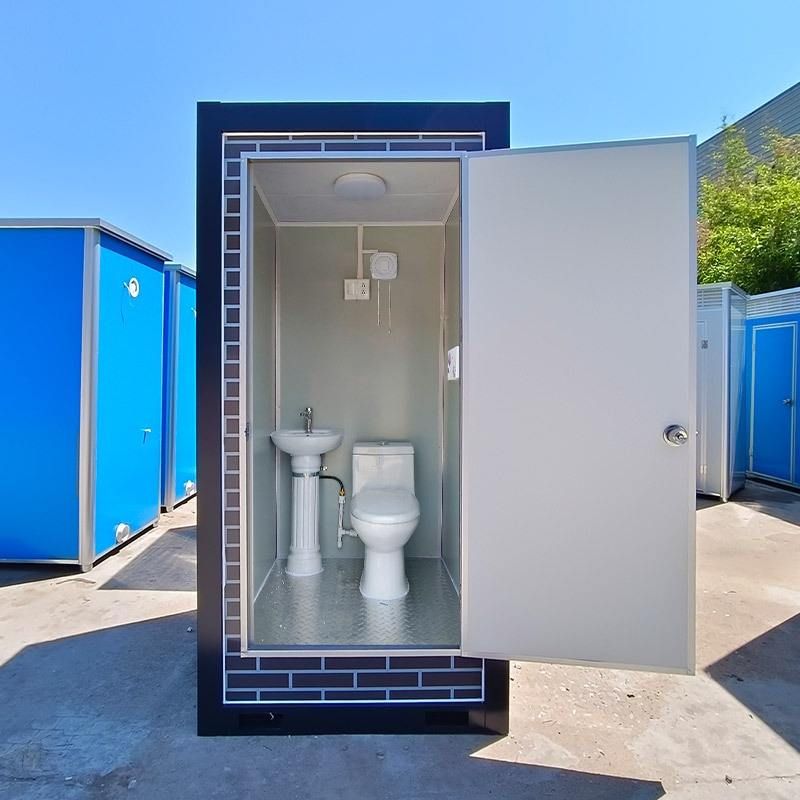
Integrated portable home toilets (also known as mobile toilets) are facilities that can be moved as a whole. Although they are mostly used in public places, they can also be adapted to home environments, especially suitable for scenarios requiring long-term independent sanitary spaces.
1. Structural Composition: They include a fecal wastewater storage tank (or disposal unit), flooring, sanitary fixtures, walls, washing facilities, water tanks, roofs, and mobility devices. The storage tank collects waste, and some models are equipped with degradation units to reduce odors and pollution. Mobility devices (such as wheels) support overall transportation, accommodating adjustments in home space.
2. Classification and Advantages: They can be classified by structural form into single and connected units; by mobility into towed and self-propelled types; and by wastewater treatment into direct discharge, recirculating flush, and bagging types. Their core advantages lie in portability (adjustable position at any time), combinability (expandable into dual toilet configurations), and easy transportability (can be transported by ordinary vehicles after disassembly), making them suitable for home yards, temporary living spaces, and other scenarios.
Selection Advice
For home use, the type should be matched according to needs: if only temporary sanitary needs for individuals with mobility issues need to be addressed, simple products are more cost-effective and practical; if an independent, complete sanitary space is required, or if the home has additional space such as a yard, integrated mobile toilets can provide more comprehensive functional support.



