
Portable Assembled Container House
The portable assembled container house is a residential or office building form that uses containers as the basic structural modules and is transformed for use. It features environmental friendliness, flexibility, low cost, and easy construction.
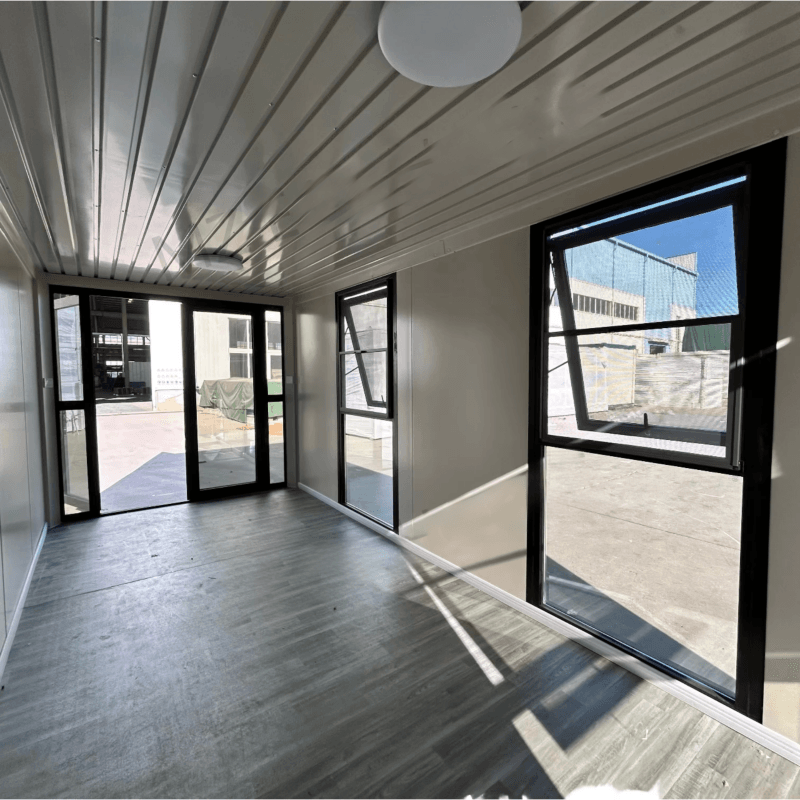
Structure and Construction Method
Its core structure is based on standard containers, with functional expansion achieved through modular transformation. For example, multiple containers can be combined into double-story or multi-story buildings according to needs, equipped with附属 structures (ancillary structures) such as stairs. During installation, a 'quick-assembly with loose parts' method is adopted, where the bottom frame is first constructed, followed by the gradual assembly of walls, roofs, and other components, significantly shortening the construction period. This design retains the standardized characteristics of containers while adapting to different scenarios through flexible assembly.
Application Scenarios
- Temporary Facilities for Large-scale Events: The 2026 Nagoya Asian Games in Japan used container houses to build the Athletes' Village. Despite controversies over budget overruns and issues with space and bed sizes, it demonstrated the rapid deployment capability of container houses.
- Innovation in the Cultural and Tourism Industry: Shanting District, Zaozhuang City, Shandong Province, China, utilized container houses to create a characteristic homestay scenic spot, attracting tourists through personalized design and achieving resource recycling.
- Emergency Medical Construction: During disaster relief or epidemics, container houses can be quickly erected as temporary hospitals or isolation wards to meet urgent medical needs.
- Innovation in the Commercial Sector: Some brands have transformed them into 24-hour self-service fitness pods and mobile cafes, exploring the new model of 'space as a service.'
Advantages and Limitations
In terms of advantages, its environmental friendliness is reflected in the recyclability of materials, reducing construction waste; flexibility supports space reorganization to adapt to diverse functions; costs are lower than traditional buildings, and construction periods are short. Limitations include restricted personalized design due to standardized space and comfort issues in certain scenarios (such as the Athletes' Village) caused by fixed module sizes.
Development Trends
With the advancement of modular construction technology, portable assembled container houses are evolving towards intelligence and multifunctionality, such as integrating solar energy and intelligent temperature control systems or enhancing structural strength through composite materials, further expanding their potential applications in extreme environments.



