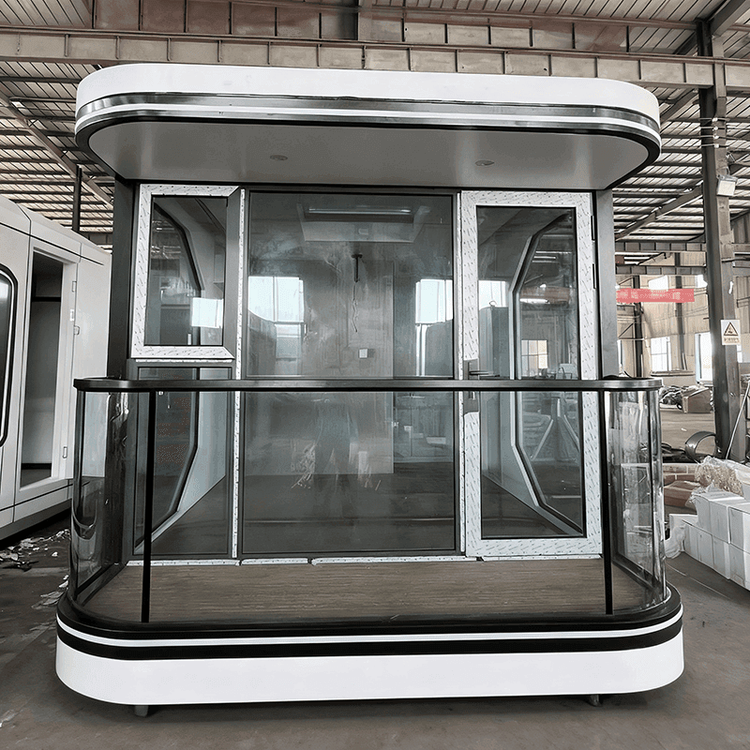
Mobile Toilet for Traffic Jams on Plateaus
In plateau traffic jam scenarios, mobile toilets need to be technically adjusted to adapt to extreme environments, with microbial degradation technology being one of the current optimal solutions.

I. Limitations of Traditional Mobile Toilets on Plateaus
Plateau regions are characterized by extreme conditions such as large temperature differences between day and night, thin oxygen, strong ultraviolet radiation, and high winds. Traditional mobile toilets are prone to the following issues:
- Insufficient Insulation Performance: Ordinary materials cannot withstand temperatures below -20°C, leading to frozen water tanks and pipes, which disrupt water supply.
- Low Ventilation Efficiency: Due to thin oxygen on plateaus, traditional exhaust systems often fail to provide adequate air exchange due to pressure differences, resulting in odor accumulation.
- Material Aging: Strong ultraviolet radiation accelerates the aging of plastic and metal materials, shortening the lifespan of the equipment.
- Poor Structural Stability: In windy conditions, lightweight structures are prone to tipping over, and foundations may sink due to thawing permafrost.
- Dependence on Pipe Networks for Water Supply and Drainage: Traditional toilets require connection to water supply and drainage pipe networks, which are difficult to install in plateau traffic jam scenarios and where water sources are scarce.
II. Technical Adjustments for Mobile Toilets on Plateaus
- Insulation and Heating: Wrap the toilet body with thickened insulation materials (such as polyurethane foam) and equip it with a plateau-specific fuel-fired heater to maintain a temperature above 0°C, preventing freezing of water tanks and pipes.
- Ventilation Optimization: Increase the exhaust vent area to 1.5 times the original design, add more air inlets, and install air filtration devices to balance internal and external pressure differences, improve air exchange efficiency, and filter dust.
- UV-Resistant Materials: Select UV-resistant plastic sheets (such as modified PP) or metal sheets (such as aluminum alloy) and apply UV-resistant coatings to extend the service life to over 5 years.
- Structural Reinforcement: Use concrete foundations with embedded wind-resistant anchors and add wind-resistant support devices (such as adjustable diagonal braces) to the toilet body, increasing the wind resistance rating to Level 12.
- Water Supply and Drainage Adaptation: Adjust the water tank pressure settings and use plateau-adapted booster pumps; select water heaters with low-pressure startup models to ensure normal water supply in low-pressure environments.
III. Breakthrough Application of Microbial Degradation Technology
In June 2026, Zhongyunhui Technology Group deployed a microbial degradation mobile toilet at the Yuzixi Scenic Area at an altitude of 4,200 meters. By dynamically adjusting microbial activity, it achieved efficient degradation of fecal waste without the need for water supply and drainage pipe networks. This technology offers the following advantages:
- Extreme Environment Adaptability: It operates stably within a temperature range of -20°C to 40°C, solving the problem of pipe network freezing in traditional toilets.
- Resource Conservation: A single toilet can serve over 2,000 people per day, requiring only a small amount of microbial inoculant supplementation and no water for flushing.
- Environmental Friendliness: The degradation products are harmless organic fertilizers, preventing fecal waste from polluting the plateau ecological environment.
- Rapid Deployment: With a modular design, it can be installed within 2 hours, making it suitable for emergency scenarios such as traffic jams.
This type of technology has been validated through practical cases, providing a sustainable solution to the toilet challenges in plateau traffic jam scenarios.