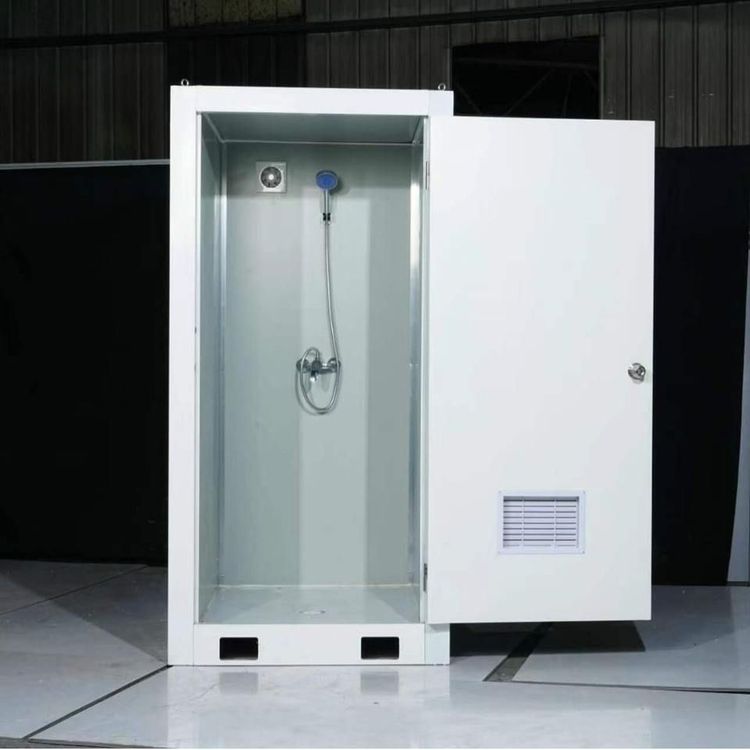
How About Plastic Mobile Toilets
Plastic mobile toilets are practical temporary sanitation facilities designed for outdoor scenarios. They offer advantages such as a sturdy structure, suitable functionality, environmental protection, and cost-effectiveness, but regular maintenance and sewage disposal are required.

Structural Design and Materials: Combining Durability and Adaptability
The main frame of plastic mobile toilets is wrapped with color-coated steel plates, which are rust-resistant and aesthetically pleasing, making them suitable for long-term outdoor use. The outer shell is made of high-density polyethylene (HDPE) plastic, which is corrosion-resistant, UV-resistant, and easy to clean. Its smooth surface does not easily adsorb stains, and it can be cleaned simply by rinsing with water. The interior is filled with 5mm-thick foam, which not only provides thermal insulation (actual tests show that the internal temperature is 8 - 10℃ lower than the outside at 35℃ high temperatures) but also reduces damage from transportation collisions. Their typical dimensions are 1100*1100 millimeters in width and length and 2000 millimeters in height, offering a compact space that meets basic usage requirements.
Functional Configuration: Meeting Basic Sanitation Needs
The core function is to provide a temporary toilet space. Some models are equipped with basic facilities such as metal locks, toilets, foot-operated flushing squat toilets, foot-operated water-dispensing hand-washing sinks, and ventilation louvers. Some models also have plastic windows that provide both ventilation and rain protection. These designs enable them to be used independently in areas without municipal sewage systems, such as scenic spots and construction sites, and they do not rely on fixed foundations, facilitating easy disassembly, transfer, and reuse.
Technical Advantages: Outstanding Lightweight and Environmental Protection Features
- Lightweight and Corrosion-Resistant: The overall weight is approximately 80 - 100 kilograms, requiring no frequent maintenance. The color-coated steel plate wrapping design further enhances the structural strength, making it less likely to deform or rust even after long-term exposure outdoors.
- Environmentally Friendly and Cost-Effective: The material has a recyclability rate of over 90%, meeting environmental protection requirements. The loose-parts shipping model reduces transportation costs, making it especially suitable for remote areas.
- Low Maintenance Costs: The smooth surface of HDPE material ensures high cleaning efficiency. The application of the foam interlayer reduces the impact of temperature fluctuations on usage comfort, preventing the internal temperature from being too low in winter.
Installation and Usage Precautions
- During assembly, ensure that the ground is level and focus on checking the sealing of components such as metal locks and windows.
- The product does not include a sewage disposal system. Regularly clean the excrement or use it in combination with a septic tank. In environments with a lot of dust, increase the cleaning frequency to prevent scratches on the plastic surface.
- When not in use for a long time, disassemble and store it in a dry and ventilated place to prevent the foam interlayer from deteriorating due to moisture. After long-term use, regularly check the lubrication of metal locks. In high-traffic scenarios, it is recommended to thoroughly clean the drainage troughs and corner crevices every 3 months.