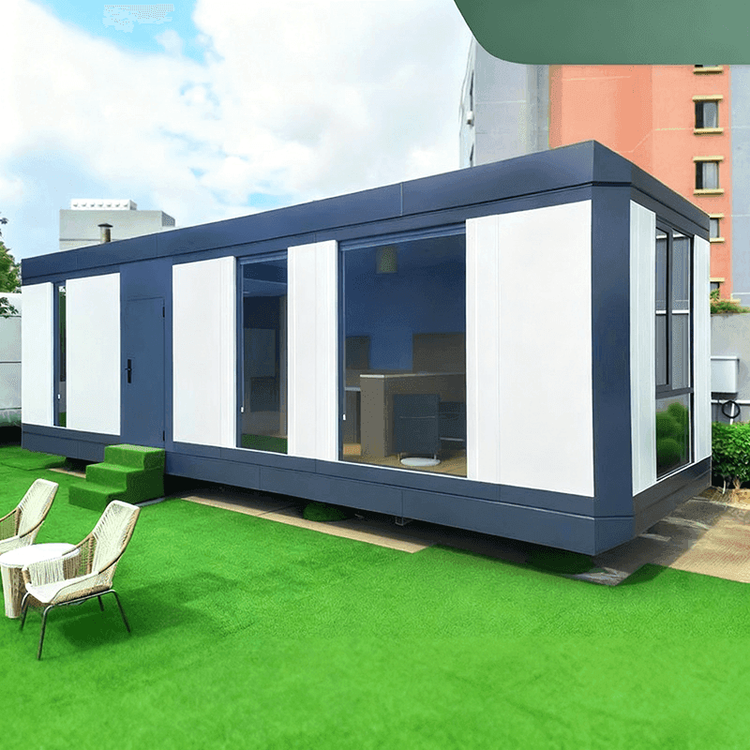
Pingxiang New Chinese-Style Mobile Toilet
The Pingxiang new Chinese-style mobile toilet can be realized through customized design, which requires combining traditional elements with functional requirements and contacting local rental companies to confirm specific plans. Here is a detailed analysis:

1. Customized design is the core idea
Currently, there are no direct finished-product cases of the "Pingxiang new Chinese-style mobile toilet" in publicly available information, but the customizable nature of mobile toilets makes it feasible. For example, Wugong Mountain Scenic Area once adopted a mobile toilet with a simulated wooden structure, integrating it with the natural landscape through exterior material and color design. The new Chinese style can draw on such ideas by incorporating traditional architectural elements into the exterior, such as wooden textures, Chinese-style window lattices, and upturned eaves, while maintaining the modular structural advantages of mobile toilets. The interior facilities need to meet modern sanitation standards, including ventilation systems, sewage disposal, and barrier-free design, ensuring a balance between functionality and aesthetics.
2. Design adjustments based on scene requirements
The application of the new Chinese style should consider the specific usage scenarios. If used in historical and cultural blocks or cultural tourism projects, the proportion of traditional elements can be enhanced, such as adopting a color scheme of blue bricks and gray tiles; if used in modern parks or commercial areas, decorative lines can be simplified to highlight a minimalist Chinese aesthetic. In addition, the size and movement method (such as towed or whole-unit transportation) of the mobile toilet should also be customized according to site conditions to avoid affecting practicality due to stylized design.
3. Contact local rental companies to confirm feasibility
The supply of mobile toilets in the Pingxiang area is usually handled by local rental companies or environmental protection equipment enterprises. Users need to provide specific requirements (such as style preferences, usage scenarios, and budget), and suppliers will evaluate technical feasibility and issue design plans. Some enterprises may have accumulated cases of Chinese-style designs and can directly refer to them for modification; if a completely new design is required, the construction period and cost need to be clarified. Typically, the customization period is 1-2 months, and the cost is 20%-50% higher than that of standard models, depending on the complexity of materials and craftsmanship.
4. Focus on environmental protection and sustainability
The new Chinese design should also take into account environmental protection requirements. For example, the wooden texture on the exterior can be achieved through environmentally friendly paints or metal imitation wood materials to avoid the maintenance costs of natural wood; the interior sewage system can use microbial degradation or circulating water flushing technology to reduce water consumption. Such designs not only conform to the new Chinese concept of "harmony between man and nature" but also meet modern environmental protection standards.