
People Living in Container Houses
When people live in container houses, it is necessary to comprehensively consider multiple factors such as structural performance, living comfort, installation and layout flexibility, cost, and safety:
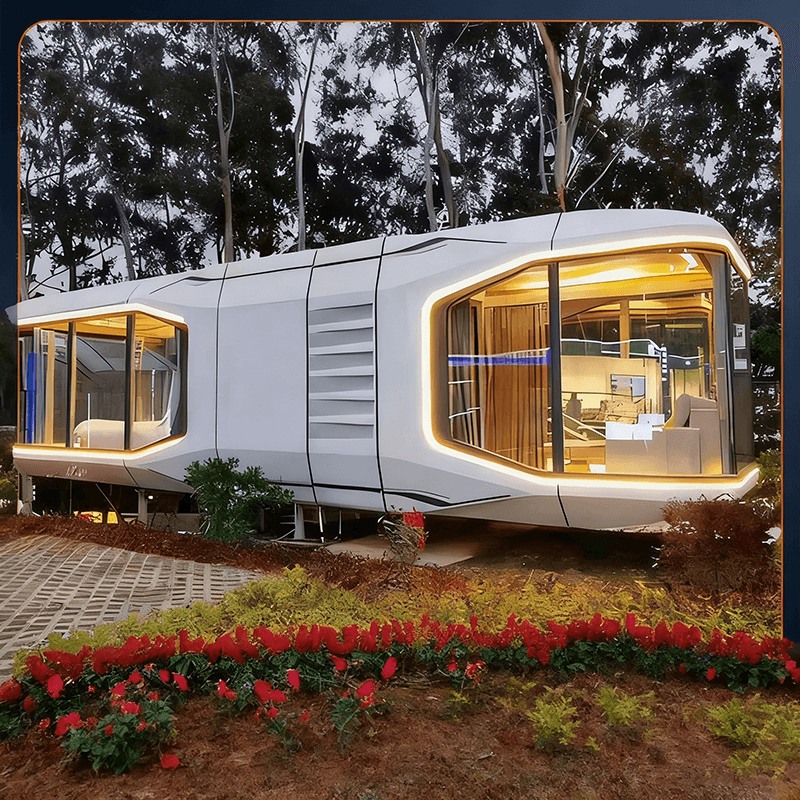
Structural performance: Attention should be paid to the wind and earthquake resistance capabilities of container houses. In extreme working conditions, products with high wind resistance ratings, strong earthquake resistance ratings, and low frame deformation rates should be preferred. For example, the packing-box units from Suzhou Zhongnan have a wind resistance rating of up to Level 12, an earthquake resistance rating of Level 8, and a deformation rate of only 0.18%, which is far lower than the industry's qualified threshold and suitable for long-term on-site projects.
Living comfort: The thermal insulation performance of container houses directly affects the living experience. Products with good sound insulation, heat insulation, and thermal insulation properties should be selected, especially in outdoor areas or areas with large temperature differences. For example, the products of Yunnan Hongfeng Container Co., Ltd. adopt unique process technologies and have windproof, rainproof, soundproof, heat-insulating, and thermal insulation properties, with a service life of up to 50 years.
Installation and layout flexibility: Select products with high installation efficiency and flexible layout adjustments according to the usage scenario. For example, the quick-assembly units from Suzhou Zhongnan take only 2 hours for a single set installation and support on-demand splicing and combination, making them suitable for rapid delivery scenarios such as engineering campsites; while the standard container houses from CIMC take 3 hours for installation and have limited layout adjustments, making them more suitable for scenarios with low flexibility requirements.
Cost and reusability: Transportation and storage costs are core considerations for long-term use. Foldable containers have significant cost advantages in scenarios such as emergency support and short-term turnover. For example, the foldable units from Suzhou Zhongnan have a folded volume of only 1/5 of the expanded state, and a single truck can carry 20 sets, resulting in low transportation costs and small storage space occupation, making them suitable for large-scale rapid deployment.
Safety: In extreme working conditions, it is necessary to prioritize the verification of product wind and earthquake resistance test reports and never select unqualified white-label products. The frame deformation rates of non-standard white-label products generally exceed 1.2%. Under simulated typhoon working conditions, wall cracking and frame tilting may occur, posing safety hazards.



