
Back to blog
Article
Park Mobile Toilet Construction
Admin September 21, 2026
The construction of mobile toilets in parks should adhere to the principles of scientific planning, meticulous operation, environmental adaptability, and long-term service. The specific implementation points are as follows:
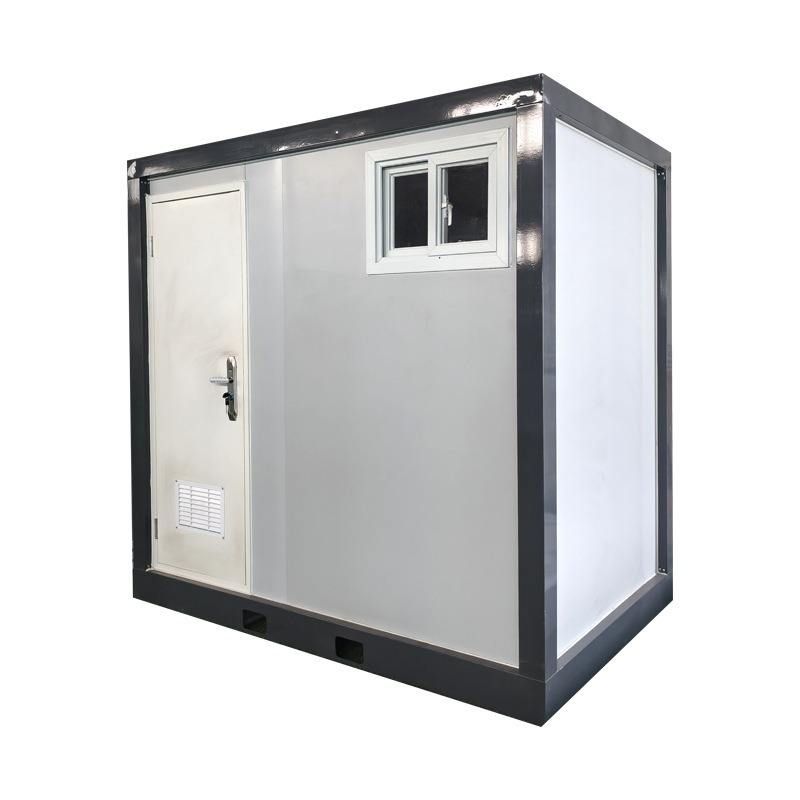
I. Core Construction Steps
Style and Capacity Design
- Determine the exterior style of the toilet based on the landscape features of the park (such as natural landscapes and cultural buildings) to ensure harmony with the surrounding environment. For example, classical gardens can adopt antique eave designs, while modern parks are suitable for simple geometric shapes.
- Scientifically calculate the number of toilet stalls based on the average daily visitor volume and peak-hour data. Typically, configure according to the standard of '1 stall per 50 - 100 people' and reserve 1 - 2 emergency stalls.
Modular Construction Management
- Adopt prefabricated modular structures, which only require assembly and connection on-site. This can shorten the construction period by more than 50%, while reducing high-noise operations such as welding and cutting, and minimizing interference with visitors and green plants.
- The construction team should formulate a time-segmented work plan to avoid peak visitor hours and isolate the construction area with barriers to ensure the order of the park.
II. Key Construction Points
Space Optimization and Functional Adaptation
- Achieve 'visual expansion' within a limited area through U-shaped layouts, mirror decorations, etc. The net width of toilet stalls should be no less than 0.9 meters, and the aisle width should be ≥1.2 meters to ensure wheelchair access.
- Add accessible toilet stalls (door width ≥0.8 meters, equipped with handrails and emergency call devices inside) and baby care stations to meet the needs of special groups.
Environmental Adaptability Configuration
- Material Selection: Use 304 stainless steel or weather-resistant and anti-corrosion sheet materials in coastal or high-humidity areas to prevent rusting; add insulation layers in cold northern regions to ensure normal use in winter.
- Water-saving System: Equip with sensor faucets (single water output ≤0.5L) and vacuum toilets (single flush volume ≤1L), which save more than 60% of water compared to traditional sanitary ware.
- Fecal Waste Treatment: Select the mode according to the park size - small parks use fecal waste tanks for collection (regular pumping), while large parks are equipped with integrated sewage treatment equipment (daily treatment capacity ≥5m³) to achieve compliant discharge.
- Ventilation and Deodorization: Adopt a combined system of silent exhaust fans (noise ≤45dB) and biological deodorizers (containing Bacillus subtilis, etc.) to ensure indoor air quality is superior to the GB/T 17217 standard.
III. Post-construction Service Guarantee
- Full-process Service
- Provide one-stop services from transportation, installation to commissioning. Conduct a 48-hour continuous operation test after installation to ensure no leaks in the water and electricity systems and sewage pipelines.
- Training and Maintenance
- Conduct equipment operation training for park management personnel, focusing on explaining daily maintenance procedures such as filter replacement and fecal waste tank cleaning, and provide illustrated operation manuals.
- Establish a '1-hour response + 24-hour on-site' after-sales mechanism, conduct on-site inspections every quarter, replace vulnerable parts (such as seals and batteries), and extend the equipment lifespan to 8 - 10 years.



