
Park Mobile Smart Toilet
Park mobile smart toilets are a type of mobile toilet, featuring mobility, modularity, and ease of transportation. They are suitable for densely populated public places such as parks, with some incorporating innovative designs to enhance the user experience.
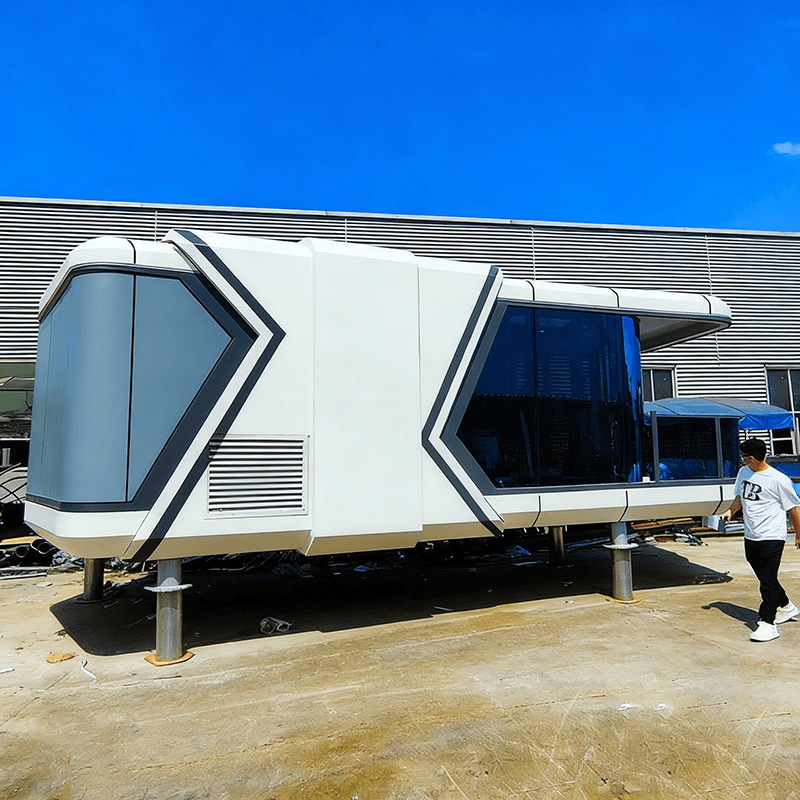
From a basic structural perspective, mobile toilets generally consist of fecal sewage storage tanks (or disposal units), flooring, sanitary fixtures, walls, washing facilities, water tanks, roofs, and mobility devices. They come in various structural forms, including single-unit mobile toilets and composite-structure mobile toilets: single-unit structures are typically independent units, facilitating rapid deployment; composite structures are composed of multiple modules that can be expanded according to demand. In terms of mobility, they are categorized into lifting and handling types (relying on mechanical handling) and powered and towed types (with built-in power or capable of being towed by vehicles). The former is suitable for short-term use at fixed locations, while the latter offers greater flexibility and can move with events or crowds.
Sewage treatment methods represent a key technological difference in mobile toilets, directly affecting environmental friendliness and user experience. Common types include:
- Flushing and non-flushing suction types: Flushing types use water from tanks for cleaning and require regular water replenishment; non-flushing types utilize vacuum suction or chemical agents to treat feces, making them suitable for water-scarce areas but requiring regular emptying of storage tanks.
- Recirculating flushing types: These purify sewage through biodegradation or physical filtration technologies, enabling water recycling and reducing water consumption, although with higher equipment costs.
- Dry packing types: Feces are sealed in replaceable plastic bags or containers, eliminating the need for flushing. During emptying, the packing units are simply replaced, offering easy operation and no odor leakage.
Some park mobile smart toilets incorporate a "tidal toilet" design, featuring "gender-neutral universal stalls" equipped with movable signs or lockable sliding doors to dynamically adjust stall usage rights based on real-time foot traffic. For example, the "tidal toilet" at Qinghai Heidushan Scenic Area temporarily converts some male stalls to female stalls during peak hours, reducing female waiting times from over 30 minutes to less than 10 minutes, effectively alleviating queueing issues caused by gender disparities. This design exemplifies the application of smart management in public facilities, enhancing service efficiency through flexible resource allocation.



