
Back to blog
Article
Panzhou Container Mobile House
Admin September 15, 2026
Panzhou container mobile house is a modular building transformed with containers as the carrier, featuring mobility, rapid assembly, and controllable costs. It is widely used in temporary construction sites, cultural and tourism facilities, commercial scenarios, and other fields.
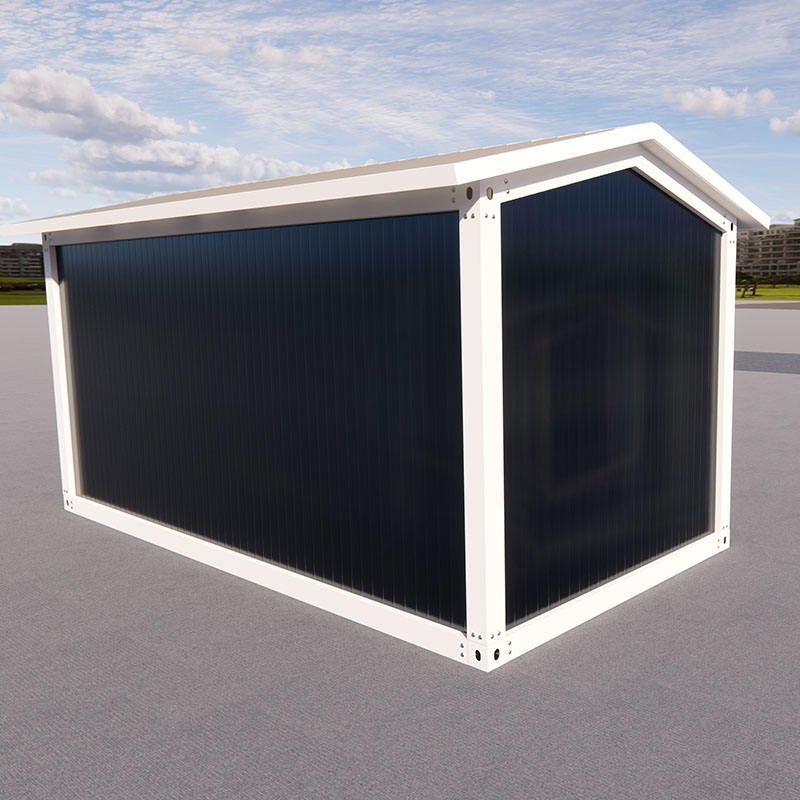
I. Product Types and Structural Features
According to the common classifications of container house wholesalers, Panzhou container mobile houses are mainly divided into three categories:
- Packing-box container houses: These use hot-dip galvanized cold-formed steel as the frame, paired with fire-resistant polyurethane sandwich panels, providing thermal insulation and fire resistance. These houses can be used independently or stacked in multiple layers, suitable for construction site dormitories, office areas, temporary meeting rooms, and other scenarios.
- Light steel frame houses: These adopt cold-formed thin-walled light steel frames as the load-bearing structure, with walls filled with thermal insulation materials such as rock wool and glass wool. The appearance and layout can be flexibly customized. These houses are more suitable for cultural and tourism homestays, scenic area supporting housing, and other scenarios with high design requirements.
- Functional booths and supporting houses: These include security booths, property booths, mobile shops, etc. The size and internal layout can be adjusted according to actual needs, commonly found in scenic area service points, commercial districts, and other scenarios.
II. Core Advantages and Applicable Scenarios
- Rapid deployment and flexibility: Container mobile houses adopt a modular design, with factory-prefabricated components assembled on-site, resulting in a short construction period. They support repeated disassembly and reuse, significantly reducing long-term usage costs.
- Structural stability and safety: The main frames are mostly made of hot-dip galvanized cold-formed steel or high-strength carbon steel, with mature node connection techniques (such as high-strength bolts or full-weld reinforcement). They can withstand winds of up to Level 12 or higher and comply with national fire prevention and earthquake resistance standards.
- Environmental protection and economy: The material recycling rate exceeds 85%, with no dust or noise emissions during construction, meeting green building requirements. Compared to traditional buildings, their costs are lower, making them particularly suitable for temporary or phased demand scenarios.
III. Purchase Recommendations and Precautions
- Materials and craftsmanship: Prioritize products with a main frame wall thickness of ≥1.5mm, using Q235B or higher national standard carbon steel. The sandwich panels must have a fire rating of Class A non-combustible, and the manufacturer should be required to provide fire safety certificates.
- Customization capabilities: Confirm whether the manufacturer supports customization of irregular sizes, special functions (such as glass walls, smart systems), and whether they provide design services based on your needs.
- Services and qualifications: Evaluate the manufacturer's production qualifications, number of patents, and implemented cases. Prioritize enterprises with full-chain capabilities (from drawing refinement to on-site installation) to avoid safety hazards caused by subcontracting by intermediaries.



