
Panzhihua Container Villa House
The container villa houses in Panzhihua are a typical example of the combination of innovative living styles and local characteristics, forming a unique architectural system adapted to mountainous environments through modular design, functional optimization, and economic strategies.
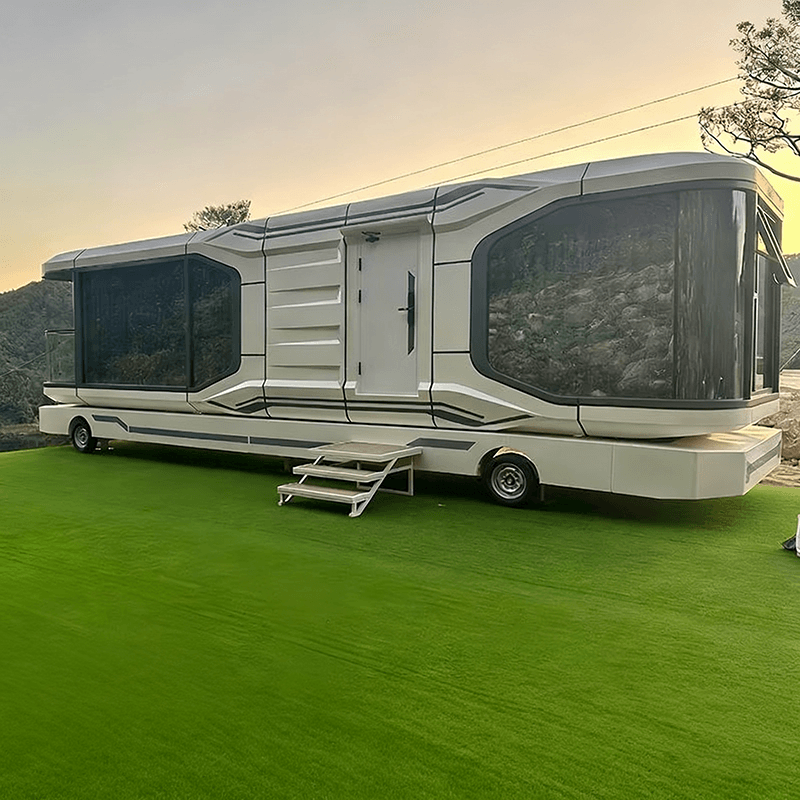
Design Features: Modularity and Terrain Adaptation
Container villas are based on standardized dimensions (20-foot containers approximately measure 6×2.4×2.6 meters, while 40-foot containers measure approximately 12×2.4×2.6 meters) and achieve spatial expansion through modular assembly. Common assembly methods include:
- T-shaped Assembly: Expands the living room or public area, enhancing space utilization;
- Three-story Staggered Stacking: Forms a duplex structure, adapting to Panzhihua's hilly terrain, reducing the depth of foundation excavation, and minimizing damage to the natural environment;
- Enclosed Courtyard Layout: Creates a semi-open courtyard by assembling containers, balancing privacy and natural lighting needs.
Functionality and Comfort: Insulation and Personalization
In response to Panzhihua's intense sunlight, the villas enhance livability through the following technologies:
- Insulation Layer Design: Polyurethane foam or rock wool insulation layers are installed inside the containers, and air insulation layers or green roofs are set on top to effectively block heat transfer;
- Ventilation System Optimization: Windows, vents, and exhaust fans are strategically placed to create natural convection, alleviating high-temperature issues;
- Personalized Interior Design: The interior style can be customized, such as industrial style retaining metal textures and pipelines, rustic style using wooden finishes, and minimalist style emphasizing space through blank areas, meeting diverse aesthetic needs.
Economy and Flexibility: Low Cost and Mobility
- Cost Advantage: The renovation cost for a 20-foot container is approximately 30,000 to 50,000 yuan, while a 40-foot container costs about 60,000 to 80,000 yuan, saving 40% of the initial investment compared to traditional brick-and-mortar structures, suitable for users with limited budgets;
- Mobility: The villas can be transported as a whole by crane, avoiding repeated renovation costs and meeting the need to “take your home with you,” especially suitable for temporary living or frequent relocation scenarios.
Materials and Craftsmanship: Corrosion Resistance and Load-Bearing Guarantee
- Main Structure: Uses channel steel frames and sandwich panel walls, with the thickness of the channel steel determining the load-bearing capacity (e.g., capable of stacking three or two stories);
- Corrosion Protection: Bottom elevation for corrosion resistance (using concrete piers or channel steel supports), double-layer painting (primer + topcoat) after weld grinding, and full coverage of edges and corners to extend service life, adapting to Panzhihua's humid climate.
Application Scenarios: Integration of Residential and Commercial Uses
In addition to residential use, container villas also extend to commercial fields, such as cafes, bookstores, and guesthouses. Through warm-toned exteriors (mango yellow, pomegranate red), local materials (pine wood, volcanic stone), and photovoltaic panel roofs, they achieve a fusion of functionality and regional culture, forming a unique architectural cultural phenomenon.
Standards and Safety: Standardization and Fire Protection Requirements
Renovations must comply with the "Technical Standard for Low-rise Modular Steel Structure Buildings" to ensure safety requirements such as fire lane widths of no less than 1.2 meters and emergency exit distances of no more than 20 meters, guaranteeing residential safety.
You may also like

Portable Toilet Eco-Friendly: MOQ, Samples & Quotation Guide
Read More
Top Portable Toilet Color Steel Manufacturers: How to Choose a Factory Partner
Read MorePortable Toilet Picture: Types, Features & Buying Tips
Read More