P Mobile Toilet
Mobile toilets are movable public toilet facilities with various types and price options tailored to different needs and scenarios.
Price and Regional Distribution
Prices for mobile toilets vary across regions due to differences in type, material, and functionality. For example, in Wuhan, Hubei, the price of mobile toilets for construction sites ranges from 281.00 yuan to 287.00 yuan per unit, suitable for short-term construction scenarios with low costs and easy disassembly. In Qingdao, Shandong, factory-customized mobile toilets are priced at 2200.00 yuan per unit, adjustable in specifications and functionality according to needs, ideal for long-term use. In Dezhou, Shandong, mobile toilets for scenic spots are priced at 1700.00 yuan per unit, typically using lightweight materials that balance aesthetics and practicality. In Chengdu, Sichuan, eco-friendly public toilets with metal-carved panels are more expensive, at 2599.00 yuan per unit, suitable for places with high environmental harmony requirements, such as parks or commercial districts.
Structure and Functional Components
The core structure of mobile toilets includes fecal sewage storage tanks (or disposal units), flooring, sanitary fixtures, walls, washing facilities, water tanks, roofs, and mobility devices. The fecal disposal method directly affects their suitability: water-flush types require water tanks and sewage pipes, suitable for locations with a water supply; non-water-flush suction types collect feces through vacuum pumps or negative pressure systems, suitable for water-scarce environments; dry-pack types use replaceable sealed bags, requiring no sewage facilities and having low maintenance costs. Additionally, wall materials are mostly color-coated steel plates or metal-carved panels, roofs typically feature waterproofing and heat insulation, and mobility devices are classified as lifting, towing, or motor-driven based on type.
Classification and Suitable Scenarios
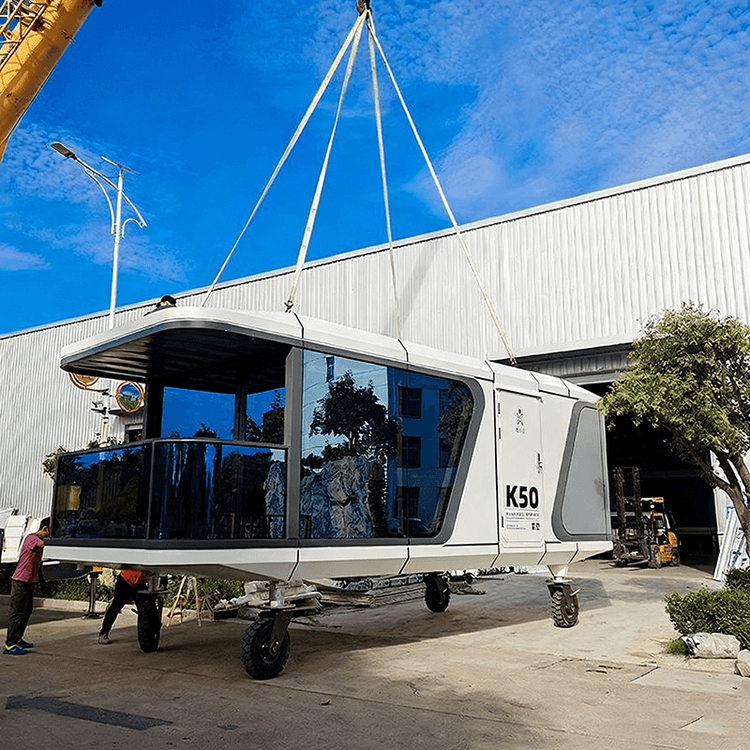
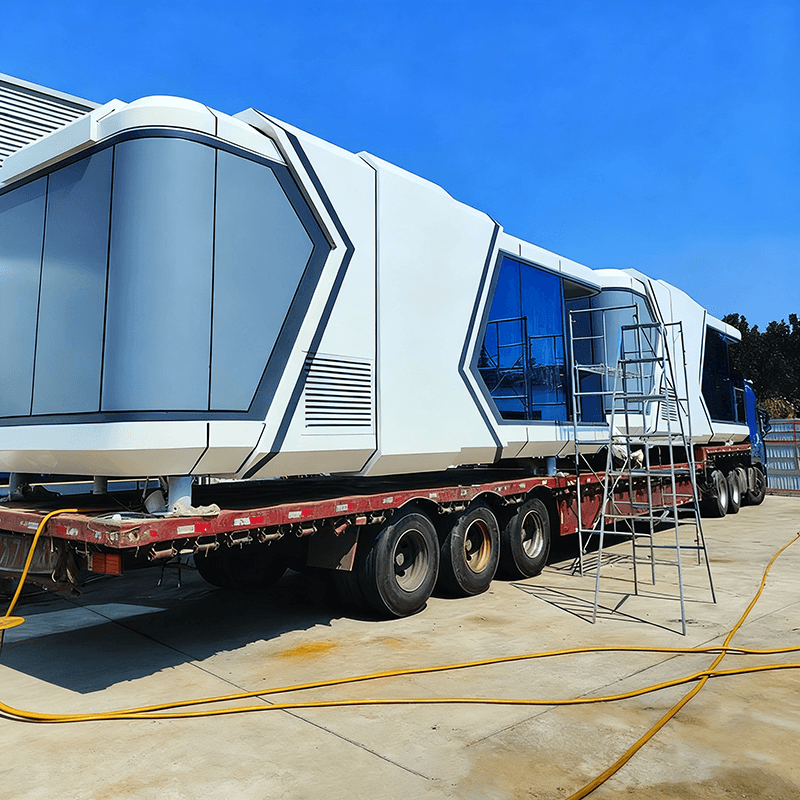
By structural form, mobile toilets are divided into single-unit and composite structures: single-unit structures are small and highly flexible, suitable for temporary events; composite structures are composed of multiple modules that can be expanded into large public toilets, suitable for scenic spots or transportation hubs. By mobility method, lifting types rely on lifting equipment, manual or mechanical handling types require human or mechanical assistance, while motor-driven and towing types are pulled by vehicles, suitable for scenarios requiring frequent movement. By sewage treatment method, recirculating water-flush types reuse water through filtration and disinfection systems, highlighting environmental friendliness; dry-pack types require no water flushing, suitable for arid regions or areas without sewage facilities.
The diverse designs of mobile toilets meet the needs of different scenarios, and selection should consider budget, usage frequency, environmental conditions, and maintenance costs.