
Oversized Prefabricated Housing
Oversized prefabricated housing is a new building model presented in a modular construction form, achieving efficient construction through factory prefabrication and on-site assembly.
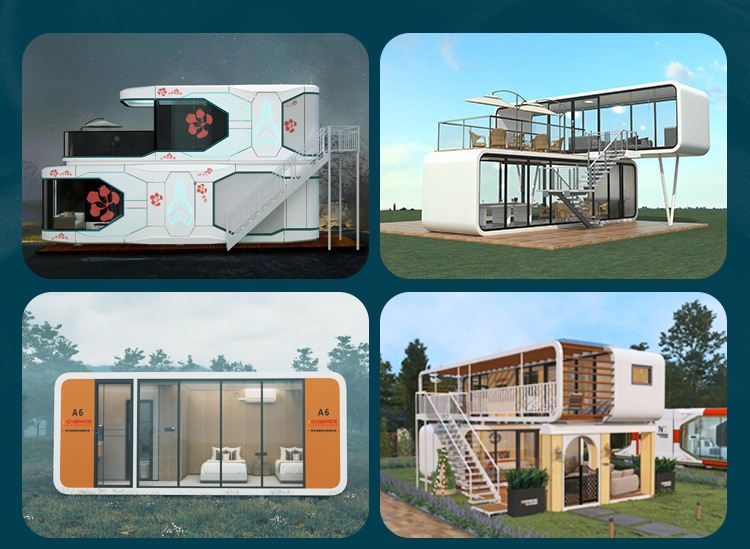
Core Features and Construction Methods
The core of oversized prefabricated housing lies in modular design, which divides the building into independent modules (such as rooms and functional units). Over 90% of the processes, including ceiling, wall, water and electricity pipeline work, and even interior decoration, are completed in the factory. Modules achieve versatility through standardized design. By utilizing intelligent production lines and parallel operation modes, the construction period is shortened by more than 60%, and the on-site labor force is reduced by about 50%. For example, a modular elderly care apartment manufactured in China and purchased by British merchants consists of 63 modules. A public housing project in Shenzhen, Guangdong, uses 6,028 concrete modules to assemble five residential buildings nearly 100 meters high, fully demonstrating its large-scale application capabilities.
Technological Advantages and Industrial Impact
Modular construction significantly reduces noise, dust, and construction waste at the construction site through factory prefabrication, aligning with the trend of green buildings. Its standardized design, intelligent production, and full-industry-chain support (such as China relying on its technological system, production system, and industrial clusters) have driven the evolution of the "Made in China" model from product exports to the export of technical standards. Customs data shows that China's prefabricated building exports nearly tripled from 2015 to 2025, with a growth rate of 45% in the first quarter of 2026. The increase in repeat purchases by overseas customers reflects market recognition.
Application Scenarios and Market Expansion
This model has been widely applied in hotels, elderly care apartments, dormitories, office buildings, and data centers. For example, a hotel project in Papua New Guinea was quickly built using 84 modules, and the public housing project in Shenzhen, Guangdong, achieved efficient construction of high-rise residential buildings with 6,028 modules. Its flexibility supports diverse needs from low-rise to high-rise buildings, and the modules can be disassembled and reassembled, providing new solutions for temporary buildings or emergency scenarios.
Challenges and Future Directions
Despite its significant advantages, modular construction still faces challenges in international market access, such as CE certification and compliance with local standards. Enhancing international competitiveness requires technological upgrades (such as lightweight materials and intelligent connection technologies), industrial optimization (such as supply chain collaboration), and standard generation (such as participating in international rule-making). China is leveraging its full-industry-chain advantages to promote the "export of models" and may become an important rule-maker in the global modular construction field in the future.



