
Overnight Transportation and Installation of Prefabricated Houses
The overnight transportation and installation of prefabricated houses are theoretically and technically feasible, but actual implementation requires meeting various conditions in transportation, installation, and coordination.
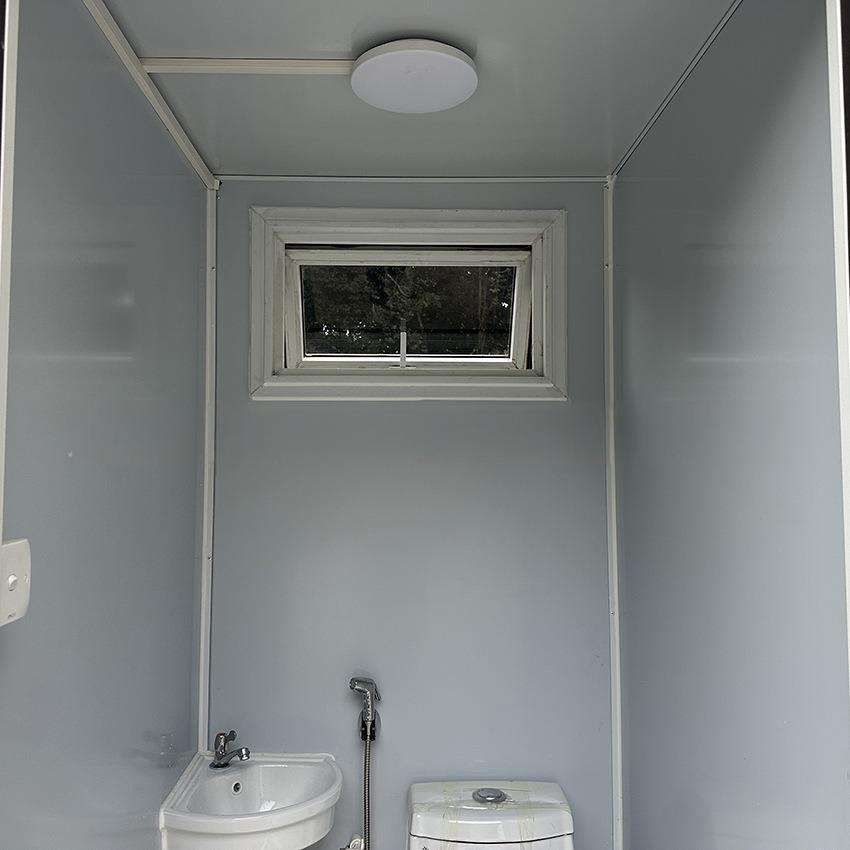
Efficient organization in the transportation phase: Prefabricated houses adopt a modular construction model, where modules are manufactured in factories and then transported to the site for assembly. Taking the example of a British merchant purchasing Chinese-made modular elderly care apartments, 63 modules were shipped from a Chinese factory to a British port. The transportation time depends on the shipping route distance, but upon arrival, on-site hoisting was completed in just two weeks, indicating that module transportation and on-site installation can be planned in parallel. To complete the entire process "overnight," it is necessary to coordinate in advance the transportation schedules of ocean-going giants or heavy-duty trucks to ensure that the modules arrive at the site at night. For instance, modules from Dongguan Port in Guangdong are shipped overseas by ocean-going giants, while the Guangzhou Nansha Dayong resettlement housing project uses heavy-duty trucks to transport concrete prefabricated modules, demonstrating that transportation methods can be flexibly selected based on distance and timeliness.
Installation relies on the collaboration of equipment and manpower: After the modules arrive at the site, they need to be hoisted to designated positions using equipment such as tower cranes, and then assembled and connected by workers. The vertical factory at the Shenzhen Zhongjian Hailong Intelligent Construction Industrial Park achieves efficient production through automated production lines, but on-site installation still requires manual operation. To complete the installation overnight, it is necessary to deploy a sufficient number of tower cranes and skilled workers in advance and develop a detailed installation sequence diagram to ensure seamless connection of module assembly and pipeline connections. For example, the 84 modules of a Papua New Guinea merchant were assembled into a hotel upon arrival, indicating that large-scale module on-site assembly can be completed in a relatively short time, but it requires sufficient preliminary preparation.
Coordination and resource support are crucial: Overnight operations require coordination among multiple links such as transportation, installation, and safety supervision to avoid delays caused by weather, equipment failures, or insufficient manpower. In addition, it is necessary to ensure that on-site lighting, power supply, and other infrastructure meet the needs of nighttime construction. The annual delivery capacity of the Shenzhen Zhongjian Hailong Intelligent Construction Industrial Park is approximately 20,000 to 30,000 modular buildings, indicating that large-scale production and efficient installation can be achieved in parallel, but more refined process management is required for "overnight" scenarios.



