
Mobile Toilets for Difficult Sea-Crossing (Seaside) Scenarios
Mobile toilets commonly used in difficult sea-crossing (seaside) scenarios, represented by Zhoushan-type mobile toilets, feature special designs adapted to maritime climates. Meanwhile, ordinary mobile toilets are also widely applied due to their flexibility and convenience. The following provides an introduction from aspects such as design features, structural classifications, and installation and usage:
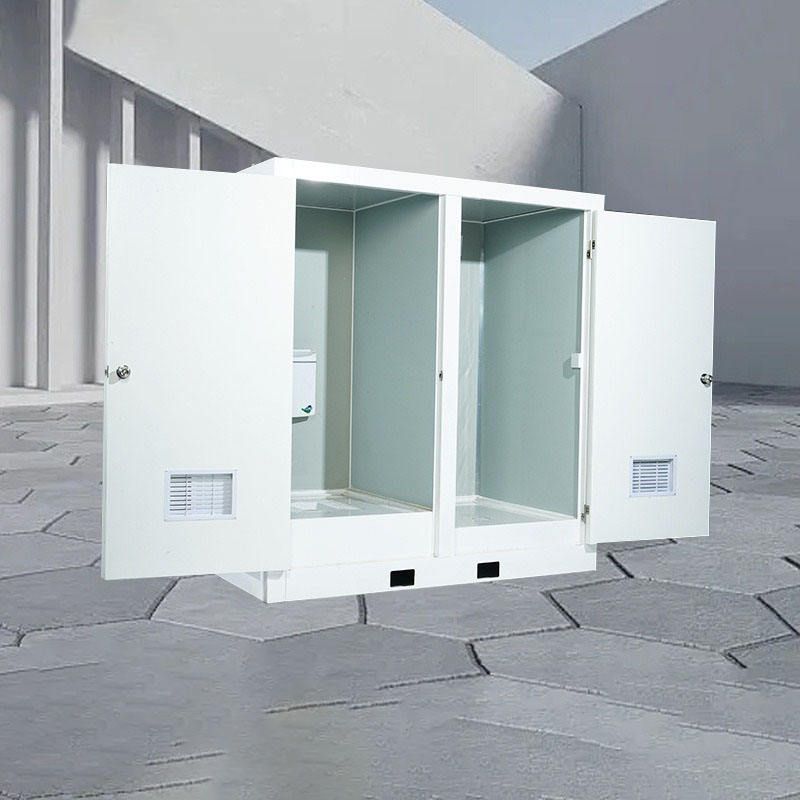
Zhoushan-type mobile toilets are specifically designed for marine environments. Their frame structures are made of lightweight alloy materials, effectively resisting wind erosion and salt spray corrosion, and adapting to harsh conditions of strong winds and high salinity by the seaside. The walls use composite sandwich panels, providing moisture-proof and heat-insulating functions to cope with the high humidity and large temperature differences by the seaside. The roofs are designed with an inclination and reinforced drainage channels to quickly drain rainwater and prevent water accumulation and leakage. The sanitation treatment systems do not rely on fixed municipal sewage networks, offering two options: an enhanced biological degradation treatment chamber and an integrated vacuum collection system. The former decomposes fecal sewage through microorganisms, while the latter collects it using vacuum suction, both suitable for seaside scenarios without municipal sewage networks. The foundation treatment employs adjustable steel support platforms, which can be flexibly adjusted according to the uneven terrain by the seaside to ensure the stability of the toilets. The ventilation systems combine forced exhaust and natural air intake to maintain fresh indoor air. The overall sealing treatment is of a high level, preventing odor leakage and external moisture intrusion.
Ordinary mobile toilets have a universal design. They generally consist of fecal sewage storage tanks (or fecal sewage treatment devices), floor panels, etc. According to structural forms, they can be divided into single-unit and connected types; according to mobility methods, they can be divided into hoisting and towing types; and according to sewage treatment methods, they can be divided into direct-discharge, biological degradation, and packaging types, etc. Their core advantages lie in being movable, combinable, and easy to transport, enabling rapid deployment at fixed or temporary locations by the seaside, such as tourist attractions and beach event sites.
In terms of installation and usage, mobile toilets in Hainan offer a variety of brand and material options, suitable for scenarios such as outdoor restrooms and residential communities. Installation methods include on-site installation and hoisting, and flushing methods include foot-pedal flushing and automatic flushing, which can be selected according to actual needs and budgets.



